
Coffee Roasting Machines: Which One Fits Your Needs?
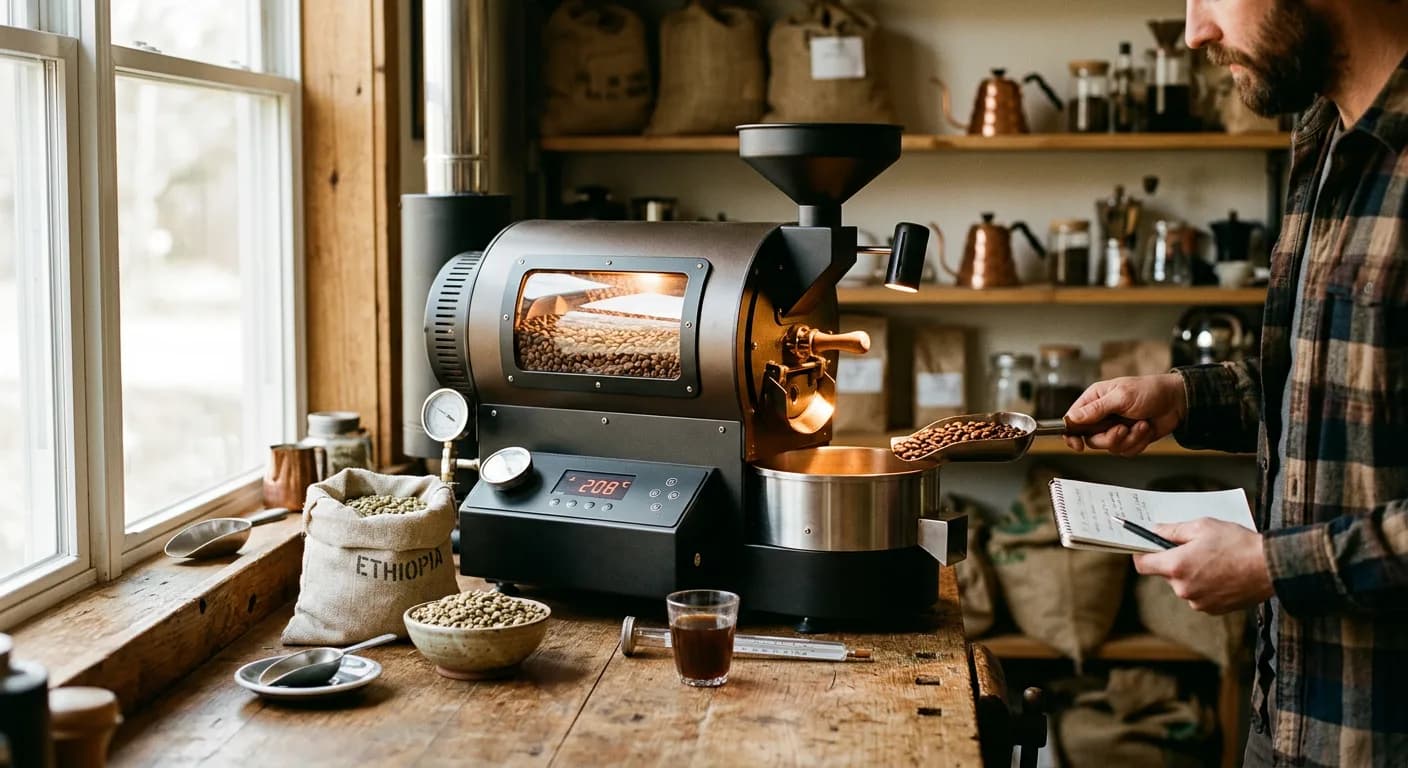
You have perfected your pour-over bloom and can spot first crack by sound, yet store-bought beans still feel like a compromise. If you have been searching “coffee roasting machine small” you are not alone. More home and prosumer options are popping up, each promising café-level freshness without taking over your counter. The trick is matching the right roaster to your space, your roast goals, and how hands-on you want to be.
In this comparison, we will look at the major styles, drum vs fluid bed, and how they shape flavor and consistency. We will cover capacity needs, gas vs electric heat, airflow control, thermometry, and profile logging. You will learn what matters for light roast clarity vs chocolatey espresso, how smoke management and noise affect apartment life, and which features actually help you repeat a great roast. We will also highlight build quality, maintenance, learning curve, and realistic budgets. By the end, you will know exactly which machine fits your workflow, from compact countertop units to beefier prosumer rigs, and how to choose with confidence instead of guesswork.
Understanding Coffee Roasting Machines
Small batch control
A coffee roasting machine small gives you tight control of heat, time, and airflow. Drum roasters hold heat well and suit chocolatey, rounded profiles. Fluid bed roasters move hot air faster and suit bright, clean cups. Either way, you want stable sensors and repeatable inputs. Many setups use PID controllers and bean probes for steady temperature tracking, which helps keep profiles consistent. See how modern gear manages this in the overview on PID controllers and bean probes here. Aim for clear phases. Many balanced roasts land near 12 to 15 minutes, which lets sugars develop and acidity round out. Airflow needs active steering across the roast. A simple plan works well, with moderate airflow early, then higher mid roast to move moisture and chaff, then fine tuning near first crack for clarity. You can read more on timing and airflow strategy in small batches here.
Eco friendly choices
Electric roasters cut direct gas use and make ventilation simpler, which lowers site emissions. They can react a bit slower to big changes. Gas systems respond fast and scale well, but need permits, vents, and often an afterburner. To lower impact on any setup, add insulation, maintain seals, and schedule back to back batches to avoid long warm ups. Keep chaff paths clean to reduce fire risk and wasted energy. Use recyclable mono material bags or certified compostable liners where facilities exist. Track kWh per kilogram and target steady declines over time. Many roasters also pair quality with conservation support, which ties your cup to habitat protection.
Why precision matters for flavor
Flavor comes from how you shape heat, time, and airflow around first crack. Keep a steadily declining rate of rise to avoid harsh notes. Log charge temperature, turning point, first crack time, and total time, then adjust one variable per run. For filter roasts, a development time near 15 to 20 percent often boosts sweetness and keeps clarity. For espresso, try 20 to 25 percent for more body. Manage airflow to clear smoke and chaff for a cleaner finish, as outlined in this guide on how airflow control shapes flavor here. This method fits both single origin lots and blends and helps small-batch roasting stay consistent.
Essential Criteria for Choosing a Coffee Roasting Machine
Size and capacity
Match batch size to your output and space. A coffee roasting machine small can handle 100 grams to about 3 kilograms per batch, good for cafes, pop ups, and R and D. For example, the SF Super 6 lists a 6 pound, about 3 kilogram, capacity with solid hourly throughput, see the US made roaster details at SF Super 6 roasting machine. Home and lab gear around 600 grams works for sample roasting and limited releases. Large machines over 10 kilograms per batch push volume, but they need more floor space, venting, and capital. Small batches give tighter flavor control and less waste, while big drums win on labor time and consistency across larger orders.
Energy efficiency and materials
Power costs add up fast, so check energy design. Electric, ventless systems cut local emissions and can shrink the roasting footprint by close to 90 percent, as noted for Bellwether in Bellwether Coffee. Heat recirculation matters too. Single burner recirc designs report up to 80 percent fuel savings compared with conventional setups, explained in this overview at Guide to sustainable coffee roasting. Electric models may need higher amperage service, while gas units may need permits and flues. Look for thick steel drums and frames for thermal stability, and food safe finishes that last. Your choice can support broader goals too, like lower emissions, better traceability, and conservation aligned sourcing.
Ease of use and maintenance
A clean, simple interface keeps you consistent. Touchscreen controls and profile logging help you repeat wins and train staff faster. Some systems use sensors and software to flag first crack and adapt airflow in real time, which supports precision roasting without constant babysitting. Plan for daily chaff removal, weekly duct and cooler cleaning, and monthly deep cleans, including bearings and thermocouples. Favor removable cooling trays, front access to the chaff collector, and standard parts you can source quickly. Ask about remote support, spare parts lead times, and training options, because downtime is costly.
Pick the smallest machine that meets weekly demand with headroom, then favor efficient builds and easy upkeep to protect quality and margin.
Diving Moose Coffee's Approach to Roasting
Sourcing that keeps flavor first
We start with specialty-grade Arabica beans, the top 3 percent of coffee worldwide. That quality gives us clean sweetness and distinct notes, even at medium-dark levels. We build both single-origin runs and focused blends, then cup side by side to confirm clarity and balance. One example is our Signature Medium-Dark Roast, a mix of African and South American lots that shows chocolate richness with a light fruit lift, documented here in the blend profile Signature Medium-Dark Roast blend profile. For small-batch work, this level of green quality matters more than fancy gear, because great beans let you keep roast times moderate and still hit depth without harshness.
Small-batch precision and fast turnaround
We roast in small batches to keep control tight. Charge temp, airflow, and heat application get adjusted in real time so the rate of rise falls smoothly. For a medium to medium-dark target, we often aim for first crack around 8 to 10 minutes, then a development window near 15 to 18 percent, which keeps body bold and finish smooth. Coffee rests to de-gas, then we pack and ship within 48 hours of your order, Monday through Friday. If you work on a coffee roasting machine small, try a similar flow, log each batch, track development ratio, and taste the same coffee at 24, 48, and 72 hours to set your sweet spot.
Purpose woven into every bag
Every purchase helps fund wildlife conservation through our status as a WWF Partner in Conservation. WWF programs support endangered species, protect forests and watersheds, and back farmer transitions that improve soil health. One current goal supports 2,000 smallholder farmers in Vietnam as they adopt organic agroforestry, which boosts biodiversity and long-term yields. For buyers comparing options, check three things on the bag, roast date, sourcing details, and who your purchase supports. Good coffee can taste great and do real work for the planet.
Side-by-Side Analysis of Popular Coffee Roasting Machines
Features and control
If you want a coffee roasting machine small enough for a cafe, consider four builds. The San Franciscan SF-6 is a 6 pound gas drum with manual control and data logging. It fits roasters who want hands on tweaks to charge temp, airflow, and gas. The Sonofresco 1 lb cut sheet and Sonofresco 2 lb cut sheet show compact gas units with ADR automation and Bluetooth. The Bellwether Shop Roaster is all electric and ventless with guided profiles at 1.5 kg. The Solar ECO is a 2 kg infrared electric drum with fully automatic profiles.
Sustainability notes
Durability supports sustainability, and the SF-6 uses heavy steel that lasts, so fewer replacements. Sonofresco ADR helps cut waste by hitting targets faster and avoiding mis roasts. Bellwether removes on site gas use, and its ventless setup suits strict locations. On site emissions can drop about 87 percent when switching from gas to its electric system. Solar ECO runs electric and can pair with smoke removal for near zero visible emissions. Tie in careful green inventory and you reduce losses across the board.
Efficiency, cost, and precision
Throughput matters. An SF-6 can do 3 to 5 batches per hour, about 18 to 24 pounds, with skilled hands. Sonofresco cycles take 10 to 18 minutes, including cooling, so you can run several per hour with little babysitting. Bellwether handles 3 to 4 batches per hour at 1.5 kg, and software queues jobs while you do other work. Solar ECO delivers around 4 kg per hour in auto mode. Pick premium manual gas for deep profile control, or go automated electric for repeatability, easier installs, and lower on site emissions.
Sustainable Practices in Coffee Roasting
Eco friendly packaging options
Sustainable packaging does more than cut waste. It also protects freshness, which keeps flavor stable for small batch drops. You have three main paths. Recyclable mono material bags offer strong oxygen and moisture barriers and fit curbside streams in many cities. A 2026 case study on zero waste roastery engineering in 2026 shows that high barrier PE can replace foil and keep quality. Compostable films work for short shelf life, but storage conditions matter and access to true composting can be limited. Reuse loops shine for cafes, with bins or buckets that skip single use waste. For a coffee roasting machine small focused on mail orders, start with recyclable mono materials. For local wholesale, build a reuse loop. Note the consumer pull too, since about 66% say they will pay more for sustainable goods.
Energy efficient equipment
Roasting drives most of a shop energy use, so efficiency pays back. Modern recirculating drum designs burn far less fuel by reusing hot exhaust, with reports of up to 80 percent cuts versus older layouts. Electric fluid bed units are simple to vent and pair well with solar, though grid mix still matters. Catalytic oxidizers tame smoke with lower gas use than thermal afterburners, a good fit for small urban sites. What to compare. Fuel or power per kilogram roasted, warm up time, and heat recovery. Add logging that tracks energy per batch and rejects. Precision control and AI guided profiles reduce reruns and defects, which saves beans and power. If you run a coffee roasting machine small, look for insulated drums, variable speed fans, and recirculation.
Align with consumer values
People now expect proof of impact. Surveys show more than 65% prefer coffee that is ethical and lower impact. Younger buyers lead this shift. Practical moves. Publish energy per kilogram, packaging mix, and waste rates. Add QR codes that show farm info and a roast log, with blockchain traceability if you have it. Choose certifications that fit your supply, or pilot regenerative lots with farmer partners. Tie sales to conservation, and share outcomes. At Diving Moose, every bag supports WWF, which aligns flavor, quality, and real world impact.
Recommendations for Coffee Enthusiasts and Businesses
Pick by roasting style and output
When you pick a coffee roasting machine small, match it to your roast style and your output. Air roasters are fast and clean, good for 100 to 150 gram test batches and bright profiles; app connected versions add auto and manual modes for repeatable home roasts. For cafés, a compact 2.8 pound profile roaster gives programmable curves and live tracking for steady production. A 6 pound drum with data logging brings stronger thermal momentum and fuller body, so plan capacity for peak hours with some headroom.
Environment friendly choices
Conscious buyers should look at electric or recirculating designs that cut local emissions. A ventless shop roaster with a 3.3 pound batch runs on a 30 amp circuit and, with a continuous kit, can reach about 400 pounds per week. Some recirculating micro roasters report annual carbon output near that of a single passenger car, while comparable gas units can be many times higher. Track energy per kilogram, tighten warmup routines, roast back to back, add catalytic smoke control where venting is tight, and buy renewable electricity.
Match the roaster to your values
Pick a machine that fits your values, not only your budget. If you sell single origin lots and want tight consistency, choose precision controls, rate of rise tracking, and profile replay. AI assisted roasting in compact and hybrid machines can help small teams cut variance and train faster. For transparency, log and export batch data that can connect with traceability tools, including blockchain pilots used in coffee. If conservation is central to your brand, pair low emission roasting with responsible sourcing and support for groups like WWF, which plans to aid about 2,000 smallholders in Vietnam and back new regenerative projects for around 180 farmers from 2026.
Conclusion: Making an Informed Choice
Choosing a coffee roasting machine small comes down to fit and control. Match capacity to your output and test schedule. Think 100 to 150 gram sample drums for R and D, about 600 grams for cafe pilots, and 1 to 3 kilograms for steady retail drops. Air systems favor bright, quick roasts. Drums build body and stability. Hybrids split the difference. Look for tight heat control, responsive airflow, and real time logging. Software that tracks bean temp rate of rise and gas changes helps you repeat profiles. Automation can help, yet manual control teaches faster. Venting, power needs, and safety clearances matter too.
Quality and sustainability go together. Small batch roasting lets you highlight origin character and keep defects out. Precision tools and hybrid machines now help you manage heat with less waste. Some buyers want full traceability, and blockchain pilots are making that easier to share. Impact matters as well. Purchases that fund conservation add real support. WWF programs aim to help 2,000 smallholder farmers in Vietnam shift toward organic agroforestry in the coming years, and regenerative pilots are engaging 180 farmers in a two year effort. Choose machines that support clean venting and efficient energy use, then back them with traceable lots and packaging that protects freshness with less material. Better inputs, better process, better cups.