
Coffee Freshness 101: How to Store Beans, When to Grind, and Why Degassing Matters
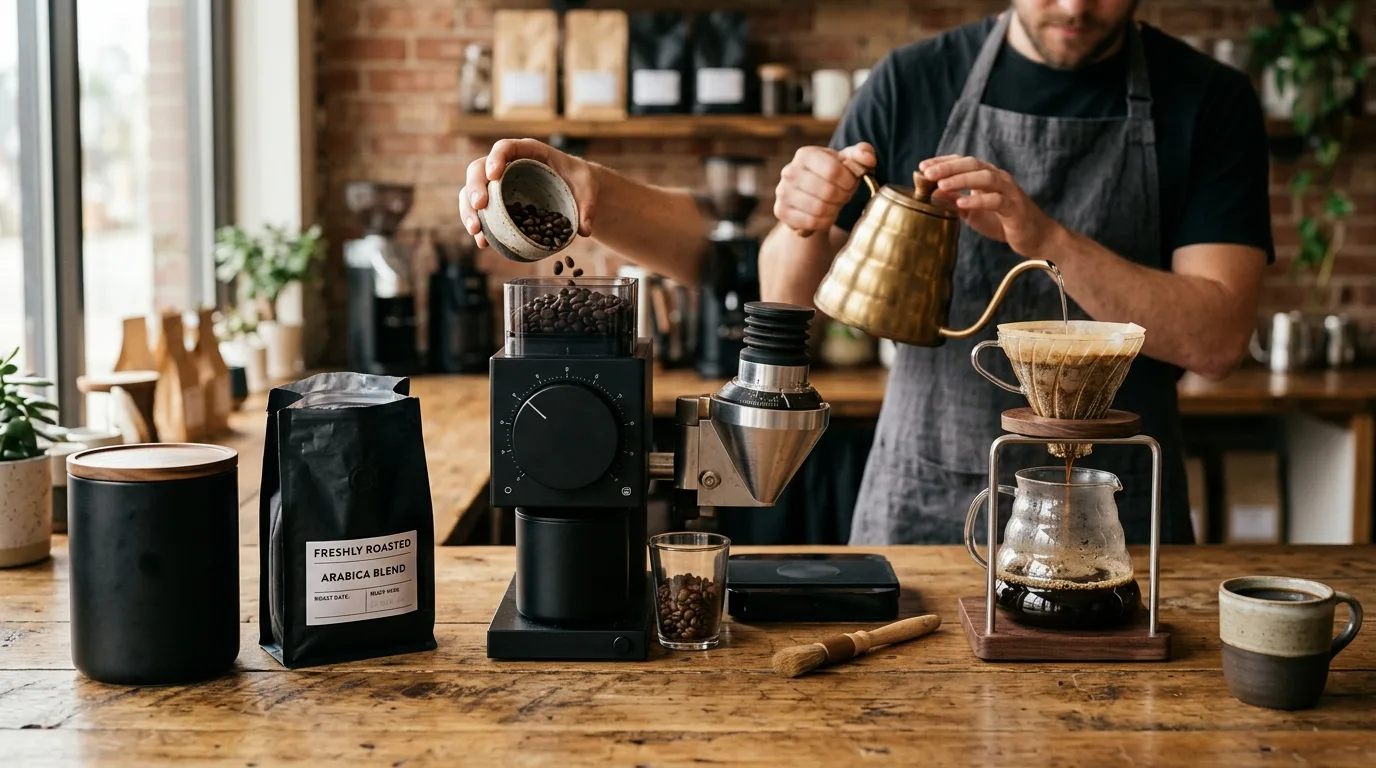
Fresh coffee is not complicated, but most people get at least one part wrong. The good news is that a few simple habits make a real difference in what ends up in your cup.
What actually makes coffee go stale
Coffee stales through oxidation. Once roasted beans are exposed to air, the compounds responsible for aroma and flavor start to break down. This is not gradual and gentle. Within a week or two of being opened, a bag of beans sitting on the counter can lose a noticeable amount of its character.
There are four things that speed up this process. Oxygen is the biggest one. Moisture causes beans to absorb ambient odors and accelerates chemical breakdown. Heat speeds up oxidation. Light, especially direct sunlight, degrades chlorogenic acids and other compounds that contribute to flavor.
The best way to store your beans
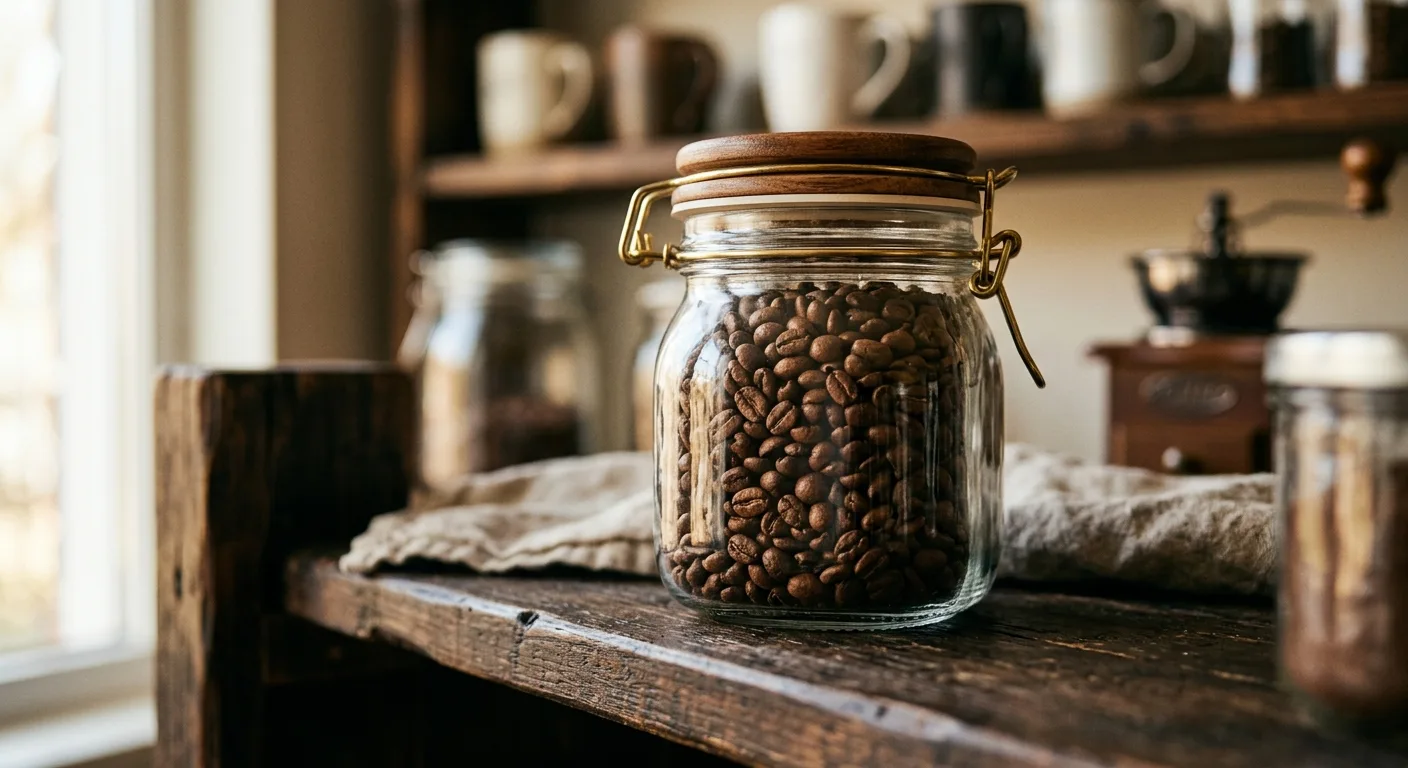
Keep whole beans in an airtight, opaque container at room temperature. A dark pantry or cabinet works well. Avoid storing coffee near the stove, on a sunny windowsill, or in a cabinet above the refrigerator where heat collects.
If your beans came in a bag with a one-way valve, that bag is actually great for short-term storage. The valve lets CO2 escape without letting oxygen in. Seal it tight and keep it somewhere cool and dark.
Many people default to the refrigerator. This is not ideal. Coffee is porous and picks up the smell of whatever else is in there. The temperature fluctuation from opening and closing the door also creates condensation, which is a problem. The fridge is more likely to hurt your coffee than help it.
When freezing makes sense
Freezing coffee is a valid option if you buy in bulk and cannot use it all within two to three weeks. The key rule is to freeze in small, single-use portions and never refreeze after thawing. Condensation forms when cold beans hit warm air, and that moisture damages the beans quickly.
Portion out your beans into small airtight bags or jars before freezing. When you are ready to use a portion, let it come to room temperature before opening the container. This way, condensation forms on the outside of the bag, not on the beans themselves.
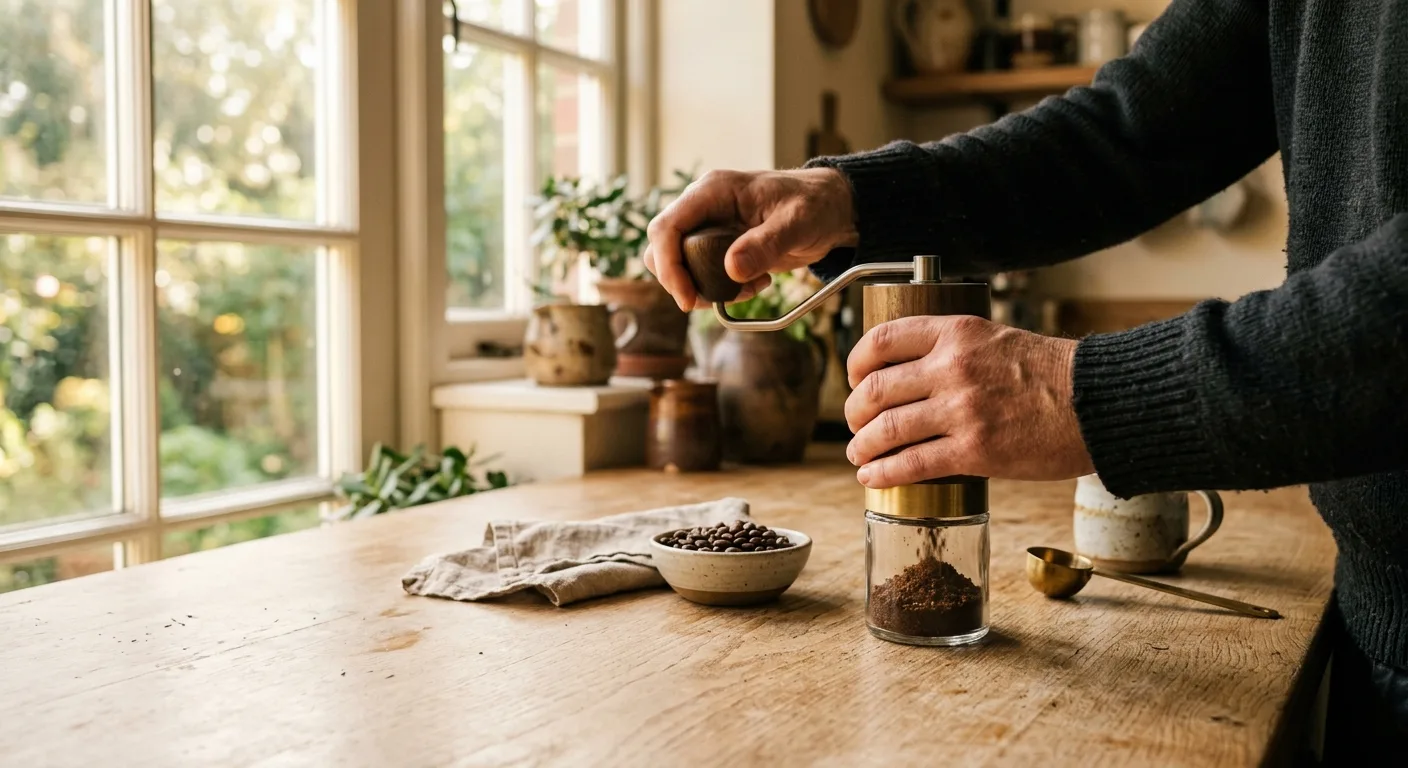
Grinding right before you brew is the single highest-impact habit for better coffee at home.
Why grinding at the last minute matters
Ground coffee has a dramatically larger surface area than whole beans. That means it oxidizes much faster. Pre-ground coffee can go noticeably flat within 20 to 30 minutes of grinding. Whole beans stay fresh for weeks under the same conditions.
A burr grinder is the standard recommendation for consistent grind size. Blade grinders chop unevenly, producing a mix of fine dust and large chunks that brew at different rates. If a burr grinder is not in your budget yet, buying whole beans and grinding them at the store in small weekly batches is a reasonable middle ground.
For espresso, the freshness window is even narrower. Many espresso drinkers prefer beans that are between 7 and 21 days off roast. Very fresh beans can produce unpredictable shots because of high CO2 content.
What degassing is and why it matters
During roasting, beans absorb a significant amount of CO2. After roasting, they release this gas slowly over several days. This process is called degassing.
Brewing with beans that are still heavy with CO2 causes problems. The gas interferes with water absorption during extraction. You end up with uneven extraction and a cup that tastes sour or underdeveloped. This is why bloom steps exist in pour-over and French press recipes. That 30 to 45 second pre-wet lets CO2 escape before the main brew begins.
For most brewing methods, beans roasted within the last 3 to 14 days are in a good range. After about four weeks post-roast, freshness starts declining noticeably depending on how the beans have been stored.
Beans roasted more than six weeks ago and stored in poor conditions may taste flat or papery regardless of brewing method. Check the roast date on the bag before you buy.
How to read a roast date
A good specialty roaster prints the roast date on the bag, not just a best-by date. The roast date tells you exactly how fresh the coffee is. A best-by date alone does not give you useful information because it tells you nothing about when the beans were roasted.
Look for bags with roast dates within the past two to four weeks for everyday brewing. If you are buying online, check that the roaster ships beans that were recently roasted, not beans that have been sitting in a warehouse.
| Time since roast | Freshness status | Best for |
|---|---|---|
| 0 to 2 days | Too fresh (high CO2) | Wait before brewing |
| 3 to 14 days | Peak freshness | Most brewing methods |
| 15 to 30 days | Still good | Everyday drinking |
| 31 to 60 days | Fading | Use quickly, store well |
| 60 days and beyond | Noticeably stale | Time to open a fresh bag |
Putting it together
The basics are straightforward. Buy whole beans with a recent roast date. Store them in an airtight, opaque container away from heat and light. Grind just before brewing. Let very fresh beans rest a couple of days before you use them.
At Diving Moose Coffee, every bag is small-batch roasted in Georgia and ships with a roast date so you know exactly what you are getting. If you want to try a few different origins, the 4-Count Most Popular Sample Pack is a good way to start. For single-origin options, the Georgia Roasted Single Origin Coffees collection covers a range of roast profiles and regions. And if you already know you want something bold and reliable for espresso, The Black Leopard is a four-bean dark roast blend built specifically for that.