
How to Grind Coffee Beans without a Grinder
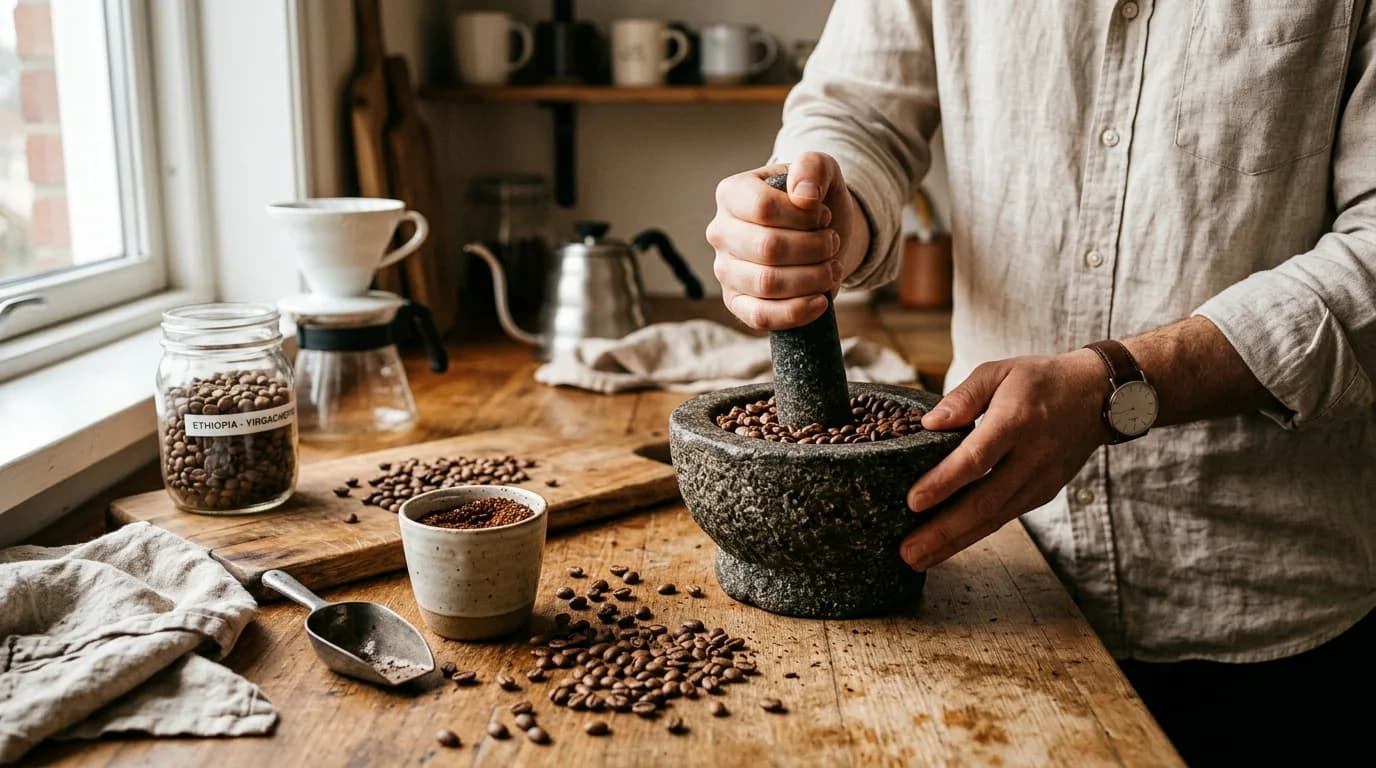
No grinder, no problem. You probably already have everything you need in your kitchen to get a decent grind from whole beans. The results won't match a burr grinder, but they're good enough to brew a solid cup.
Why grind size matters
Grind size controls how fast water pulls flavor from the coffee. Too coarse and the brew tastes weak and sour. Too fine and it turns bitter and over-extracted. Different brewing methods need different grinds, so knowing your target before you start will save you a bad cup.
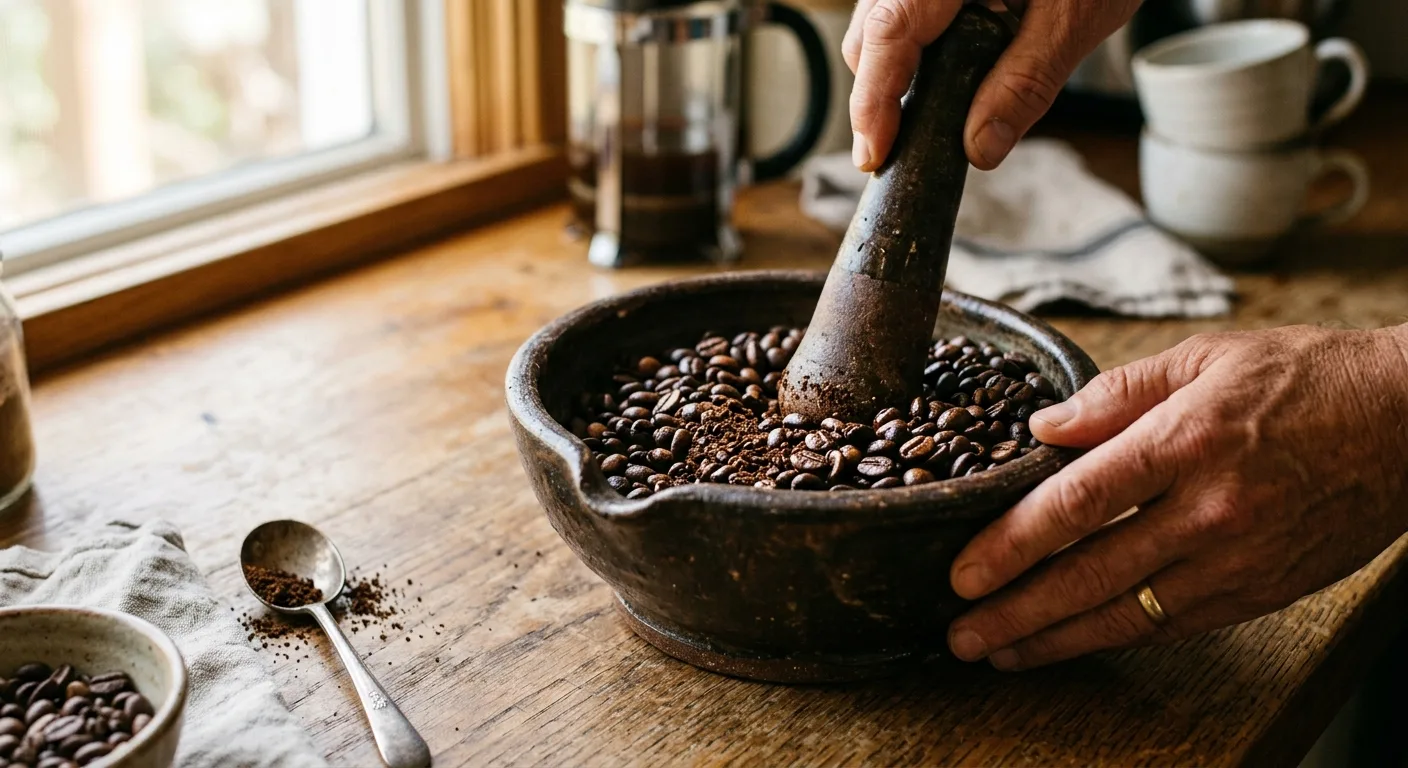
The methods below are ranked roughly from best to worst results. None of them will give you the consistency of a burr grinder, but some come close enough that you won't notice much difference in a French press or a cold brew.
Method 1: Mortar and pestle
This is the oldest grinding method there is, and it actually works well for coffee. You get real control over the grind size, and the process is quiet. It does take a few minutes of effort per serving.
- Add a small amount of beans at a time, no more than what you need for one or two cups.
- Press and twist rather than just pounding. This breaks the beans more evenly.
- Check the grind every 30 seconds and stop when it looks right for your brewing method.
This method is well suited to pour-over and drip coffee, where a medium grind is the target. With patience, you can get it fairly consistent.
Method 2: Blender
A standard kitchen blender will grind coffee beans reasonably well. The blade moves fast enough to break beans down to a usable size, though the grind will be uneven with both fine powder and larger chunks.
- Use the pulse setting, not continuous blend. Short two-second bursts give you more control.
- Shake the blender between pulses to redistribute the beans.
- Aim for 10 to 15 pulses total for a medium grind.
If your blender has a "grinder" or "mill" attachment, use that instead of the main jar. It's designed for harder, drier ingredients and will give you a more even result.
Method 3: Food processor
A food processor works similarly to a blender but tends to produce a coarser, less consistent grind. It's fine for French press or cold brew where a rough grind is acceptable.
- Pulse in five-second bursts.
- Spread beans in a single layer if possible so the blade catches them evenly.
- Expect a mix of fine and coarse particles. That's just the nature of the tool.
The goal isn't perfection. It's getting enough ground coffee to brew something worth drinking.
Method 4: Rolling pin or heavy pan
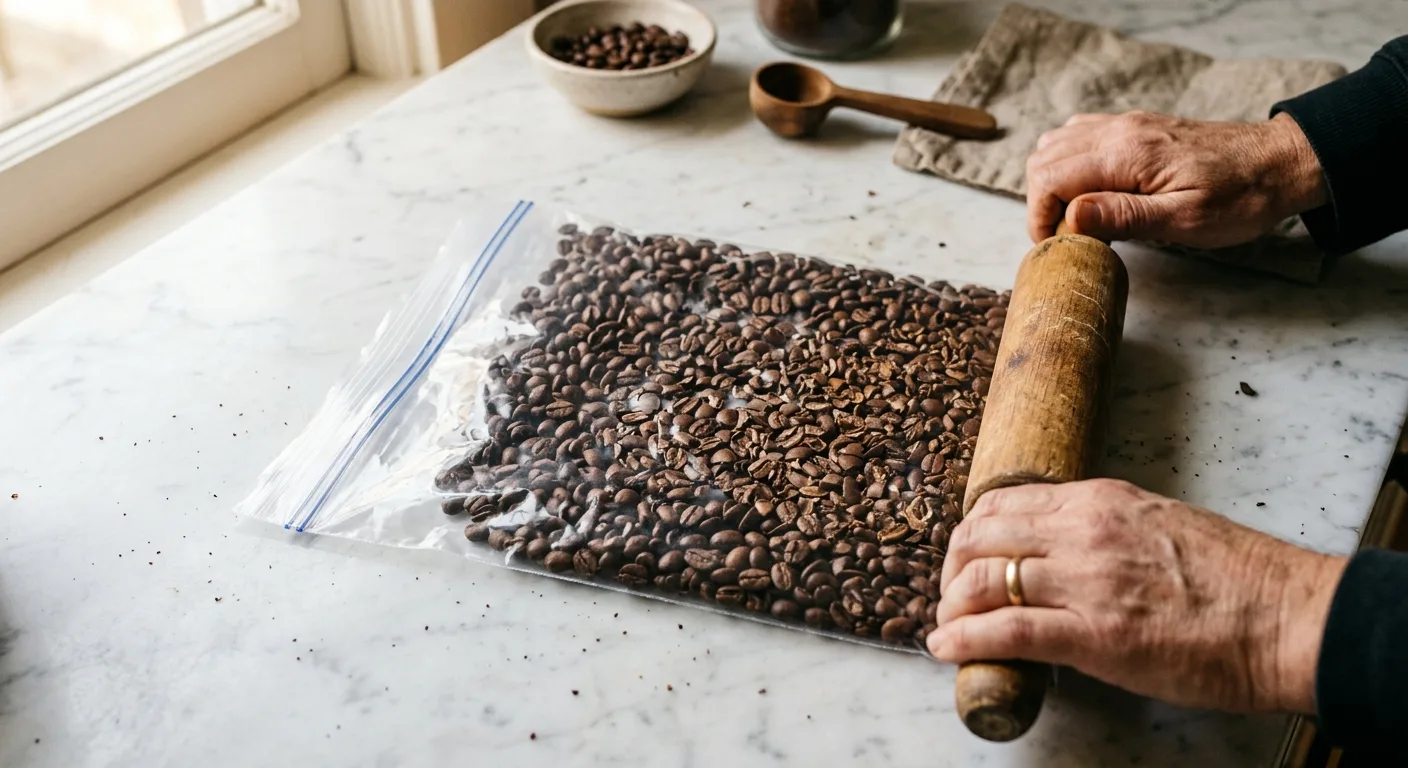
This is the most low-tech option and it works well enough in a genuine emergency. Put the beans in a zip-lock bag, seal it, and crush them on a flat surface.
- Use a rolling pin, the bottom of a cast iron pan, or even a heavy wine bottle.
- Apply steady downward pressure and roll rather than hammering, which tears the bag.
- Keep working until the grounds look roughly uniform in size.
This method is best for French press or cold brew. You won't get anything fine enough for espresso without a lot of extra effort.
These manual methods work best with good quality whole beans to start with. Beans that have been sitting open for weeks won't taste great no matter how you grind them.
Which method matches which brew
| Method | Best grind result | Best brew method |
|---|---|---|
| Mortar and pestle | Medium to fine | Pour-over, drip |
| Blender | Medium | Drip, French press |
| Food processor | Coarse | French press, cold brew |
| Rolling pin | Coarse and uneven | French press, cold brew |
The honest backup option
If this keeps happening and you find yourself regularly without a grinder, it's worth buying pre-ground coffee to keep on hand. Pre-ground is not the enemy. It's practical, it's consistent, and if you buy fresh-roasted specialty coffee, it tastes great.
At Diving Moose Coffee, all of our coffees are available pre-ground. The The Red Panda House Blend is a good everyday option, smooth and balanced for a standard drip brewer. If you want something with more character, the Nyala Ethiopia Sidamo Organic has bright, fruit-forward notes that work well with pour-over.
If you're ready to commit to whole bean
Whole bean coffee stays fresh longer than pre-ground because the outer surface of the bean protects the flavor compounds inside. If you're buying quality coffee, grinding right before you brew gives you the best result. But a good burr grinder doesn't have to be expensive. Entry-level hand grinders from brands like Hario or 1Zpresso cost less than a bag of specialty coffee a month.
In the meantime, browse our most popular roasts and order pre-ground until you're set up. Every bag you buy also supports wildlife conservation through our WWF partnership, so it's a decent use of your coffee budget either way.