
How to Dial In Your Espresso at Home: A Step-by-Step Guide to Grind Size, Dose, and Extraction Time
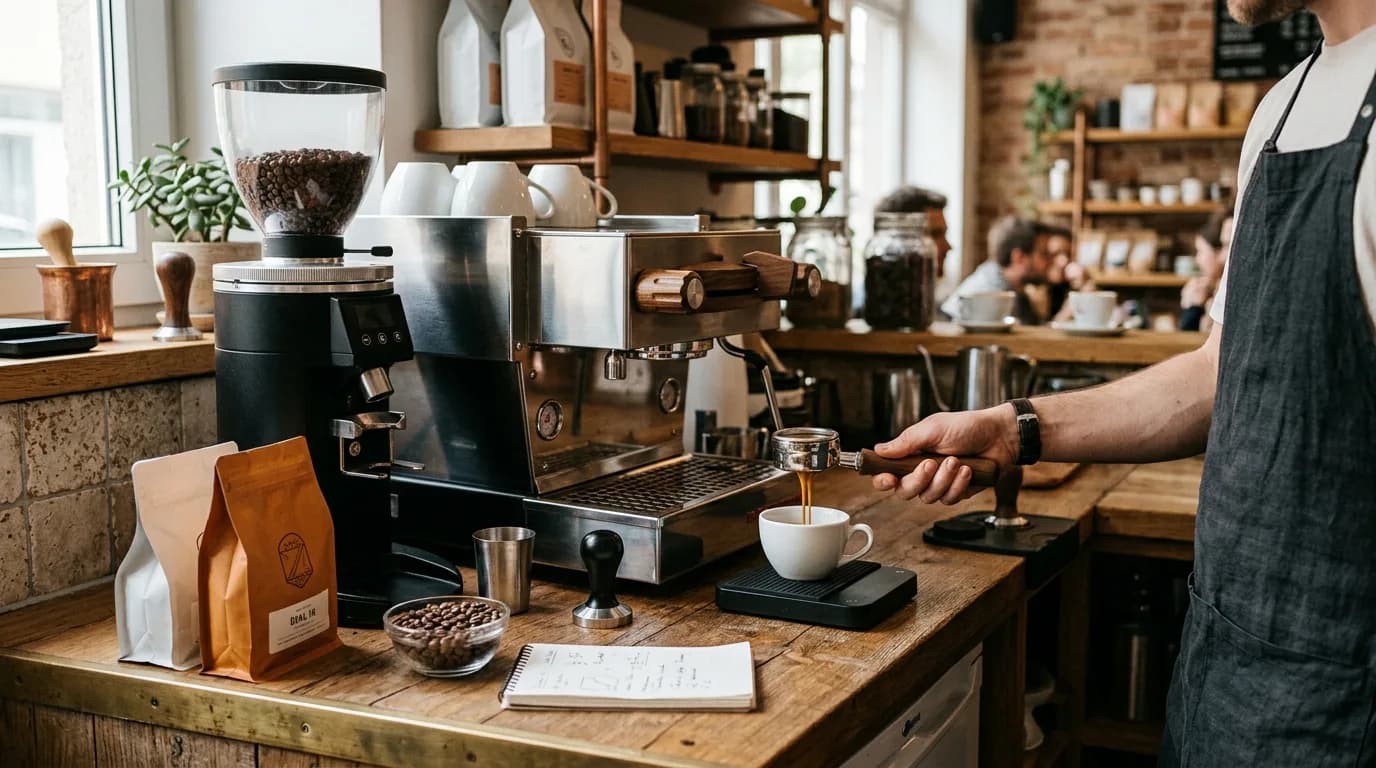
Pulling a good espresso shot at home takes more patience than skill. The machine matters less than you think. What actually determines the cup is grind size, dose weight, and how long the shot takes to run. Once you understand those three things, you can fix almost any problem.
Start with the right beans
Espresso is unforgiving. It concentrates everything in the bean, good and bad. Stale coffee, poor processing, or a roast that doesn't suit espresso will give you flat or harsh results no matter how well you dial in your grind.
For espresso, you generally want a medium-dark to dark roast with enough body to hold up under pressure. The Black Leopard from Diving Moose Coffee is a four-bean dark roast blend built specifically for espresso. It pulls with a deep, rich body and handles milk drinks well. If you prefer something without caffeine, The Koala is a decaf espresso dark roast blend that behaves the same way under pressure.
Grind your beans fresh, right before pulling the shot. Pre-ground coffee goes stale fast and makes dialing in nearly impossible because the grind behavior changes as it ages.
Understanding the three variables
Before you start adjusting anything, it helps to know what each variable actually does.
- Grind size controls how fast water moves through the puck. Finer grinds slow the flow; coarser grinds speed it up.
- Dose is how much ground coffee goes into the portafilter basket, measured in grams. More coffee increases resistance and slows extraction slightly.
- Yield and time are what you measure as output. Yield is the weight of liquid espresso in the cup. Time is how long the shot takes to run.
These three variables work together. Change one, and the others shift. That's why you adjust them one at a time.
The standard starting point
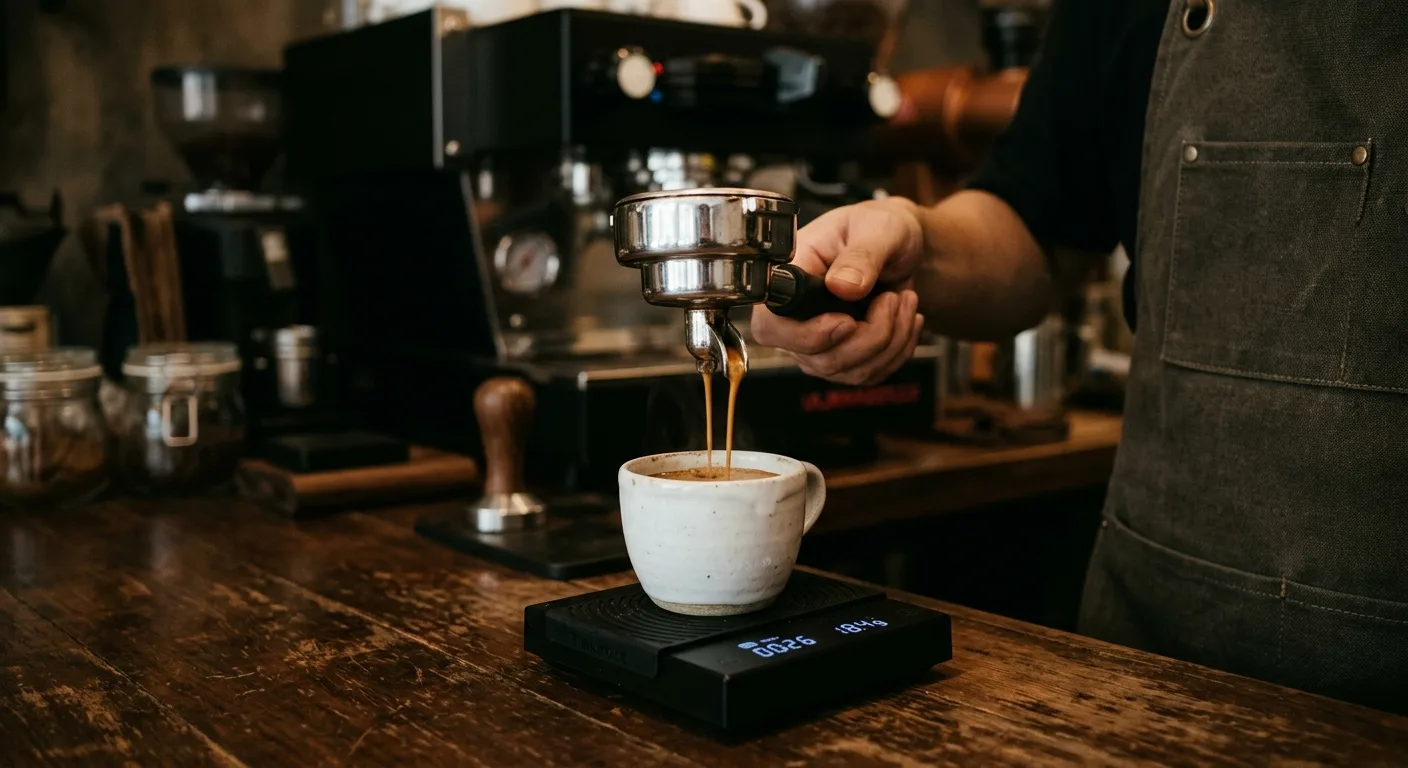
A good default for most home setups is an 18g dose, a 36g yield, in 25 to 30 seconds. This is called a 1:2 ratio. It's not a rule, but it gives you a reliable baseline to work from.
Weigh your dose with a small kitchen scale. Eyeballing grounds by volume is inconsistent and will make troubleshooting harder. A scale that reads to 0.1g is ideal, but any scale that goes to 1g will get you in the ballpark.
Change one variable at a time. If you adjust grind size and dose on the same shot, you won't know which one fixed the problem.
Dialing in grind size
Grind size is the first thing to adjust. Start with your grinder set to its espresso range, pull a shot at your target dose, and time how long it takes.
- Shot runs too fast (under 20 seconds): grind finer. Water is moving through too quickly, and the espresso will taste sour, thin, or sharp.
- Shot runs too slow (over 35 seconds): grind coarser. Resistance is too high, and the espresso may taste bitter or dry.
- Shot runs in the 25 to 30 second range: taste it before adjusting anything else.
Make small grind adjustments. On most grinders, one click or one step changes things more than you expect. Pull, taste, and note what changed before touching anything else.
Espresso grind is much finer than drip or pour-over. If your grinder has numbered settings, espresso typically sits near the lowest numbers. A correctly ground espresso should feel like fine table salt or slightly finer.
Reading the shot
Once your shot runs in the target time window, taste it and use what you find to guide small tweaks.
| What you taste | What it means | What to try |
|---|---|---|
| Sour or sharp | Under-extracted | Grind finer or increase dose slightly |
| Bitter or dry | Over-extracted | Grind coarser or reduce dose slightly |
| Thin or watery | Too much yield or too fast | Reduce yield or grind finer |
| Balanced, sweet, full | Good extraction | Write down your settings |
You're not chasing perfection on the first shot. Most people need three to five pulls before a new bag is properly dialed in. Different beans, even from the same roaster, may need different settings.
Puck prep matters too
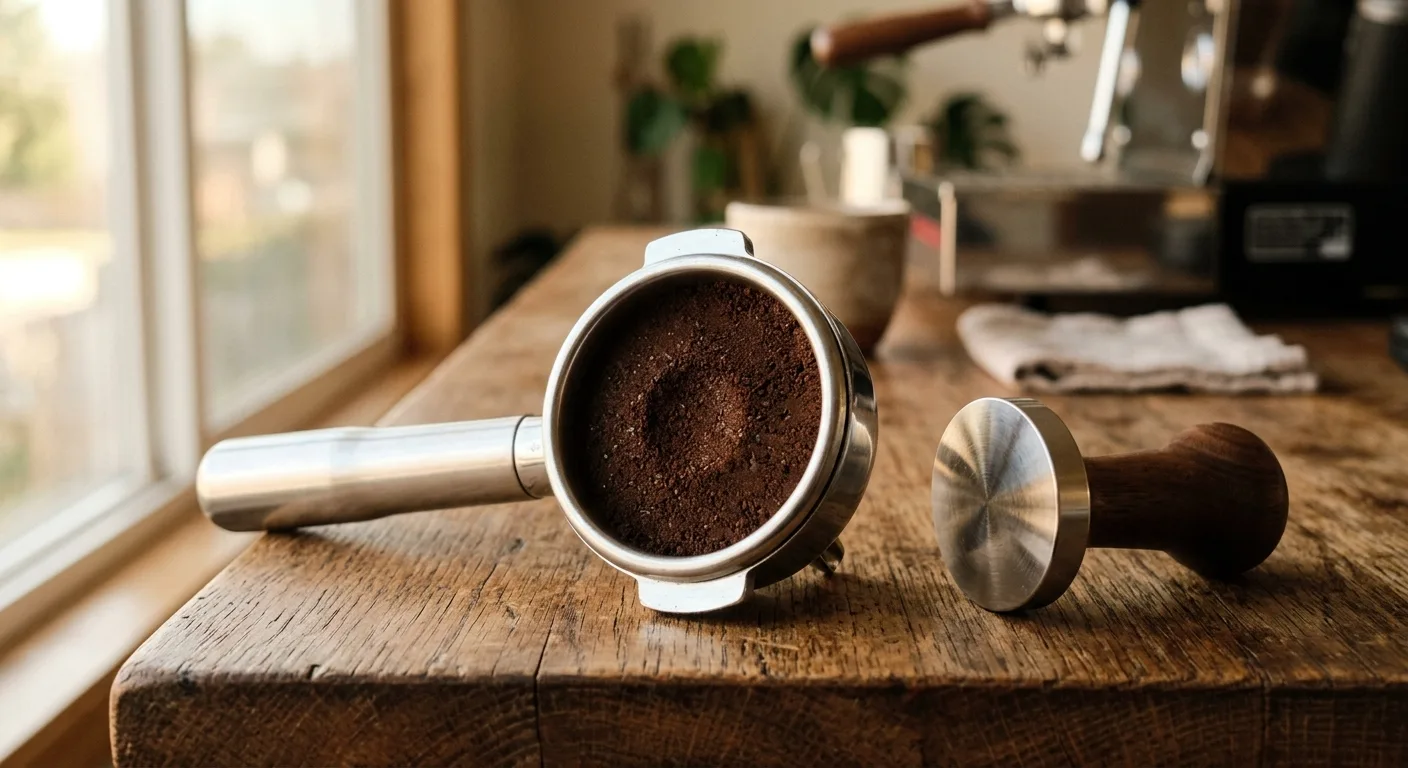
Even a perfect grind and dose can produce an uneven shot if the puck is poorly distributed. After dosing, level the grounds with a finger or distributor tool, then tamp with firm, even pressure straight down. An angled tamp creates channels where water bypasses the coffee, which causes uneven extraction regardless of your other settings.
If your shot starts fast then slows down mid-pull, channeling is likely the cause. Even out your distribution before the next shot rather than adjusting grind size.
What changes when you switch beans
Every new bag will need at least a small grind adjustment. Roast level, bean density, and freshness all affect how the coffee behaves. A darker roast is more porous and often needs a slightly coarser grind than a medium roast at the same dose. Freshly roasted beans release more CO2, which can speed up the shot in the first few days after roast. If your beans are very fresh, let them rest for 5 to 10 days after the roast date before dialing in for espresso.
Getting consistent results
Write down your settings each time you dial in a new bag. Note the dose, grind setting, yield, time, and how the shot tasted. It takes a minute and saves a lot of wasted coffee on the next bag.
If you want to explore what different origins taste like as espresso, our small-batch blends are a good place to start. Each one is roasted in small quantities in Georgia and ships fresh. Fresh beans are the single biggest factor most home baristas overlook, and it's the easiest thing to fix.