
Coffee Roasting Machines: Which One Fits Your Needs?
Choosing a coffee roasting machine is one of the most consequential decisions a coffee lover can make. Whether you want to roast a small batch at home on weekends or you're thinking about scaling up to a serious hobby setup, the machine you pick will shape every cup you make from that point on.
Why roast your own coffee?
Green coffee costs less per pound than roasted coffee, and it stays fresh far longer, sometimes years when stored correctly. Roasting at home gives you control over roast level, so you can pull a light roast at exactly the flavor profile you want rather than guessing from a label.
That said, roasting well takes time to learn. The first few batches will likely be uneven or scorched. If you're not ready to experiment and occasionally lose a batch, buying from a quality roaster is still the right call for most people.
The main types of roasting machines
There are three core machine types you'll run into, and each works differently enough to affect your final cup in a meaningful way.
Drum roasters
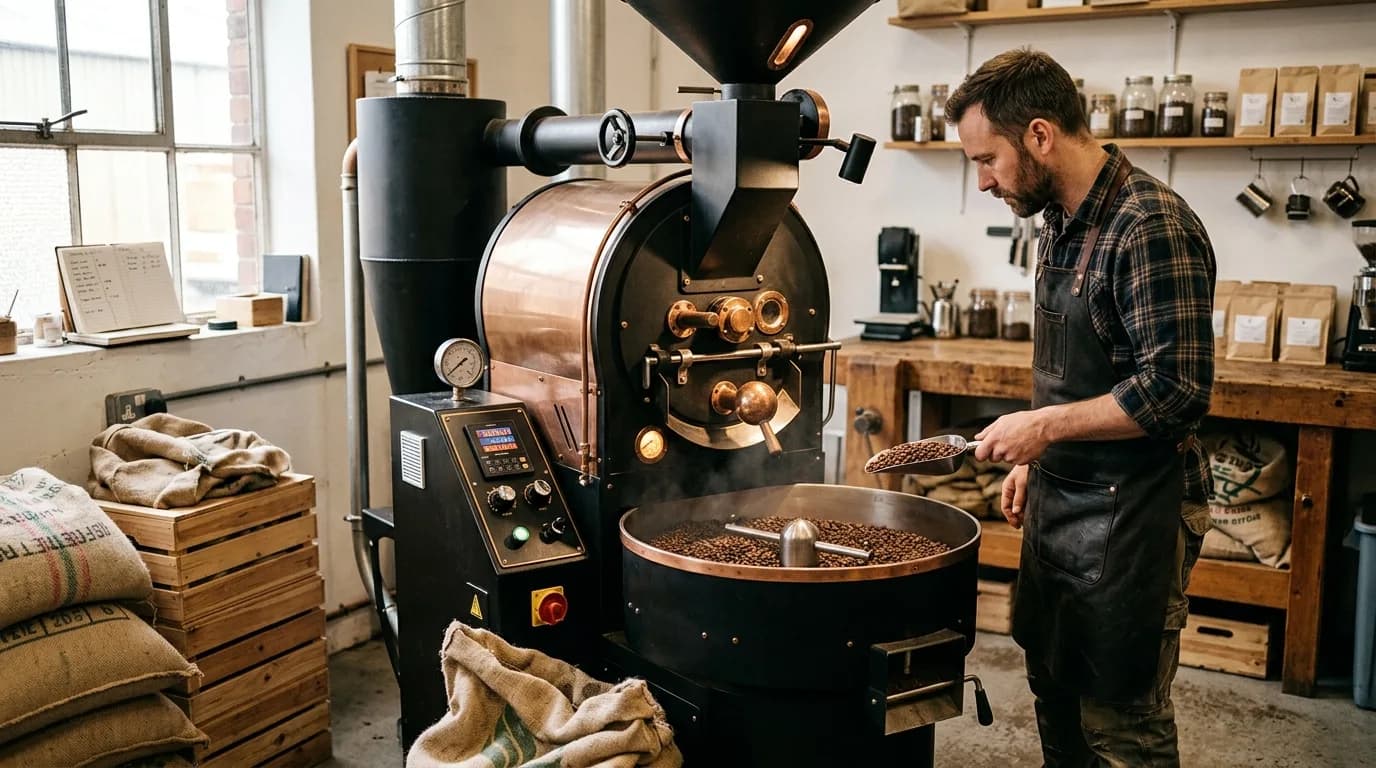
Drum roasters tumble beans inside a rotating cylinder while applying heat from below or from a gas flame. The beans stay in contact with the drum surface, which adds a kind of thermal mass and usually produces a fuller, rounder body. Most commercial roasters and many serious home setups use drum technology.
Fluid bed roasters (air roasters)
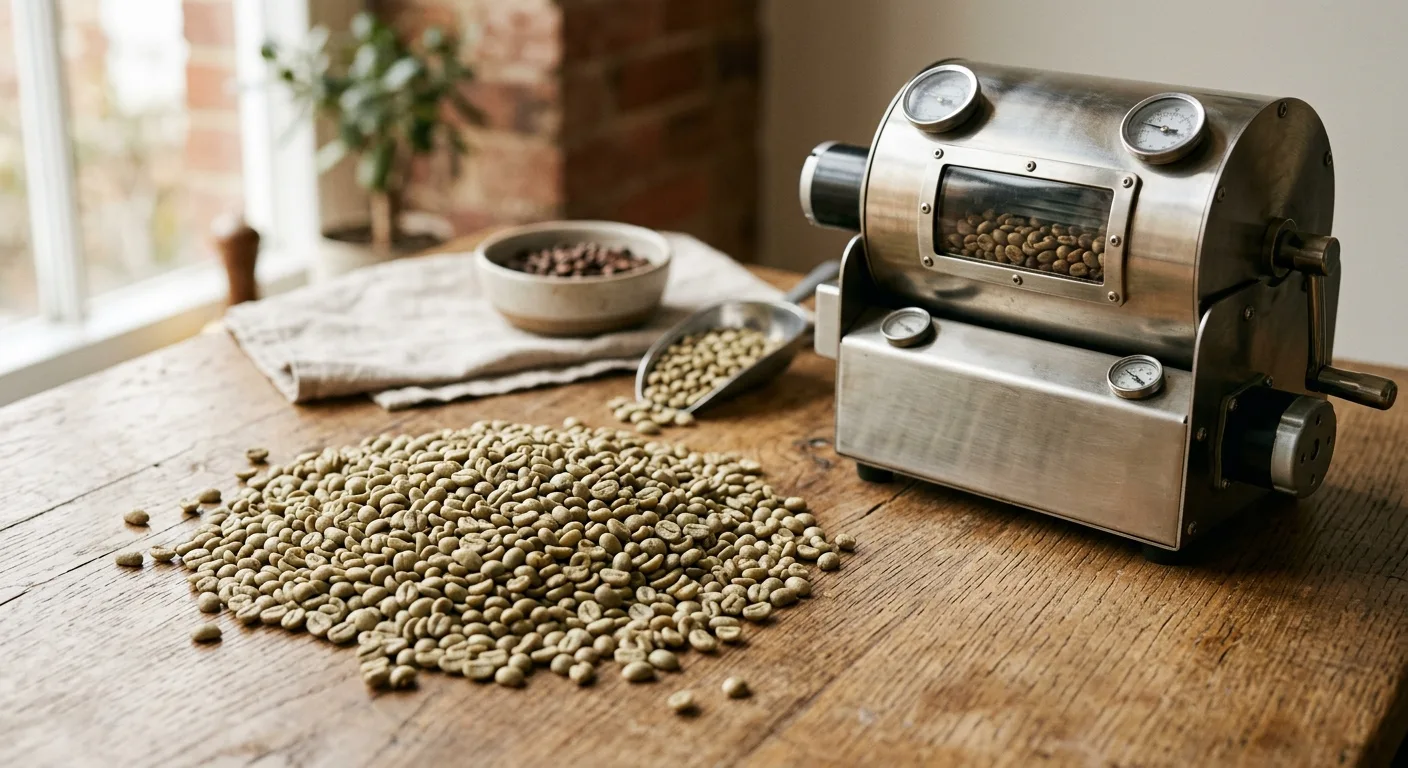
Fluid bed machines suspend and tumble beans on a column of hot air. Because the beans never touch a hot surface, you get faster, more even heat transfer and typically a cleaner, brighter flavor. These machines are popular with home roasters because they're compact and relatively affordable.
Stovetop and pan roasting
A cast iron skillet or a stovetop popcorn popper can technically roast coffee. Results are inconsistent and smoke is significant, but the cost is essentially zero. This is a reasonable way to decide if roasting interests you before spending money on equipment.
Comparing common home roasting machines
| Machine type | Typical batch size | Price range | Best for |
|---|---|---|---|
| Stovetop popper | 60 to 120g | Under $30 | Beginners testing the hobby |
| Fluid bed home roaster | 100 to 250g | $100 to $300 | Home brewers wanting consistency |
| Small drum home roaster | 200 to 500g | $300 to $700 | Hobbyists who brew daily |
| Sample or 1kg drum roaster | 500g to 1kg | $1,000 and up | Serious hobbyists or micro-roasters |
What to look for before you buy
A few features separate a frustrating machine from one you'll actually use regularly.
- Temperature control. Look for adjustable heat settings rather than a single dial. Precise temperature control lets you slow down development or push through a plateau when needed.
- Chaff collection. Roasting produces dry chaff from the bean skins. Machines with a built-in chaff collector are much easier to clean and safer to use indoors.
- Cooling cycle. Beans need to cool fast after roasting or they keep cooking. A built-in cooling fan or a dedicated cooling tray is important.
- Batch size consistency. Overloading a small drum roaster leads to uneven roasts. Match the machine's recommended capacity to what you actually plan to brew each week.
- Smoke and ventilation. Darker roasts produce more smoke. Without good ventilation or a machine with a catalytic converter, indoor roasting gets uncomfortable quickly.
If you're roasting indoors, run a hood fan or crack a window. Even small machines produce noticeable smoke past a medium roast, and the smell lingers longer than you'd expect.
Drum vs. fluid bed: which cup profile do you prefer?
This is the most practical question you can ask before spending money. Drum roasters tend to produce coffee with more body and a slightly more complex, rounded flavor. Fluid bed roasters tend to bring out acidity and fruity or floral notes more clearly.
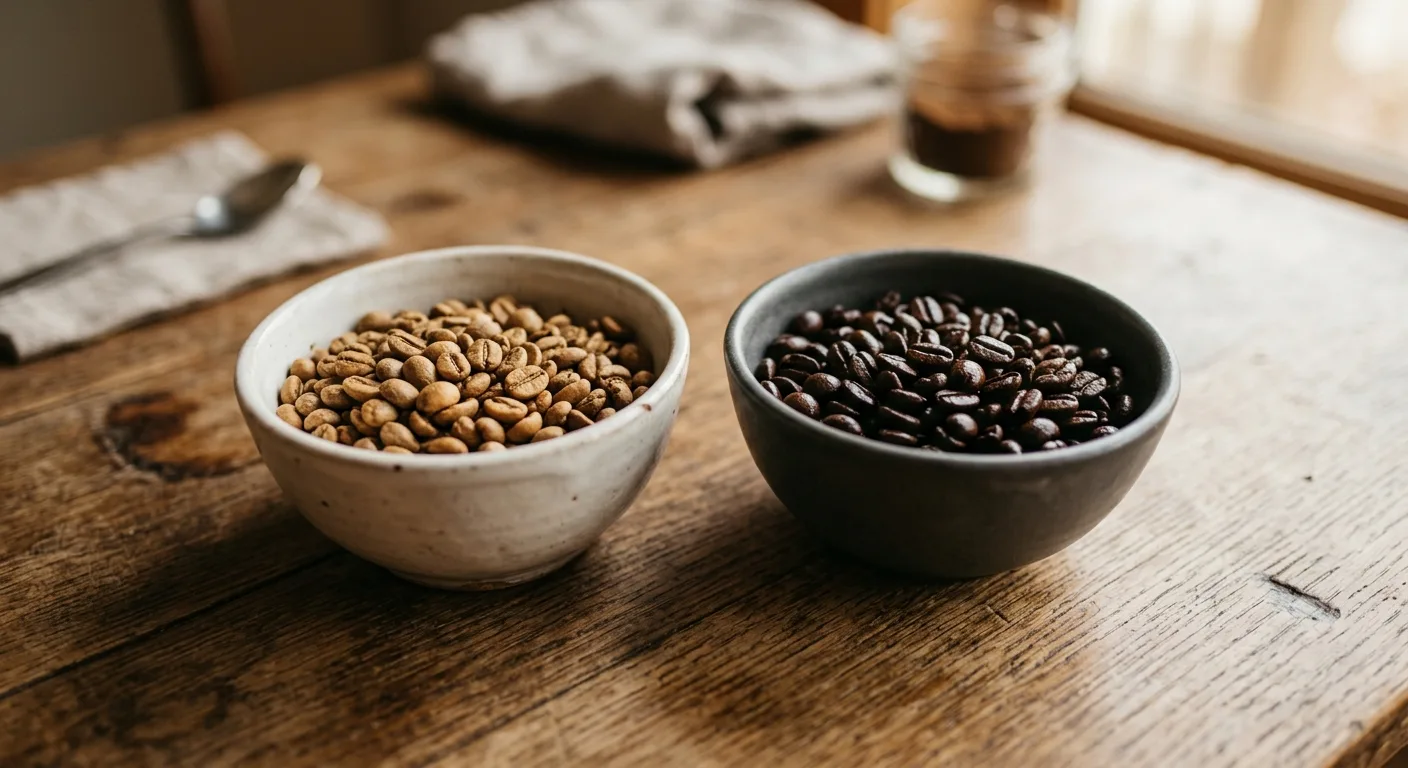
If you love Ethiopian natural coffees with stone fruit and berry notes, a fluid bed machine will let those flavors show. If you prefer a Brazilian medium roast with chocolate and nuts, a drum roaster will probably serve that profile better.
The machine you choose shapes every cup. Drum roasters build body. Fluid bed machines build clarity. Pick based on what you actually like to drink.
The learning curve is real
Even with a good machine, dialing in a roast takes practice. You'll need to track variables like time, temperature, first crack timing, and development time ratio. Many home roasters keep a simple log for each batch so they can repeat the good results and avoid the bad ones.
Start with a forgiving origin. Brazilian or Colombian beans are more tolerant of beginner mistakes than, say, a delicate Kenyan AA that can turn sharp or flat very quickly if the heat curve is off.
Green coffee loses around 15 to 20 percent of its weight during roasting as moisture evaporates. Factor that into your batch size planning so you don't end up with less coffee than you expected.
When buying freshly roasted makes more sense
Not everyone has the time, space, or interest to manage a roasting setup. A home roaster requires storage for green beans, ventilation planning, batch logging, and regular cleaning. For many coffee drinkers, that's more friction than the hobby is worth.
A simpler path is buying freshly roasted, small-batch coffee from a roaster who sources carefully. At Diving Moose Coffee, all coffees are specialty grade, 100% Arabica, and roasted in small batches in Georgia. If you want to explore different origins without committing to a roasting machine, the 4-Count Most Popular Sample Pack is a practical starting point. You get four different coffees at 4oz each, which is enough to understand what origins and roast levels you're drawn to before deciding whether home roasting is worth pursuing.
And if you do decide roasting is your thing, knowing which profiles you prefer from pre-roasted coffees will tell you exactly what to aim for with your own machine.
A few honest recommendations
If you're just starting out, don't buy a $600 drum roaster on day one. Start with a stovetop popper or a basic fluid bed machine to see if the process holds your interest. Most people who stick with home roasting upgrade within a year once they know what they want from the machine.
If you already know you prefer full-bodied, low-acid coffees roasted to medium-dark, look at small drum roasters in the $300 to $500 range. If you prefer lighter, brighter cups with distinct origin character, start with a fluid bed machine and work up from there. Either way, your best reference point is a coffee you already love. Our most popular roasts are a good benchmark to compare your home roasting results against.