
What Is Green Coffee? How Raw Beans Are Transformed by the Roasting Process
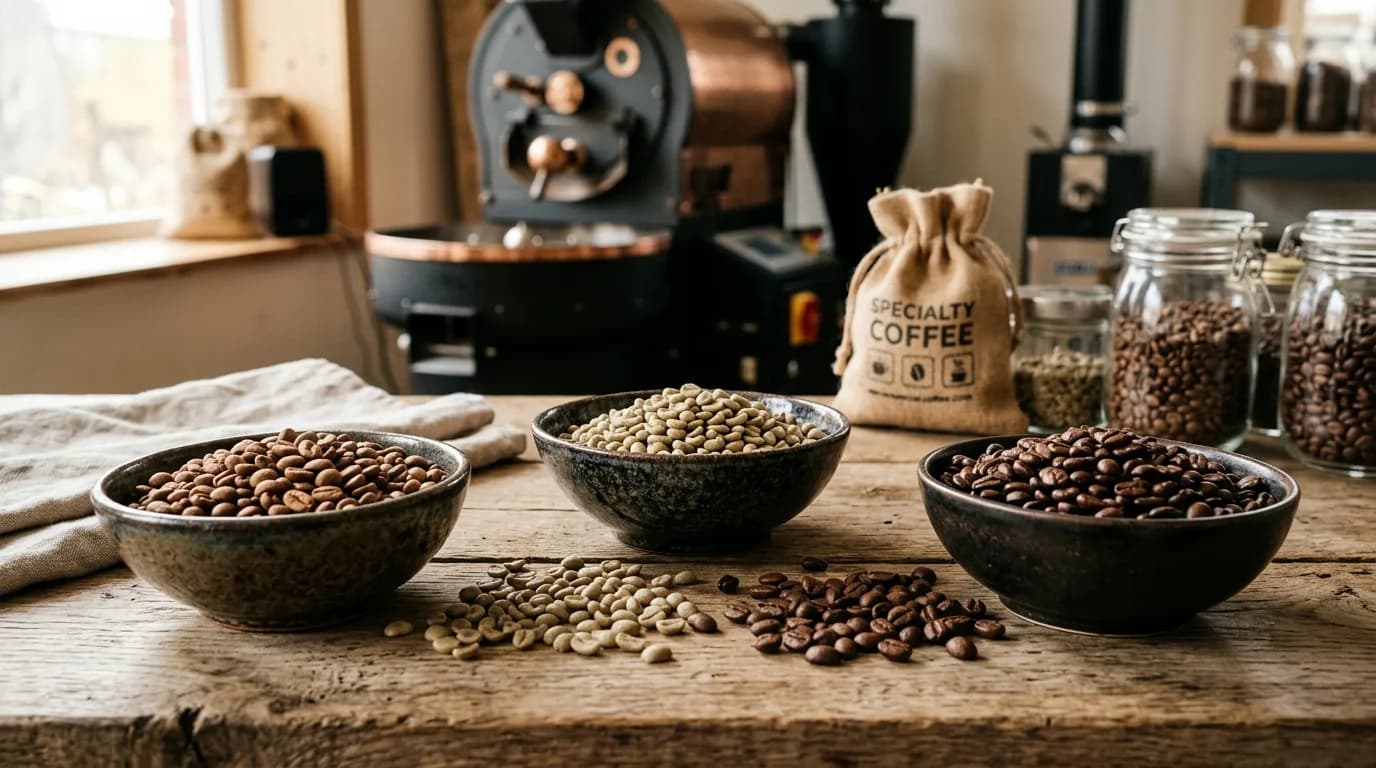
Green coffee is just unroasted coffee. That's it. The beans you grind and brew every morning start life as small, pale seeds, and roasting is what turns them into something drinkable. Understanding what happens in that transformation helps you make better choices about what you buy and brew.
What green coffee actually is
A coffee cherry is a small fruit. Inside each fruit are two seeds, and those seeds are what we call green coffee beans. After the fruit is harvested and processed to remove the outer layers, the seeds are dried and sorted. At this stage they look greenish or bluish-gray, dense, and almost grassy when you smell them.
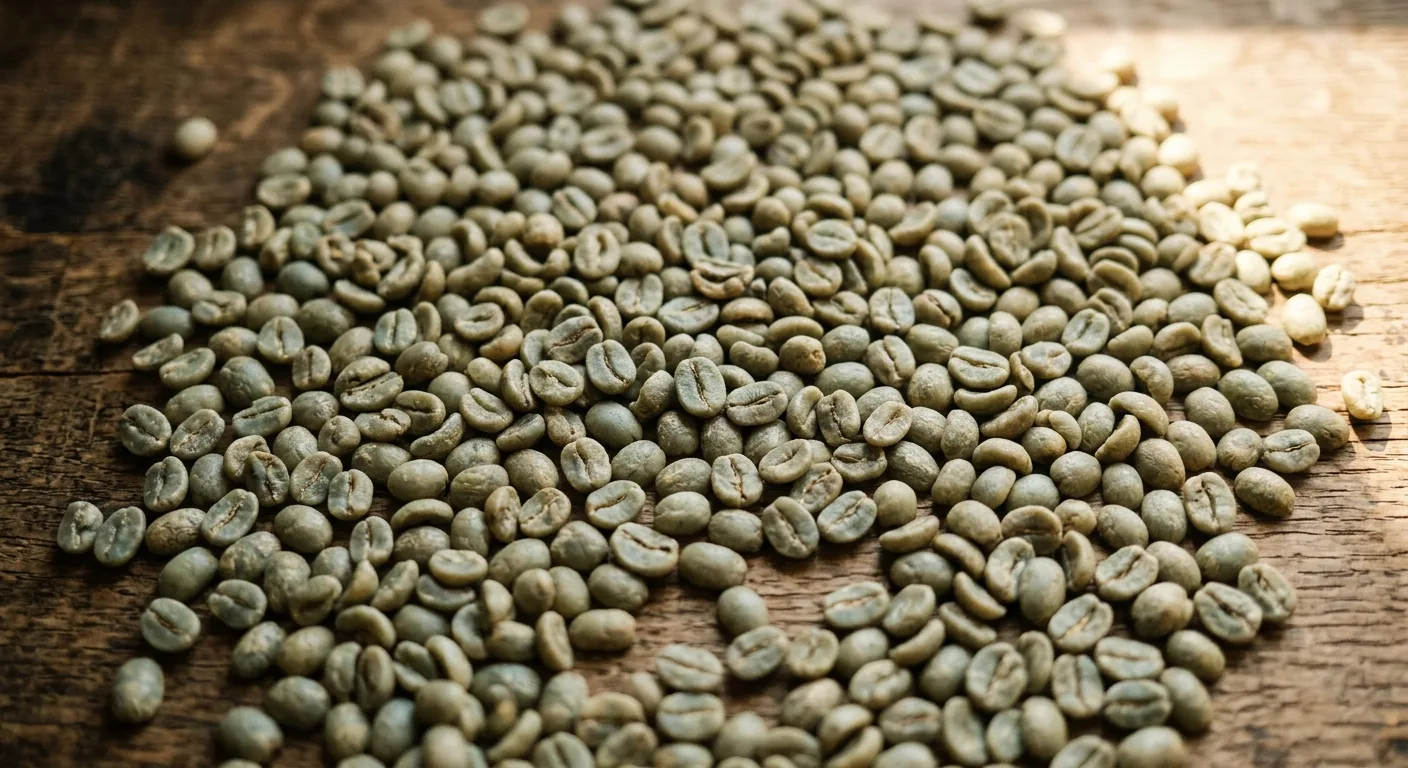
Green beans are stable. They hold their flavor potential for months, sometimes over a year, when stored properly. Roasted beans do not share that patience. Once roasted, the clock starts ticking.
The chemistry of roasting
Roasting is a controlled application of heat that causes hundreds of chemical reactions inside the bean. The two most important are the Maillard reaction and pyrolysis. The Maillard reaction produces the brown color and many of the complex flavor compounds. Pyrolysis breaks down larger molecules into simpler ones, releasing CO2 and developing roast-specific aromas.
The bean also loses water during roasting, typically dropping 15 to 20 percent of its weight. It expands in size. Sugars caramelize. Acids break down at different rates depending on temperature and time. Each of these shifts changes what ends up in your cup.
Tip: CO2 released after roasting is why freshly roasted coffee needs to rest before brewing. Brewing too soon can result in uneven extraction and a slightly hollow taste. Most roasters recommend waiting 2 to 5 days after the roast date before brewing.
How roast level changes the flavor
The longer and hotter the roast, the more the bean's original character gets replaced by roast character. A light roast preserves more of the origin's natural flavors. A dark roast pushes those out in favor of deeper, bittersweet, chocolatey notes. Neither is better. They are different tools for different cups.
| Roast level | Surface appearance | Flavor profile | Acidity |
|---|---|---|---|
| Light | Dry, pale brown | Fruity, floral, tea-like | Higher |
| Medium-light | Dry, medium brown | Balanced, bright, nutty | Medium-high |
| Medium-dark | Slight oil, darker brown | Rich, chocolatey, mild bittersweet | Medium-low |
| Dark | Oily, dark brown to black | Bold, smoky, roasty | Lower |
Roasting does not create flavor out of nothing. It reveals or destroys what the green bean already contains.
Origin still drives the base flavor
No roast level can invent flavor that was not already in the green bean. The soil, altitude, rainfall, and processing method at origin set the foundation. Roasting either expresses or masks that foundation. A well-sourced bean from Ethiopia will still carry its natural fruit notes even after a medium-dark roast. A poorly sourced bean will taste flat at any roast level.
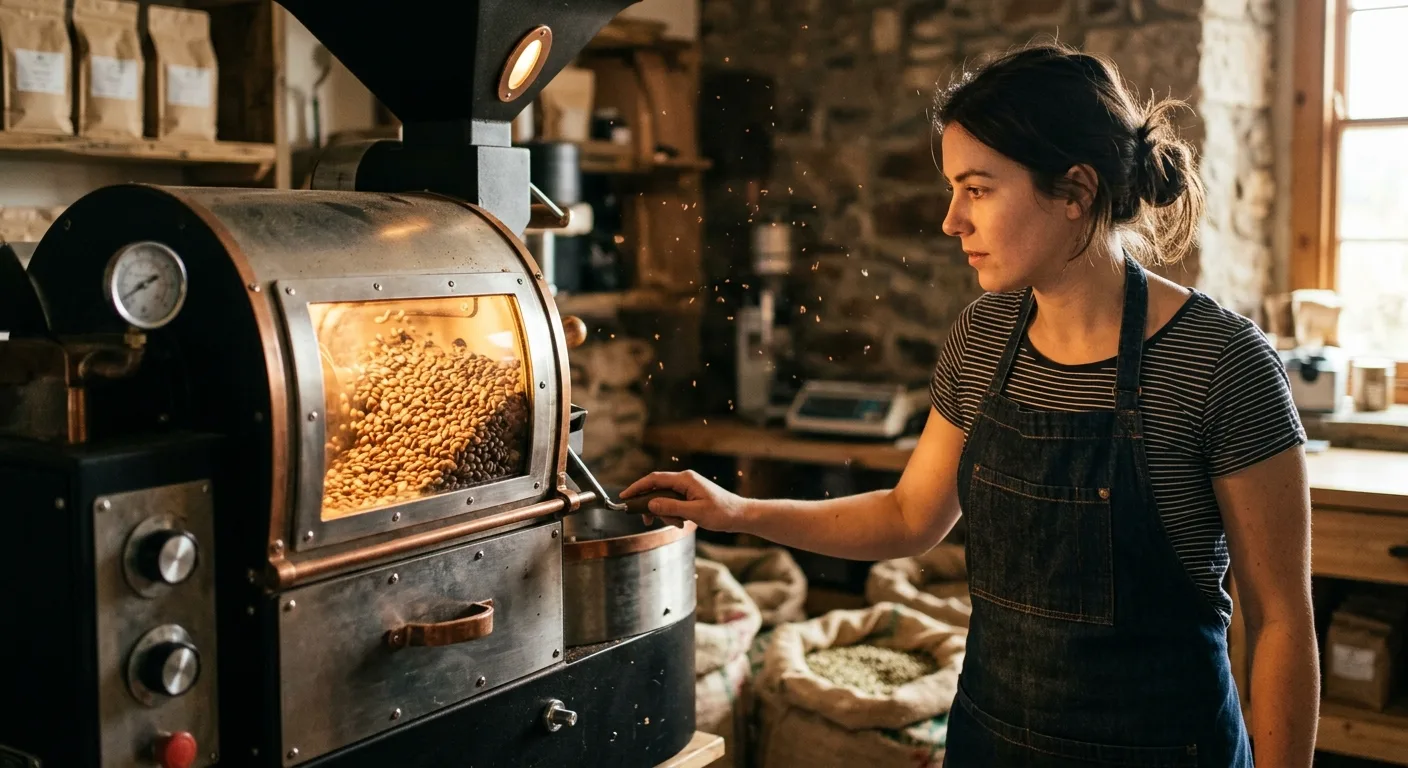
That is why specialty roasters spend a lot of time selecting green coffee, not just dialing in roast profiles. The sourcing decision happens long before the bean touches heat.
Note: Most commodity coffee is roasted dark specifically to mask defects in lower-quality green beans. Specialty roasters tend to roast lighter because the underlying bean can hold up to scrutiny.
Why green coffee is gaining attention
You may have seen green coffee marketed as a supplement. Some people brew it, though the resulting drink tastes nothing like roasted coffee. It is grassy, mild, and slightly astringent. The interest mostly comes from research into chlorogenic acids, which are present in green beans but break down during roasting. Whether those compounds offer any meaningful health benefit is still debated, and the claims often outrun the evidence.
For most coffee drinkers, green coffee is simply the raw material at the start of the supply chain. What matters is how it was grown, how it was processed, and how it was roasted.
What to look for when buying roasted coffee
Since you cannot see the green bean, you have to trust the roaster. A few things worth checking when you buy
- Roast date, not a best-by date. Look for coffee roasted within the last two to four weeks.
- Single origin or named blend components. Transparency about where the beans come from is a good sign.
- Processing method. Washed, natural, and honey-processed coffees each produce different flavor profiles from the same origin.
- Roast level that matches your brew method. Espresso often suits medium-dark or dark roasts. Pour-over and filter brewing often shine with lighter roasts.
Where to start with Diving Moose Coffee
At Diving Moose Coffee, every bean we roast starts life as carefully sourced green coffee. We roast in small batches in Georgia to keep quality tight and freshness predictable. If you want to taste how origin and roast level interact, our Georgia Roasted Single Origin Coffees are a good starting point. Each one shows you what a specific growing region actually tastes like.
If you prefer a blend or want to try a few different roast levels side by side, the 4-Count Most Popular Sample Pack gives you four of our most popular roasts in a single order. It is a practical way to see how much roast level shifts the character of your cup without committing to a full bag of each.
And a portion of every purchase we make goes to wildlife conservation through our WWF partnership. So when you are buying fresh, well-roasted coffee anyway, it makes sense to buy from somewhere that does something useful with a slice of that money.