
Coffee vs Espresso: What’s the Difference?
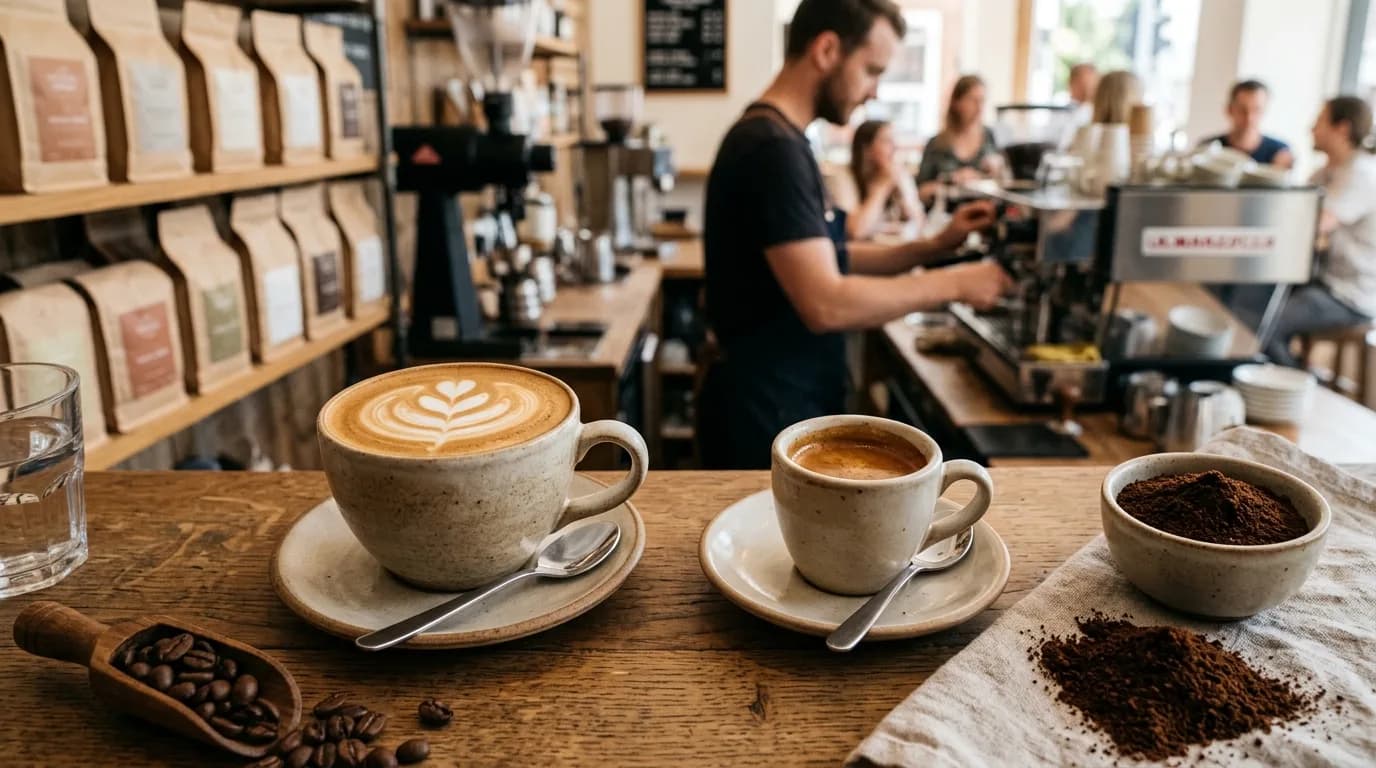
A lot of people use "coffee" and "espresso" interchangeably, but they're not the same thing. One is a brewing method. The other is a category. Knowing the difference helps you pick the right beans, the right grind, and the right brew for what you actually want in your cup.
What people mean by "coffee"
"Coffee" is a broad term. It covers every drink made from roasted coffee beans, brewed by any method. Drip coffee, French press, pour-over, cold brew. These are all coffee. What they share is hot (or cold) water passing through or steeping in ground coffee to extract flavor.
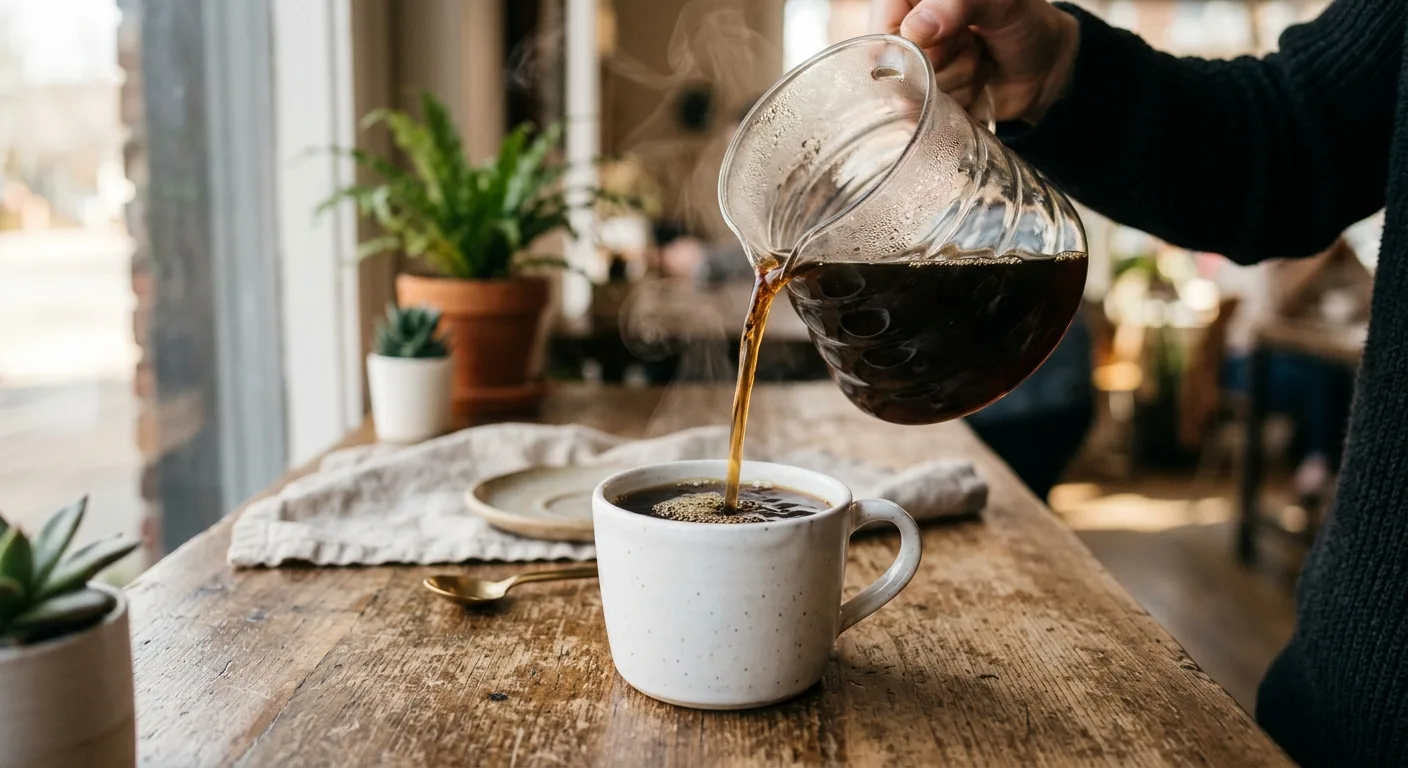
Most standard drip coffee uses a medium grind, a water temperature around 195 to 205°F, and a brew time of a few minutes. The result is a diluted, high-volume drink. A typical cup is 8 to 12 ounces of liquid with a relatively low concentration of dissolved coffee solids.
What espresso actually is
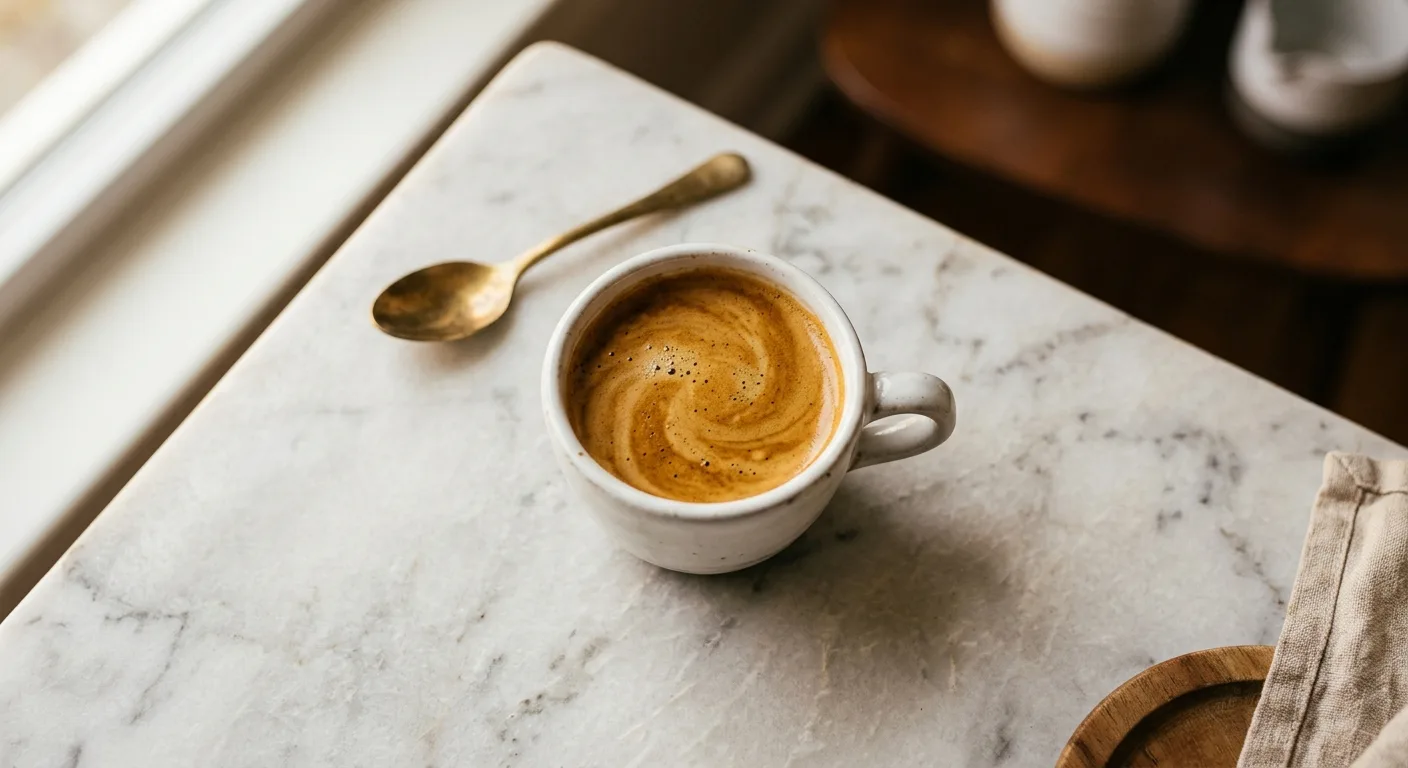
Espresso is a specific brewing method. Hot water is forced through very finely ground coffee at high pressure, typically around 9 bars. The process takes 25 to 30 seconds and produces a small, concentrated shot, usually 1 to 2 ounces.
Because the extraction is fast and the grind is very fine, the resulting liquid is thick, intense, and coated in a layer of reddish-brown crema. That crema is an emulsion of coffee oils and carbon dioxide. It dissolves quickly, so a shot is best consumed right away.
Grind matters more for espresso than almost any other method. The grind should be finer than table salt but coarser than flour. Too coarse and the water rushes through. Too fine and the shot chokes. Small adjustments make a big difference.
Is espresso just dark roast coffee?
No, but this is a very common assumption. Many espresso blends use dark roasts because the lower acidity and heavier body hold up well under pressure. But medium and medium-dark roasts can pull excellent espresso shots too, often with more complex, fruity flavor.
The word "espresso" on a bag tells you the roaster thinks those beans will perform well under pressure extraction. It doesn't mean the beans came from a different plant or a different country. It's a roasting and blending decision, not a botanical one.
Any coffee bean can be used for espresso. The roast, grind, and pressure determine what ends up in your cup.
How they compare side by side
| Factor | Drip Coffee | Espresso |
|---|---|---|
| Brew method | Gravity or immersion | Pressurized water (9 bar) |
| Grind size | Medium | Very fine |
| Brew time | 3 to 5 minutes | 25 to 30 seconds |
| Serving size | 8 to 12 oz | 1 to 2 oz |
| Caffeine per oz | Lower | Higher |
| Caffeine per serving | Higher (larger volume) | Lower (small shot) |
| Body | Light to medium | Thick and concentrated |
Caffeine: which has more?
Espresso has more caffeine per ounce than drip coffee. But a standard shot of espresso is only about 1.5 ounces, so the total caffeine in a single shot is actually less than a full mug of drip coffee. A double shot starts to close that gap.
If you're watching your caffeine intake, volume matters as much as concentration. A large drip coffee can deliver significantly more total caffeine than a single espresso.
Robusta beans contain more caffeine than Arabica beans. Most specialty coffee, including everything at Diving Moose Coffee, uses 100% Arabica, which has a cleaner flavor profile and lower bitterness.
Which beans should you use for each?
For drip coffee or pour-over, medium and medium-light roasts tend to shine. They have more brightness and nuance, and the longer brew time lets those flavors come through. The Toucan, our Costa Rica Tarrazú medium-light roast, is a good example. It's clean, slightly sweet, and well suited to a pour-over or drip setup.
For espresso, you want something that holds up under pressure. The Black Leopard is our specialty espresso blend, a 4-bean dark roast designed specifically for pulled shots. It has a full body and stands up well in milk-based drinks like lattes and cappuccinos.
If you want something in between, The Diving Moose Signature Medium-Dark Roast Blend works well in both a drip setup and a home espresso machine. It's a good starting point if you're still figuring out what you like.
Where to start if you're not sure
If you're new to specialty coffee and want to try a few different roast styles before committing, our 4-Count Most Popular Sample Pack is a practical option. You get four 4oz bags of our top sellers, which is enough to run a few brews and get a feel for how roast level affects your cup.
The bottom line is this: espresso is not a stronger or fancier version of coffee. It's a different way to extract flavor from the same beans. Once you understand that, choosing what to buy and how to brew it gets a lot easier.