
Are Espresso Beans and Coffee Beans Different?
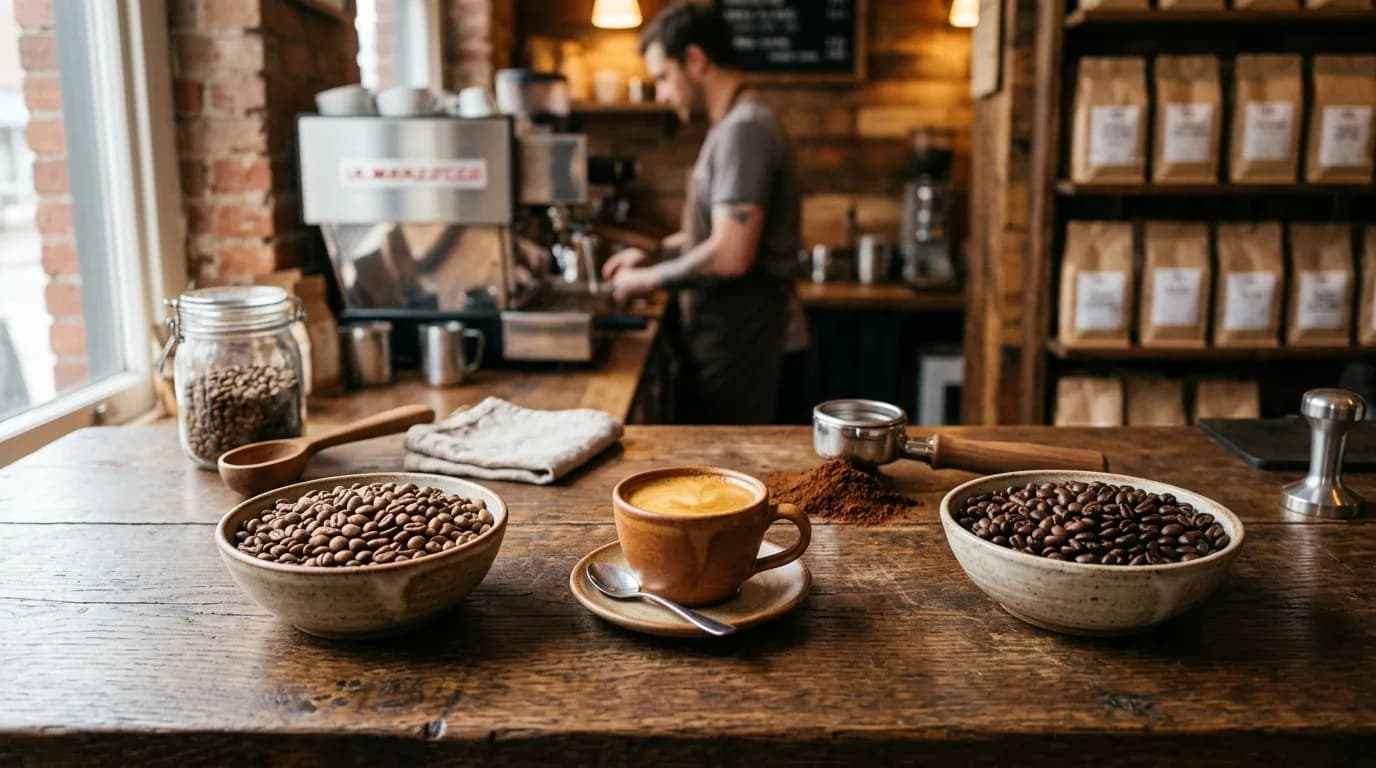
Walk into any coffee shop and you will see bags labeled "espresso beans" sitting right next to bags of regular coffee. It looks like they must be different products. But they are not, at least not in the way most people think.
The short answer
Espresso beans and coffee beans are the same thing. The difference is in how the beans are roasted and how the coffee is brewed. When a roaster labels a bag "espresso," they are telling you how they think the beans will taste best, not that the beans came from a different plant or farm.
What makes a roast an "espresso roast"
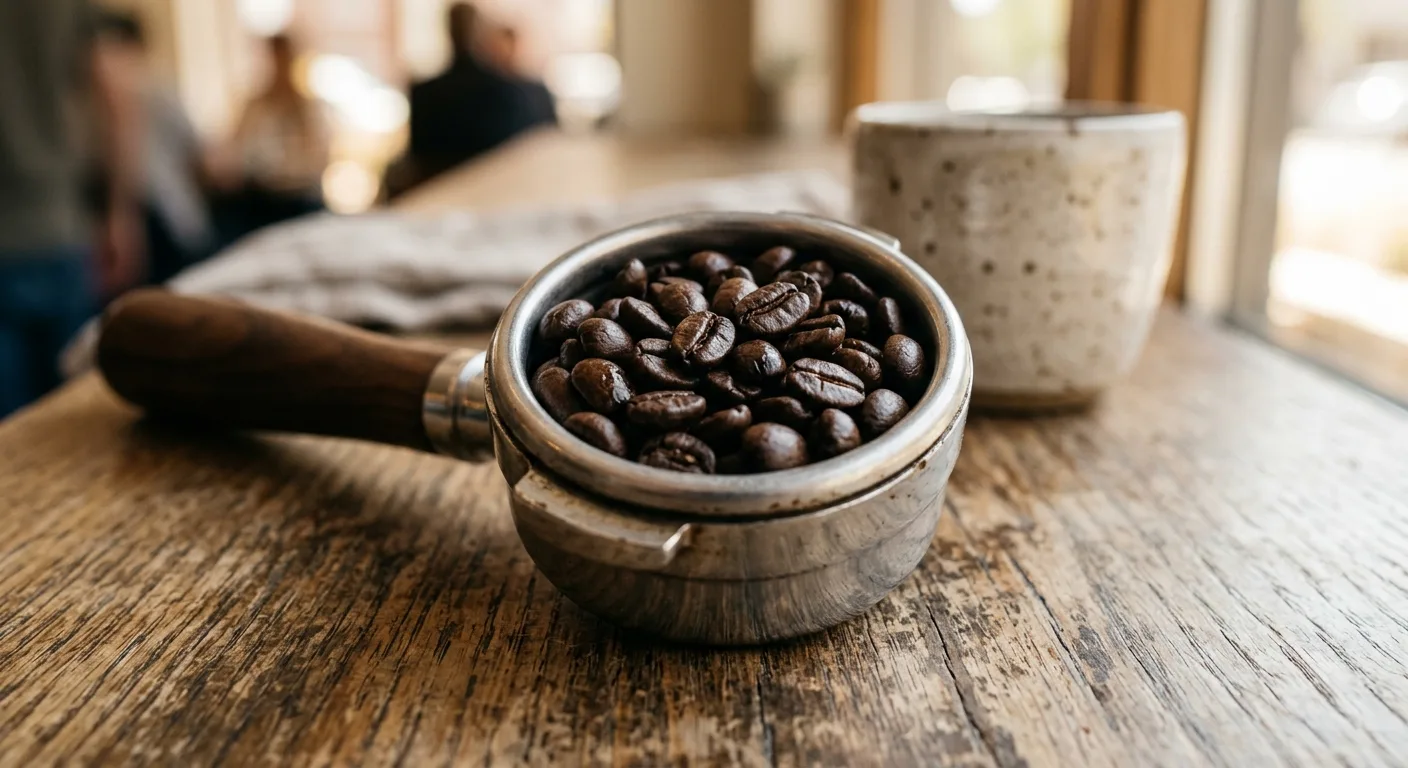
Roasters who build an espresso-specific profile are usually aiming for a few things. They want low acidity, a full body, and flavors that hold up when forced through a small amount of water at high pressure. Dark roasts accomplish this by breaking down some of the brighter, fruitier acids in the bean during the longer roast time.
That is why espresso roasts often taste like chocolate, caramel, or toasted nuts rather than bright citrus or stone fruit. The roast is doing the work of creating a flavor that reads well through milk or on its own as a short, concentrated shot.
Tip: If you want to try espresso from a single-origin bean, look for something with a medium-dark or dark roast profile. The structure of those beans handles the pressure of espresso brewing without turning bitter.
The role of grind size
Grind size is where the real action is. Espresso is brewed by pushing hot water through tightly packed, finely ground coffee at around nine bars of pressure. That fine grind creates resistance, which slows the water down and extracts a concentrated shot in roughly 25 to 30 seconds.
If you grind espresso-labeled beans coarsely and brew them in a French press, you get French press coffee. If you grind regular house blend beans to an espresso-fine setting and pull a shot, you get espresso. The brewing method defines the drink far more than what the bag says.
The brewing method defines the drink far more than what the bag says.
Can you use any coffee for espresso?
Yes, with some caveats. Very light roasts are harder to work with in an espresso machine. They are denser and more acidic, so they require a finer grind and a longer extraction time to pull sweetness out without sourness. It takes some dialing in, but it is absolutely possible to pull a light roast espresso shot that tastes complex and sweet.
Medium and medium-dark roasts are more forgiving. They extract evenly, produce a balanced shot, and pair well with milk. Most espresso blends sit somewhere in this range.
| Roast Level | Flavor Profile | Espresso Suitability |
|---|---|---|
| Light | Bright, fruity, high acidity | Possible but requires precision |
| Medium-Light | Balanced, mild acidity, floral notes | Good with careful dialing |
| Medium-Dark | Chocolate, caramel, low acidity | Very good, forgiving extraction |
| Dark | Bold, smoky, full body | Classic espresso choice |
Arabica vs. Robusta in espresso
One real difference you will find in espresso is the use of Robusta beans. Some Italian-style espresso blends include a percentage of Robusta alongside Arabica. Robusta has more caffeine, a heavier body, and produces more crema (that golden foam on top of a shot). It also has an earthier, more bitter taste.
High-quality specialty espresso blends tend to use 100% Arabica beans. The flavor is cleaner, more nuanced, and more consistent. Whether you want that crema-heavy Robusta blend or a refined Arabica shot depends on what you are looking for.
Note: All Diving Moose Coffee beans are 100% Arabica specialty grade. You will not find Robusta in any of our roasts.
What to look for when buying for espresso
When shopping for beans to use in an espresso machine, pay attention to roast level, origin, and processing method rather than just the word "espresso" on the bag. A medium-dark or dark roast from a reputable roaster will almost always pull a great shot.
- Roast level: Medium-dark to dark works best for most home espresso setups.
- Freshness: Beans roasted within the last two to four weeks extract more cleanly.
- Grind fresh: Pre-ground espresso goes stale quickly. Grind right before brewing if you can.
- Blend vs. single origin: Blends are built for consistency. Single origins give you something more distinct.
What we roast at Diving Moose Coffee
If you want a dedicated espresso dark roast, The Black Leopard is our four-bean dark roast blend built specifically for espresso drinks. It pulls a rich, full-bodied shot and holds up well in lattes and cappuccinos.
For something with more brightness, The Whale Shark is an organic medium-dark blend that works well as both drip coffee and espresso. And if you want decaf espresso without sacrificing body, The Koala is our decaf espresso dark roast blend. All of our coffees are 100% Arabica specialty grade, roasted in small batches in Georgia. You can browse the full 100% Arabica Specialty Grade Coffee collection to find the roast level that fits your setup.