
Sourcing Coffee Beans Process and Trends
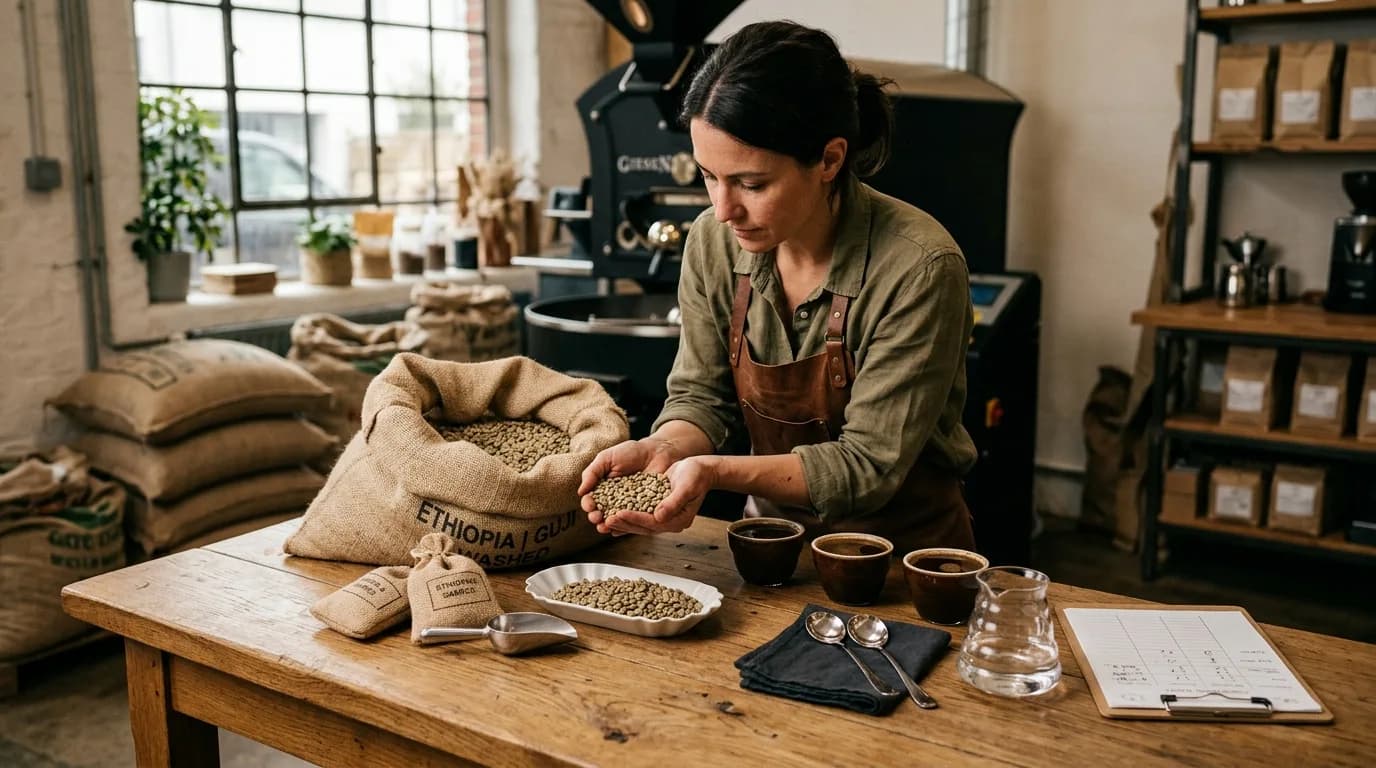
Most of what makes a cup of coffee good or bad is decided long before it reaches a roaster. The sourcing process, from the farm to the green bean buyer, shapes everything about the flavor in your cup. Here is what that process looks like and where the industry is heading.
Where coffee actually comes from
Coffee grows in a band around the equator called the Bean Belt, covering parts of Africa, Latin America, and the Asia-Pacific region. The altitude, rainfall, soil, and local microclimate of a specific farm shape the raw flavor potential of the bean before anyone roasts it.
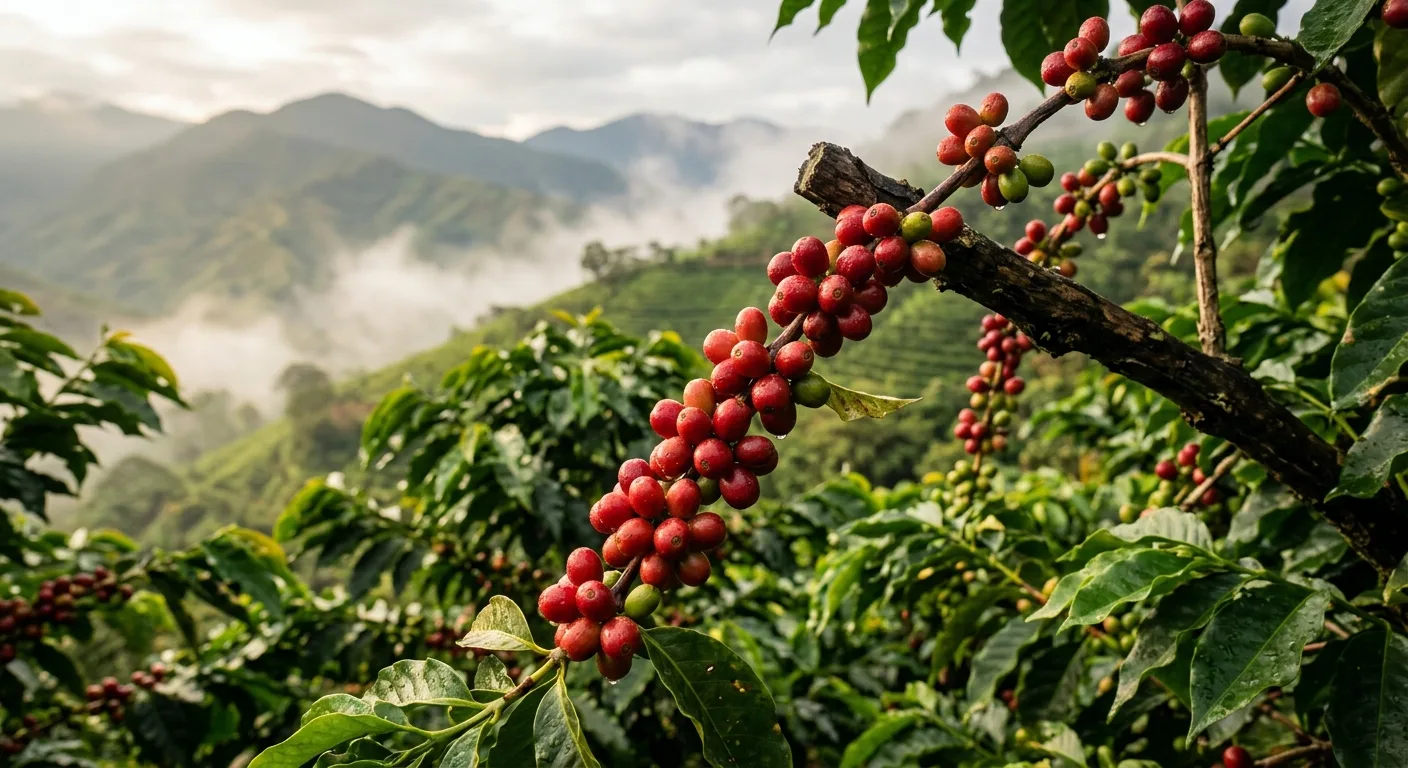
Most specialty coffee is Arabica, which tends to grow at higher altitudes and produces more complex flavors. Robusta, the other major species, grows at lower elevations, has more caffeine, and carries a harsher, more bitter profile. Specialty roasters almost always focus on Arabica.
From cherry to green bean
Coffee starts as a fruit called a cherry. Farmers pick the cherries, then process them to remove the fruit and reveal the seed inside, which is the green coffee bean. There are a few main processing methods, and each one changes the flavor of the final cup.
| Processing method | How it works | Flavor effect |
|---|---|---|
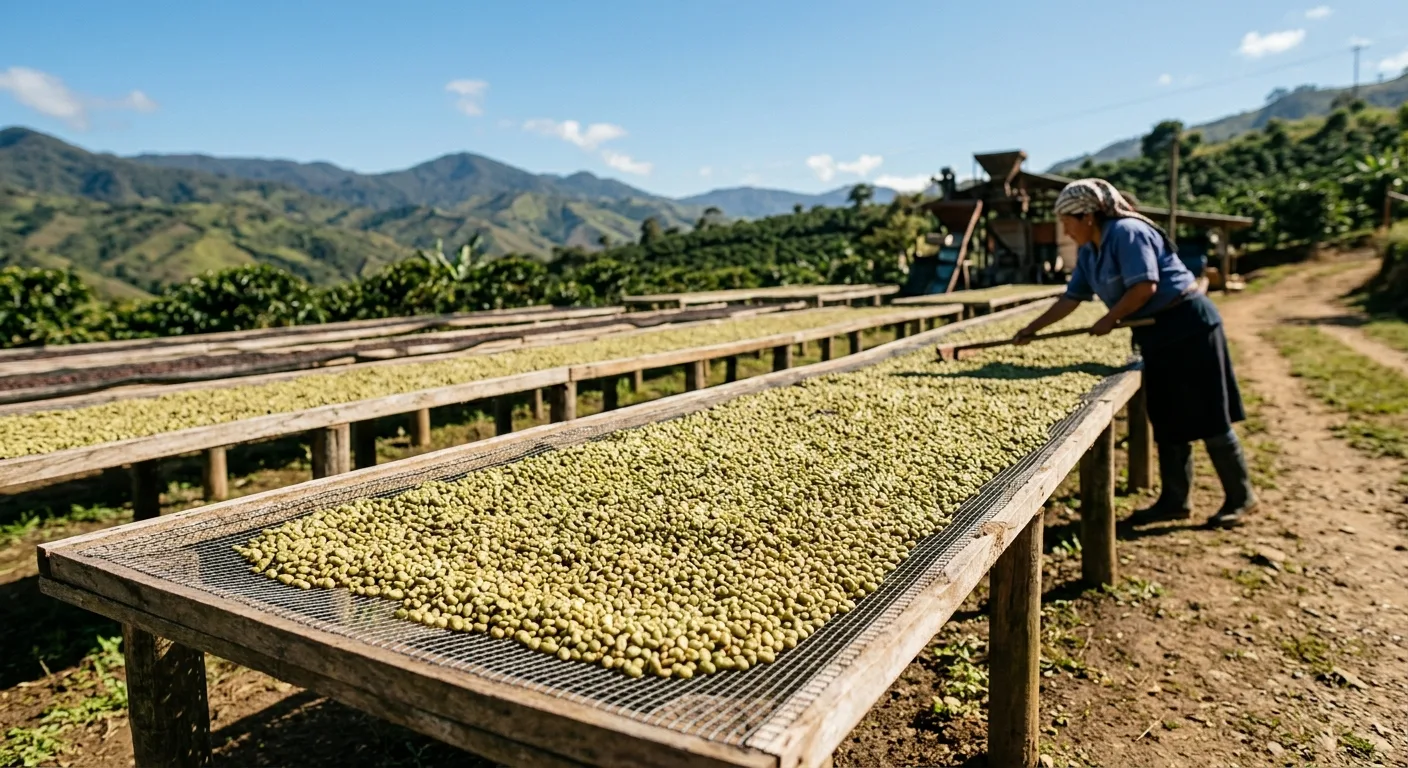
| Washed (wet) | Fruit is removed before drying | Cleaner, brighter, more acidic |
| Natural (dry) | Cherry dries whole around the bean | Fruity, heavier body, more sweetness |
| Honey | Some fruit left on during drying | Middle ground, balanced sweetness |
| Anaerobic | Fermented in sealed tanks | Intense, sometimes funky or wine-like |
After processing, the green beans are sorted, graded, bagged, and exported. Quality control at this stage is critical. Defective beans get removed because even a few bad ones can throw off an entire roast.
Tip: When a coffee label lists the processing method, like "washed" or "natural," it is telling you something real about how the cup will taste. Washed coffees tend to be cleaner and more tea-like. Naturals are often rounder and fruitier.
How roasters find and evaluate beans
Specialty roasters source green beans through importers, brokers, or direct relationships with farms. Before committing to a lot, a roaster will cup the coffee, which means brewing small samples in a standardized way and evaluating aroma, flavor, acidity, body, and aftertaste.
The Specialty Coffee Association uses a 100-point scale to score green coffee. A score of 80 or above qualifies as specialty grade. Most of what ends up in premium bags sits between 82 and 90.
The sourcing decision is the most important quality decision a roaster makes. No amount of skill at the roaster can fix a bad green bean.
Roasters who build long-term relationships with specific farms often get access to better lots, more consistency year over year, and the kind of transparency that lets them make accurate claims on their packaging.
Direct trade vs. fair trade vs. organic
These three terms get used interchangeably, but they mean different things.
- Fair trade is a certification with set minimum prices and labor standards. It ensures farmers get a floor price even when market rates drop.
- Organic certification means the coffee was grown without synthetic pesticides or fertilizers. It says nothing about how farmers are paid.
- Direct trade is not a certification but a practice. A roaster works directly with a farm or cooperative, often paying above fair trade rates in exchange for quality and access.
At Diving Moose Coffee, several coffees carry both organic and fair trade certification. The Organic and Fair Trade Certified collection is a good place to start if those sourcing standards matter to you.
Where sourcing trends are heading
The coffee industry is under real pressure from climate change. Rising temperatures and shifting rainfall patterns are shrinking the areas where high-quality Arabica can grow reliably. That is pushing farmers and researchers to experiment with new varieties, higher altitudes, and more resilient farming methods.
A few trends worth watching right now:
- Traceability tools are getting more detailed. Some roasters now publish GPS coordinates for the farms they source from, or use QR codes that link to harvest data.
- Regenerative agriculture is moving from a buzzword toward a real practice. It focuses on soil health, biodiversity, and water retention alongside crop yield.
- Climate-resilient varieties like Timor-Hybrid, Castillo, and various Ethiopian landraces are getting more attention as reliable Arabica becomes harder to grow in some regions.
- Women-led cooperatives are growing in number and reputation across East Africa and Central America, producing some of the highest-scoring lots in recent years.
Note: When a roaster lists a specific farm, region, and harvest year on a bag, that level of detail is a reliable sign that the sourcing relationship is real and the coffee was evaluated properly before purchase.
What this means for what you buy
Understanding sourcing helps you read a coffee bag more accurately. A label that names a country and a region tells you more than one that just says "premium blend." A bag that lists a processing method and a farm name tells you even more.
Single-origin coffees tend to reflect their sourcing most clearly because there is nothing blended in to smooth over the edges. Our Georgia Roasted Single Origin collection pulls from some of the most interesting growing regions in the world, including Ethiopia, Colombia, Papua New Guinea, and Indonesia.
If you want a place to start, The Nyala, Ethiopia Sidamo Organic is a single-origin medium-dark roast grown in the Sidamo region of southern Ethiopia, one of the most storied coffee-growing areas on the planet. It carries organic certification and comes from a region that has been producing specialty-grade coffee for generations.
Good sourcing is not a marketing claim. It is the difference between a cup that is flat and forgettable and one that actually tastes like where it came from. If you want to explore coffees with clear sourcing stories, the single-origin collection is a straightforward next step.