
5 Coffee Brewing Methods Compared: Find Your Perfect Cup
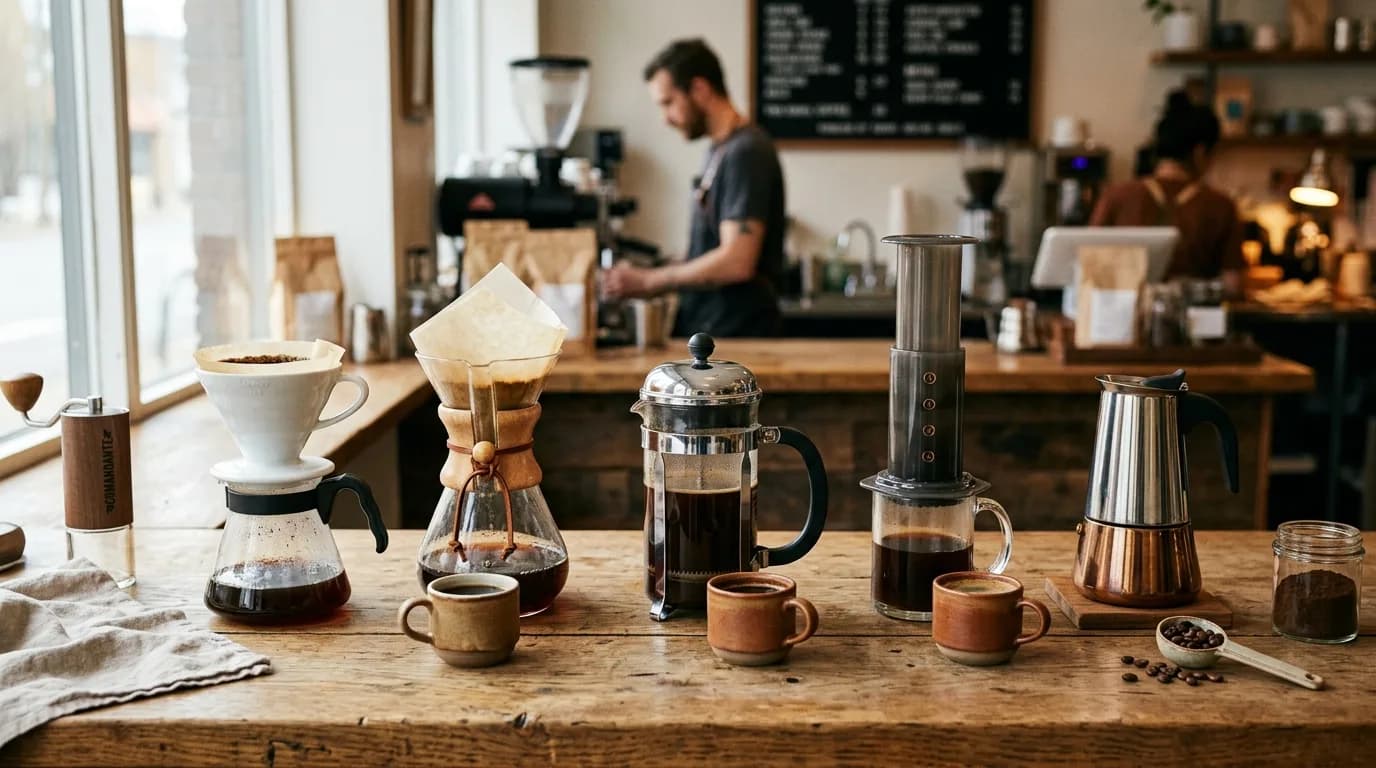
Not every brewing method suits every coffee drinker. The right one depends on the cup you want, the time you have, and how much fuss you're willing to deal with. Here's a clear look at five common methods so you can pick the one that actually fits your life.
Why brewing method matters
The same coffee bean brewed two different ways can taste like two different coffees. Pressure, steep time, water temperature, and filtration all change what ends up in your cup. Changing your method is one of the fastest ways to get more out of beans you already like.
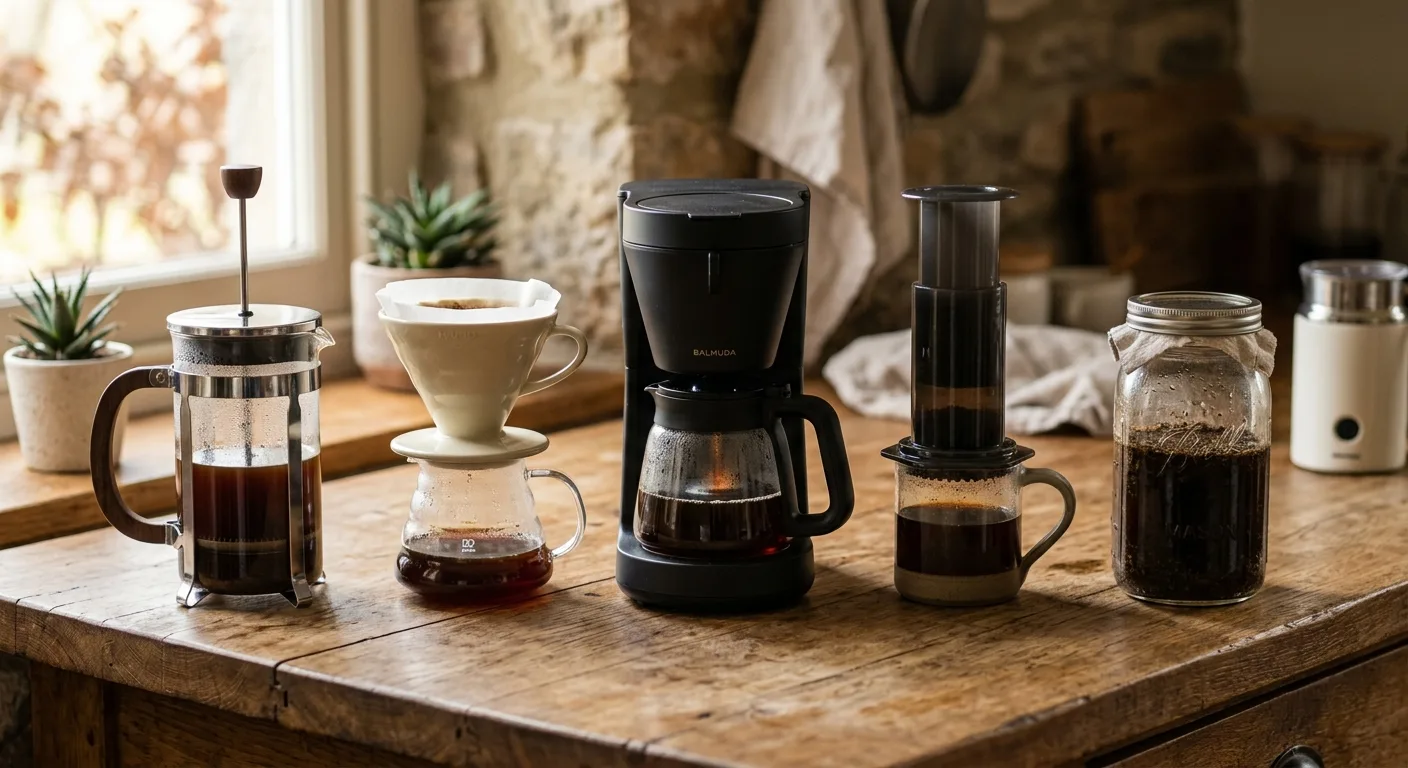
French press
Best for full-bodied, rich coffee with a heavier mouthfeel.
A French press steeps coarsely ground coffee directly in hot water for around four minutes, then a metal mesh plunger separates the grounds. Because there's no paper filter, oils from the bean stay in the cup. That gives French press coffee a thick, round texture you won't get from drip.
The tradeoff is a bit of sediment at the bottom of the mug and less clarity in the flavor. It also requires a consistent, coarse grind. Grind too fine and you'll get a muddy, bitter cup.
Water temperature matters here. Aim for around 200°F (just off the boil) and let it steep for exactly four minutes before pressing slowly.
Pour-over
Best for clean, bright cups that highlight subtle flavors.
Pour-over uses a paper filter and a slow, controlled pour of hot water over ground coffee. The paper traps oils and fines, so the cup is clear and light. This method rewards patience. Single-origin coffees with fruit or floral notes tend to shine here because nothing gets masked.
The downside is time and attention. You're pouring in slow circles for two to three minutes, and small changes in pour speed or grind size shift the flavor noticeably. It's not the right choice for a rushed morning.
Drip coffee maker
Best for consistent, hands-off brewing with minimal effort.
A drip machine automates the pour-over process. You add water and grounds, press a button, and walk away. It's the most convenient method on this list, and a good drip machine can produce excellent coffee. The key is using fresh beans, the right grind, and clean equipment.
Drip machines that heat water to at least 195°F produce noticeably better coffee. Many cheap machines fall short of this, which leads to weak, under-extracted cups.
AeroPress
Best for experimentation, travel, and quick strong coffee.
The AeroPress is a small plastic brewer that uses air pressure to push water through coffee grounds in about 60 to 90 seconds. It's compact, nearly indestructible, and very forgiving. You can make something close to espresso-strength concentrate, or dilute it for a regular cup.
It's also the most flexible method here. Grind size, steep time, water temperature, and how hard you press all affect the result, so there's a lot of room to experiment. Many coffee fans swear by it for travel because the whole kit fits in a backpack.
The AeroPress is nearly indestructible, brews in 90 seconds, and fits in a backpack. It's the most flexible brewer on this list.
Cold brew
Best for smooth, low-acid coffee made in large batches.
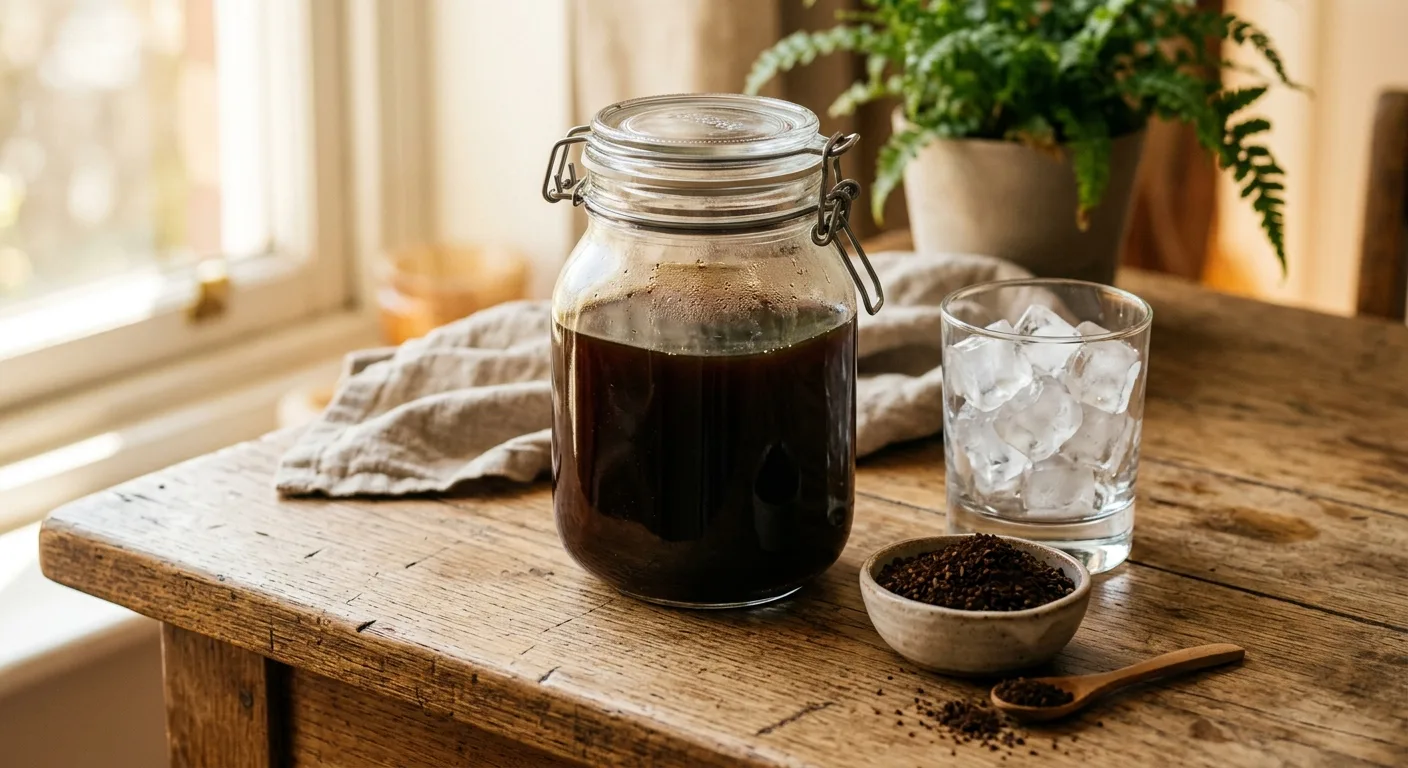
Cold brew steeps coarsely ground coffee in cold or room-temperature water for 12 to 24 hours. The slow, cold extraction pulls out sweetness and body while leaving behind a lot of the compounds that make hot coffee taste sharp or bitter. The result is a smooth, naturally sweet concentrate you can keep in the fridge for up to two weeks.
The only real downside is planning ahead. You need to start your cold brew the night before, or earlier. But once you have a batch ready, pouring a cup takes seconds.
Side by side
| Method | Brew time | Effort | Body | Best for |
|---|---|---|---|---|
| French press | 4 min | Low | Full | Rich, bold cups |
| Pour-over | 3 min | High | Light | Nuanced single origins |
| Drip machine | 5 to 8 min | Very low | Medium | Daily convenience |
| AeroPress | 1 to 2 min | Medium | Variable | Travel and experimenting |
| Cold brew | 12 to 24 hrs | Low (passive) | Full | Smooth, low-acid batches |
Matching the method to the bean
Brewing method and bean origin work together. A bright, fruity Ethiopian coffee like The Nyala will taste best through a pour-over or drip brewer, where the paper filter keeps the cup clean and lets those fruit notes come through. A heavier, earthier bean like the Jimothy Roast from Indonesia pairs well with a French press or cold brew, where the fuller body has room to show up.
If you want to try a few different origins and figure out what you like, the 4-Count Most Popular Sample Pack is a practical way to do it without committing to a full bag of each.
Start with the bean, then pick the method
The best brewing method is the one you'll actually use with good beans. Technique only goes so far if the coffee isn't fresh and well-sourced. At Diving Moose Coffee, all our beans are specialty grade, roasted in small batches in Georgia, and a portion of every purchase goes to wildlife conservation through our WWF partnership. Browse our single-origin collection or most popular roasts to find something worth brewing well.