
Burr Grinder vs. Blade Grinder: Why Your Grind Quality Determines Your Coffee's Flavor
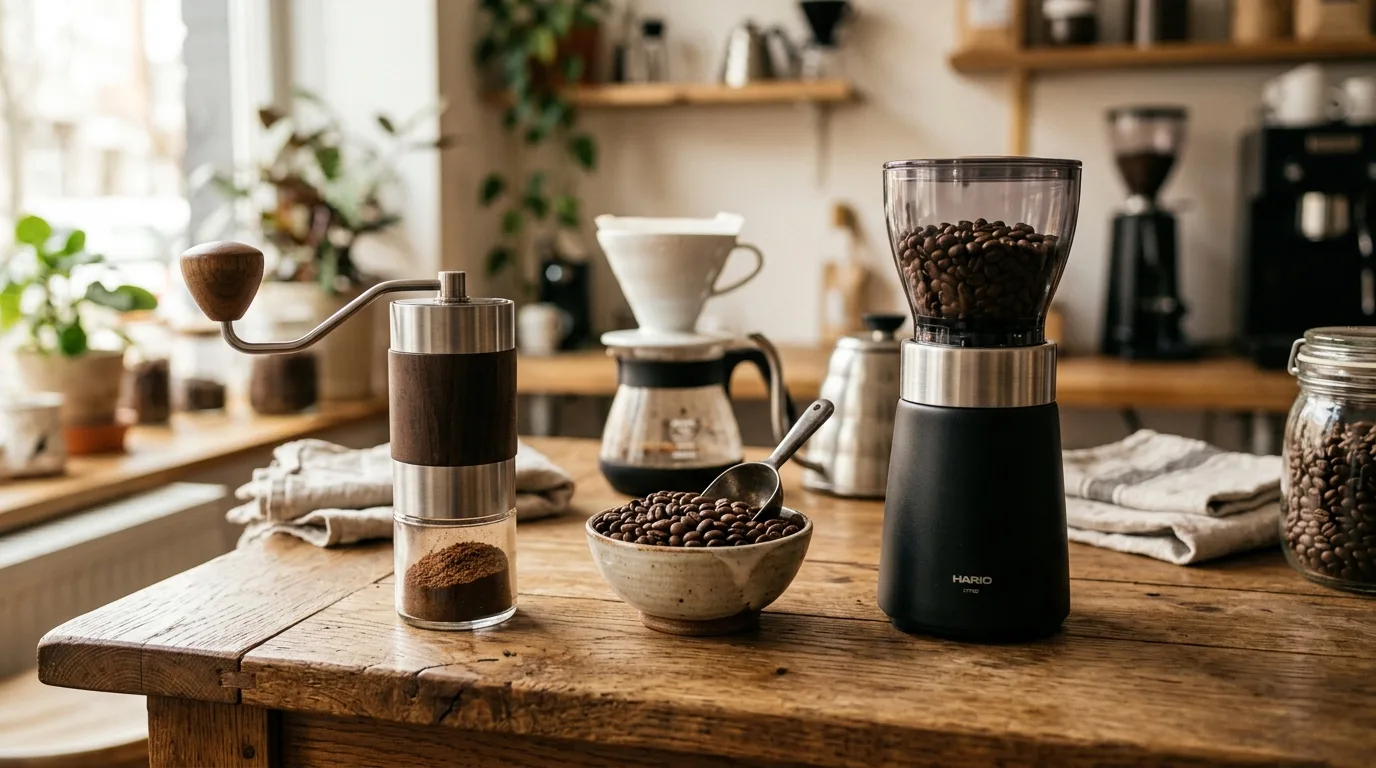
The grinder you use matters more than most people expect. You can start with excellent beans, brew with care, and still end up with a flat or bitter cup if your grind is uneven. Here is what separates a burr grinder from a blade grinder, and why it changes what ends up in your mug.
What a blade grinder actually does
A blade grinder works like a tiny propeller. It spins a metal blade at high speed and smashes into your beans until they break apart. The result is a mix of fine powder, medium chunks, and larger broken pieces all in the same batch.
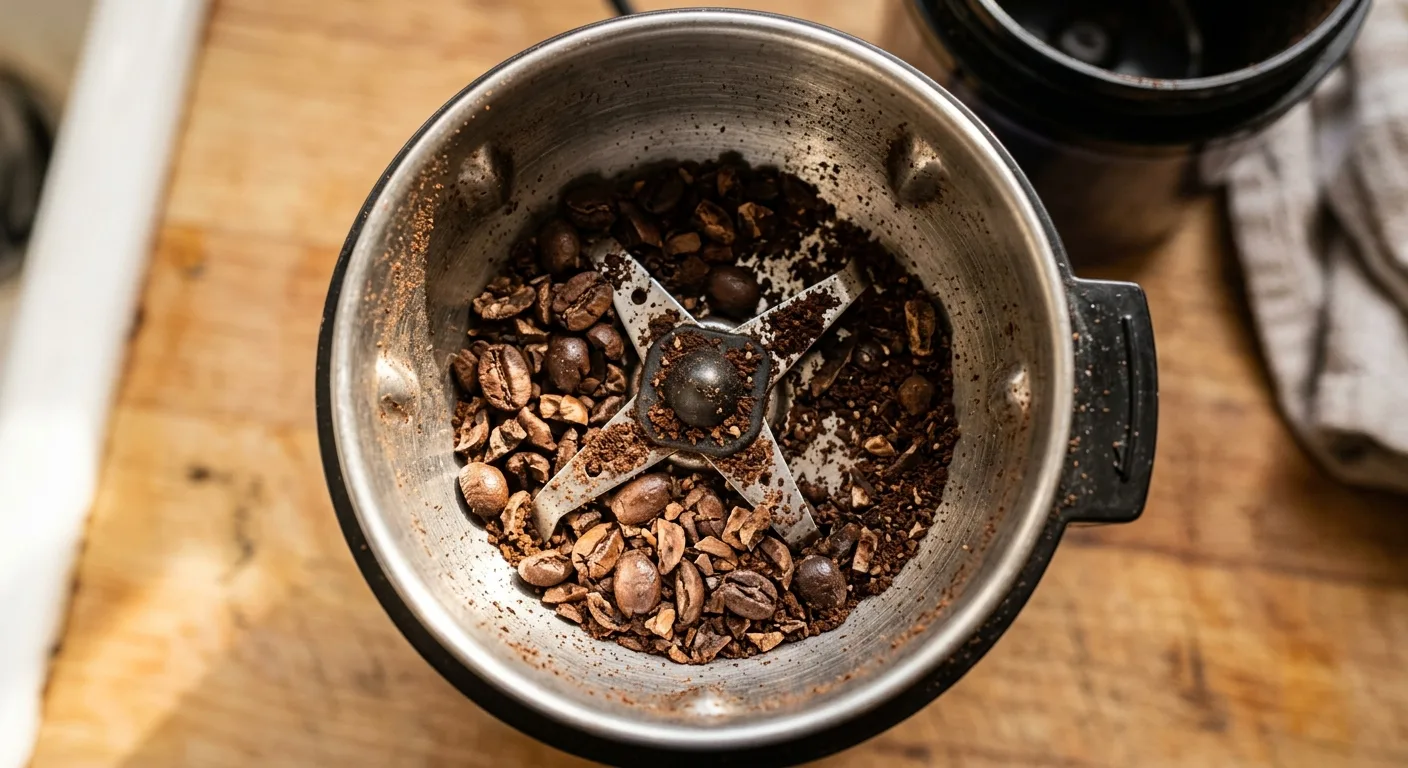
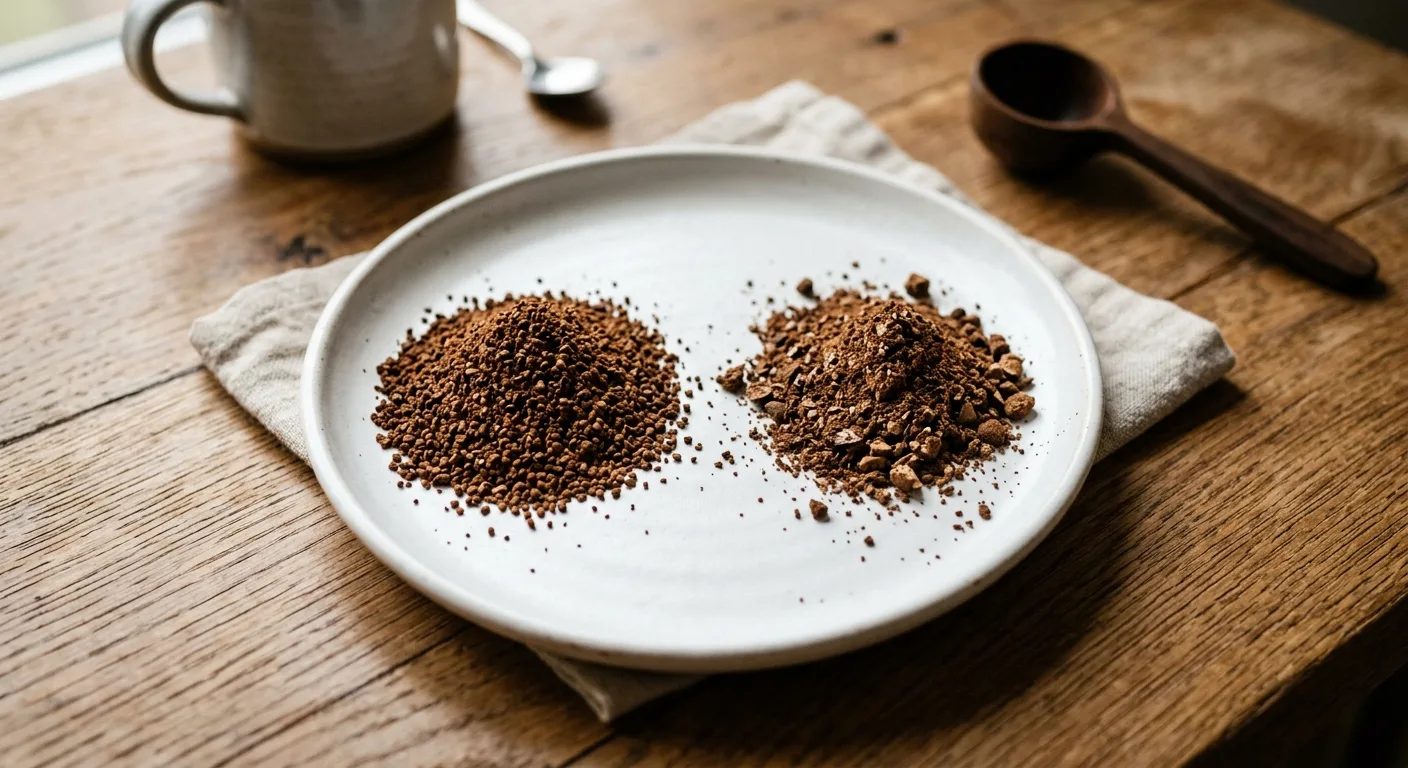
That inconsistency is the problem. When you brew, water extracts flavor from every particle at a different rate. Fine particles over-extract quickly and taste bitter. Coarse chunks under-extract and taste weak or sour. Both end up in the same cup.
Grinding longer with a blade grinder does not fix the problem. It just makes more of the grounds finer while leaving others coarse, and it generates heat that can damage flavor before the water ever touches the beans.
How a burr grinder works differently
A burr grinder has two abrasive surfaces, called burrs, set a specific distance apart. Beans feed between them and get crushed to a consistent size. Every particle that comes out is roughly the same, because the gap between the burrs determines the grind size, not how long you run the machine.
You can adjust that gap. Move the burrs closer together and you get a finer grind for espresso. Move them apart and you get coarser grounds for a French press or cold brew. That level of control is simply not possible with a blade.
Consistent grind size means consistent extraction, and consistent extraction is what separates a good cup from a great one.
Why grind size matters for extraction
Extraction is what happens when hot water pulls flavor compounds out of ground coffee. The size and uniformity of your grounds controls how fast that happens. A coarser grind slows extraction down. A finer grind speeds it up.
When grounds are uneven, extraction becomes unpredictable. Some particles finish early. Others never fully extract. The flavors that come out first tend to be sour and sharp. The flavors that come out last tend to be bitter and dry. A uniform grind keeps everything in balance so the sweet, complex notes have a chance to come through.
Grind size by brew method
Different brew methods need different grind sizes. A burr grinder lets you dial in the right one each time. Here is a general guide.
| Brew method | Grind size | Texture reference |
|---|---|---|
| Espresso | Extra fine | Finer than table salt |
| Moka pot | Fine | About like table salt |
| Pour over | Medium fine | Slightly coarser than sand |
| Drip machine | Medium | Like coarse sand |
| French press | Coarse | Rough, chunky crumbs |
| Cold brew | Extra coarse | Almost like rough gravel |
Flat vs. conical burrs
If you are shopping for a burr grinder, you will run into two types. Flat burr grinders use two parallel ring-shaped burrs facing each other. Conical burr grinders use a cone-shaped burr that sits inside a ring burr. Both produce far more consistent results than any blade grinder.
Conical burr grinders are the most common in home grinders. They run quieter, produce less heat, and tend to cost less than flat burr models. Flat burr grinders are popular in commercial settings and with espresso enthusiasts who want extremely precise particle distribution. For most home brewers, a good conical burr grinder is the right starting point.
When buying a burr grinder, look for one with at least 10 grind settings. More settings give you better control across different brew methods, especially if you switch between espresso and drip during the week.
Does the grinder matter if the beans are good?
Yes. Good beans ground poorly will still produce a mediocre cup. Specialty coffee is grown, harvested, processed, and roasted with real care. A blade grinder wastes a lot of that work before the water even touches the grounds.
At Diving Moose Coffee, all of our coffees are 100% Arabica specialty grade, roasted in small batches in Georgia. Whether you are brewing The Condor, our organic Colombian single-origin, or the The Nyala from Ethiopia Sidamo, a consistent grind will let those flavors actually show up in the cup. Bright citrus notes, floral aromatics, clean sweetness: none of that comes through reliably when your grounds look like a mix of dust and pebbles.
What to expect from the upgrade
Switching from a blade grinder to a burr grinder is one of the most noticeable upgrades you can make at home. Most people report a cleaner taste, more balanced flavor, and less bitterness right away. You also get more control if you want to keep improving your brew over time.
You do not need to spend a lot to notice a difference. A solid entry-level conical burr grinder in the $40 to $80 range will outperform most blade grinders. If you want to push further into espresso or pour over, mid-range grinders in the $100 to $200 range give you tighter tolerances and more grind steps.
Start with great beans
A good grinder needs good beans to work with. If you want to try a range of roasts and origins before settling on a favorite, our 4-Count Most Popular Sample Pack is a practical way to do that. Four different coffees, each roasted to order, so you can taste the difference a proper grind actually makes across different profiles. You can also browse our full Georgia Roasted Single Origin collection if you already know what you like.