
French Press vs. Pour-Over vs. AeroPress: Which Brewing Method Brings Out the Best Flavor in Specialty Coffee?
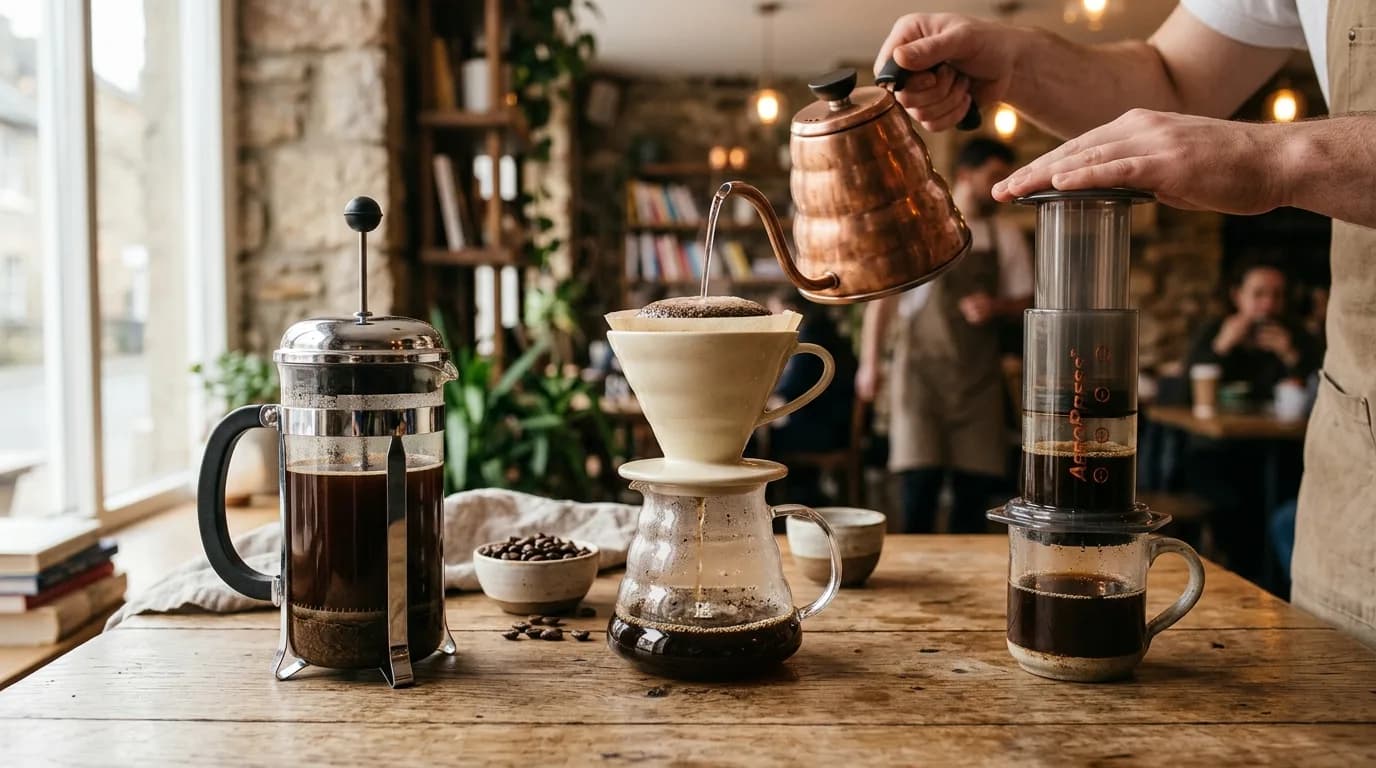
Your brewing method shapes your cup more than most people realize. The same specialty coffee bean can taste completely different depending on how you brew it. Here is a plain breakdown of three popular methods so you can pick the one that fits your beans and your routine.
French press: full body, no filter
French press uses a metal mesh to separate grounds from water, which means the natural oils in the coffee stay in your cup. That gives you a heavier mouthfeel and a richer, rounder flavor. It works especially well with medium-dark and dark roasts.
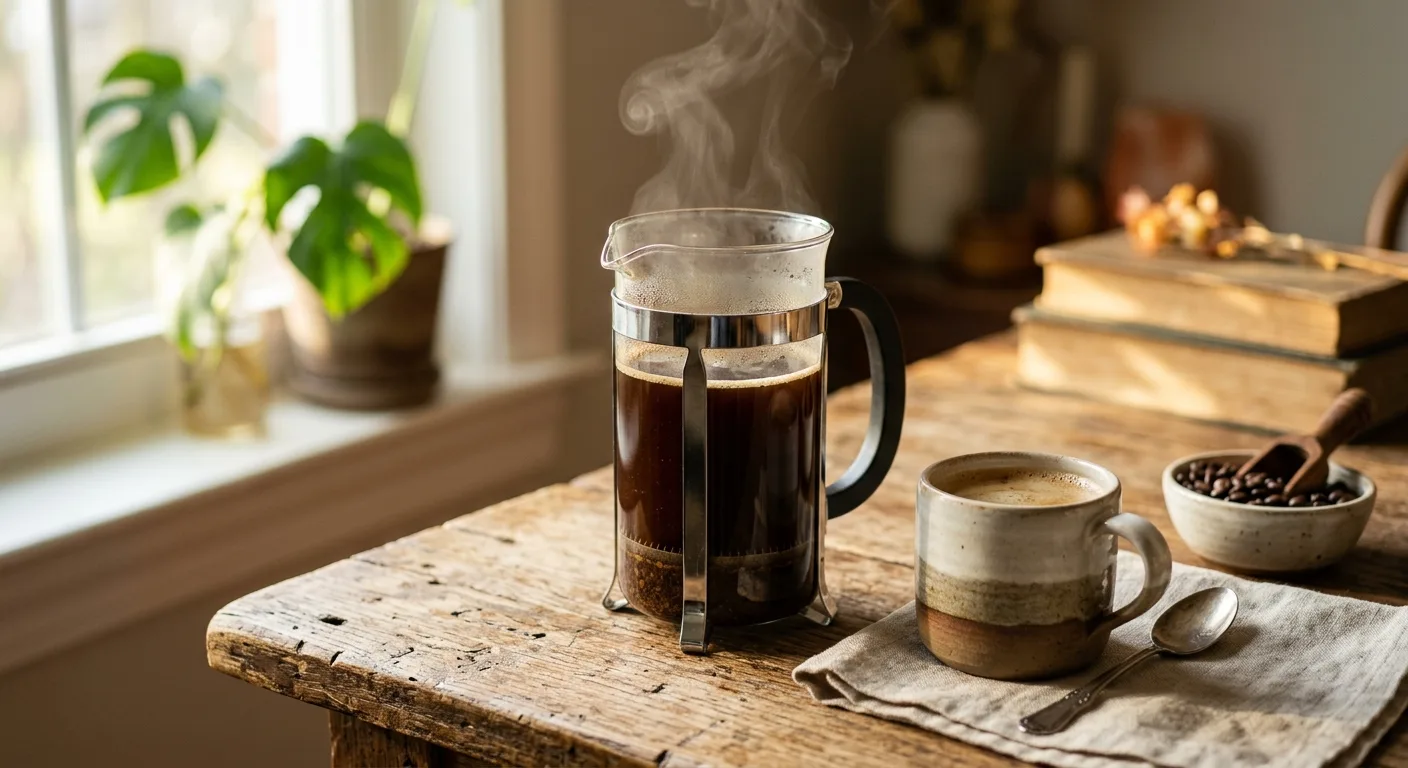
The downside is some sediment at the bottom of the cup, and the lack of a paper filter means more fine particles get through. It is also easy to over-extract if you let it steep too long. Four minutes at around 200°F (93°C) is a reliable starting point.
For French press, grind coarser than you think you need. A coarse, even grind reduces bitterness and keeps the plunger from clogging.
French press is a good match for something like The Diving Moose Signature Medium-Dark Roast Blend, which has the body and depth to hold up well in an immersion brew.
Pour-over: clarity and brightness
Pour-over forces water through a paper or metal filter and a bed of grounds in a steady, controlled flow. The paper filter absorbs most of the oils, so the result is a clean, bright cup with well-defined flavor. You can taste the individual notes in a coffee much more clearly this way.
This method rewards lighter roasts. If a coffee has fruity, floral, or delicate tea-like notes, pour-over is usually the best way to highlight them. It takes more attention than French press, because pour rate and water distribution affect the final flavor.
Water temperature for pour-over should sit between 195°F and 205°F (90°C to 96°C). Off-boil water works well for most light to medium roasts.
A single-origin coffee with a defined flavor profile shines in a pour-over. Our The Toucan, a Costa Rica Terrazu Morning Medium-Light Roast, is a good example. Its brightness and clean finish come through best when you slow things down and give it the attention pour-over requires.
The same specialty coffee bean can taste completely different depending on how you brew it.
AeroPress: flexible and fast
The AeroPress is a compact, plastic brewer that uses air pressure to push water through coffee grounds. It brews fast, usually under two minutes, and produces a concentrated, smooth cup with low acidity. It is also nearly impossible to break and easy to travel with.
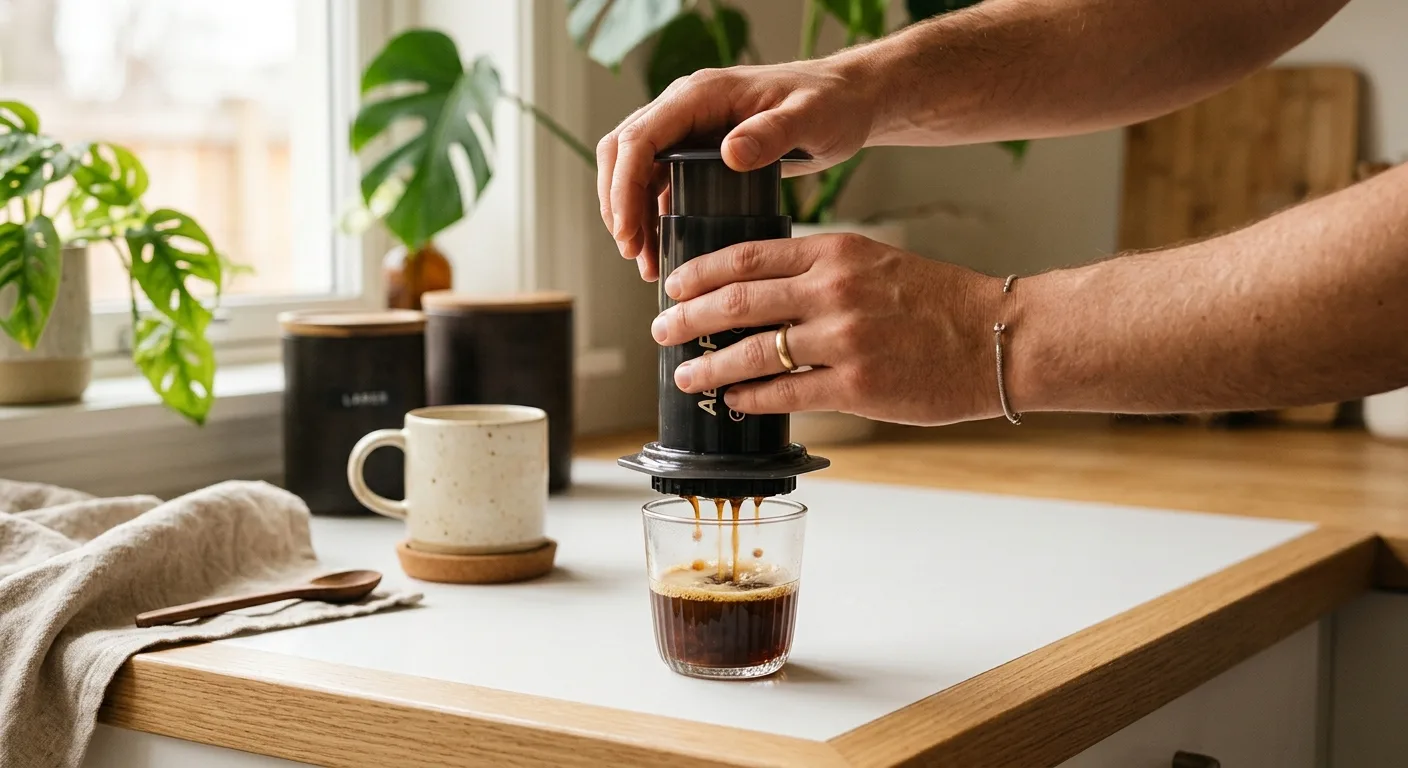
What sets the AeroPress apart is how adjustable it is. You can change steep time, grind size, water temperature, and pressure to pull very different cups from the same coffee. It sits somewhere between espresso-style concentrate and a standard brewed coffee, depending on how you use it.
Try the inverted AeroPress method for more control over steep time. Flip the brewer, add your grounds, pour water, steep for 60 to 90 seconds, then press through the filter.
Because AeroPress handles a wide range of grind sizes and roasts, it pairs well with bold blends like The Black Leopard Specialty Espresso Dark Roast Blend. You get a dense, rich concentrate you can drink straight or add hot water to.
Side-by-side comparison
| Feature | French Press | Pour-Over | AeroPress |
|---|---|---|---|
| Brew time | 4 minutes | 3 to 4 minutes | 1 to 2 minutes |
| Body | Full, heavy | Light, clean | Medium to full |
| Clarity | Low (oils and sediment) | High | Medium |
| Best roast level | Medium-dark to dark | Light to medium | Any roast |
| Skill required | Low | Medium | Low to medium |
| Portability | Low | Medium | High |
| Cleanup | Moderate | Easy | Very easy |
Which method should you choose?
If you want a rich, comforting cup with minimal fuss, start with French press. If you are curious about the origin character of a single-origin coffee and want to taste what makes it distinct, use pour-over. If you want speed, portability, and flexibility, AeroPress is hard to beat.
Most people who get serious about specialty coffee end up owning at least two of these methods, because each one does something the others do not. That is not a bad thing. It just means more ways to enjoy good coffee.
Start with great beans
No brewing method fixes a bad or stale coffee. The foundation is always the bean. If you want to see what these methods can really do, start with something that was roasted recently and sourced with care.
At Diving Moose Coffee, all our coffees are small-batch roasted in Georgia and sourced from specialty-grade farms. A portion of every purchase goes to wildlife conservation through our WWF partnership. If you are not sure where to start, our most popular roasts are a good entry point, and we also carry Georgia-roasted single-origin coffees if you want to explore what pour-over can really do.