
How to Brew the Perfect Pour-Over Coffee at Home: A Step-by-Step Guide for Beginners
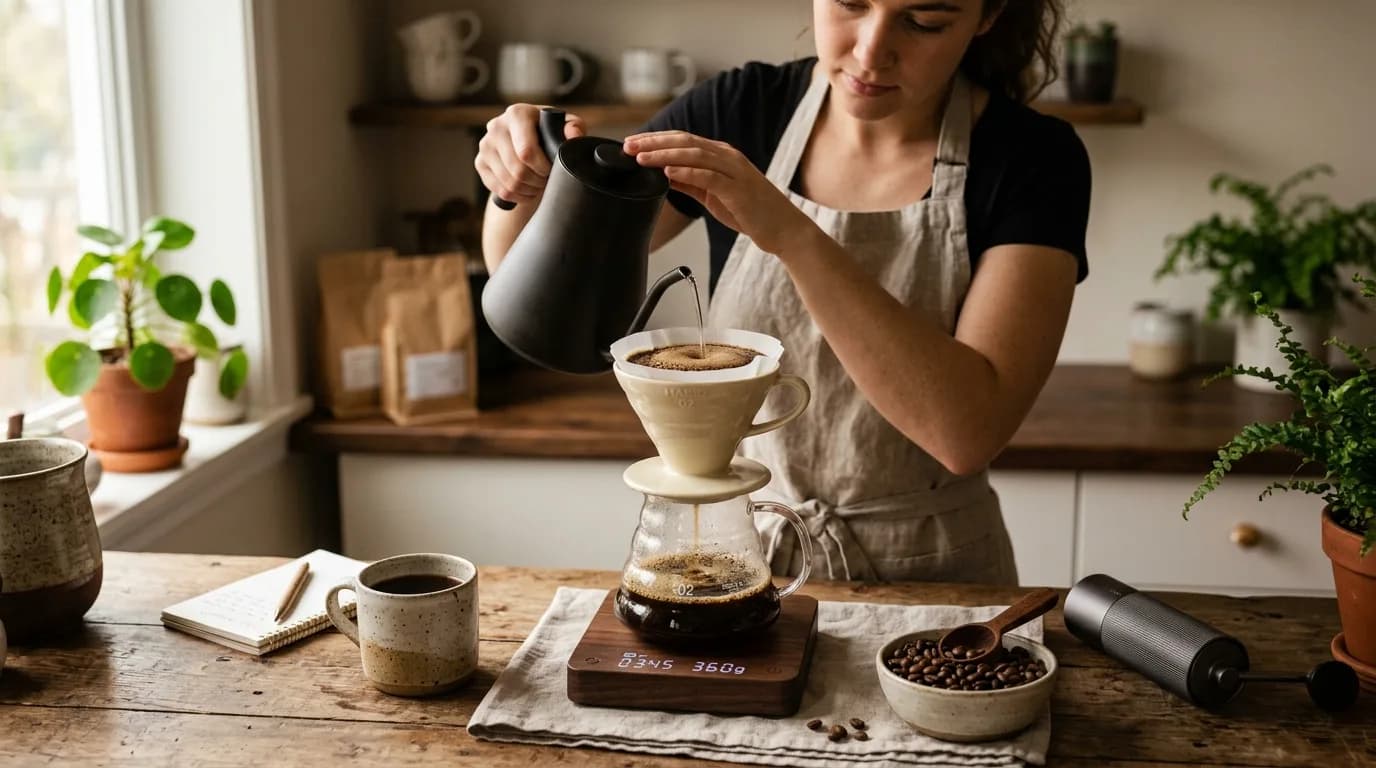
Pour-over coffee is simple, but most people get it wrong the first few times. The good news is that once you understand what each step actually does, you can fix problems fast and brew a consistently great cup from home.
What you actually need
You don't need expensive gear to brew a good pour-over. A basic dripper, paper filters, a kettle, and a scale will get you there. A gooseneck kettle helps with pour control, but a standard kettle works fine when you're starting out.
Here's what the core setup looks like:
- A pour-over dripper (Hario V60, Chemex, or Kalita Wave are common options)
- Paper or metal filter
- A burr grinder
- A kitchen scale
- A kettle
- Fresh whole bean coffee
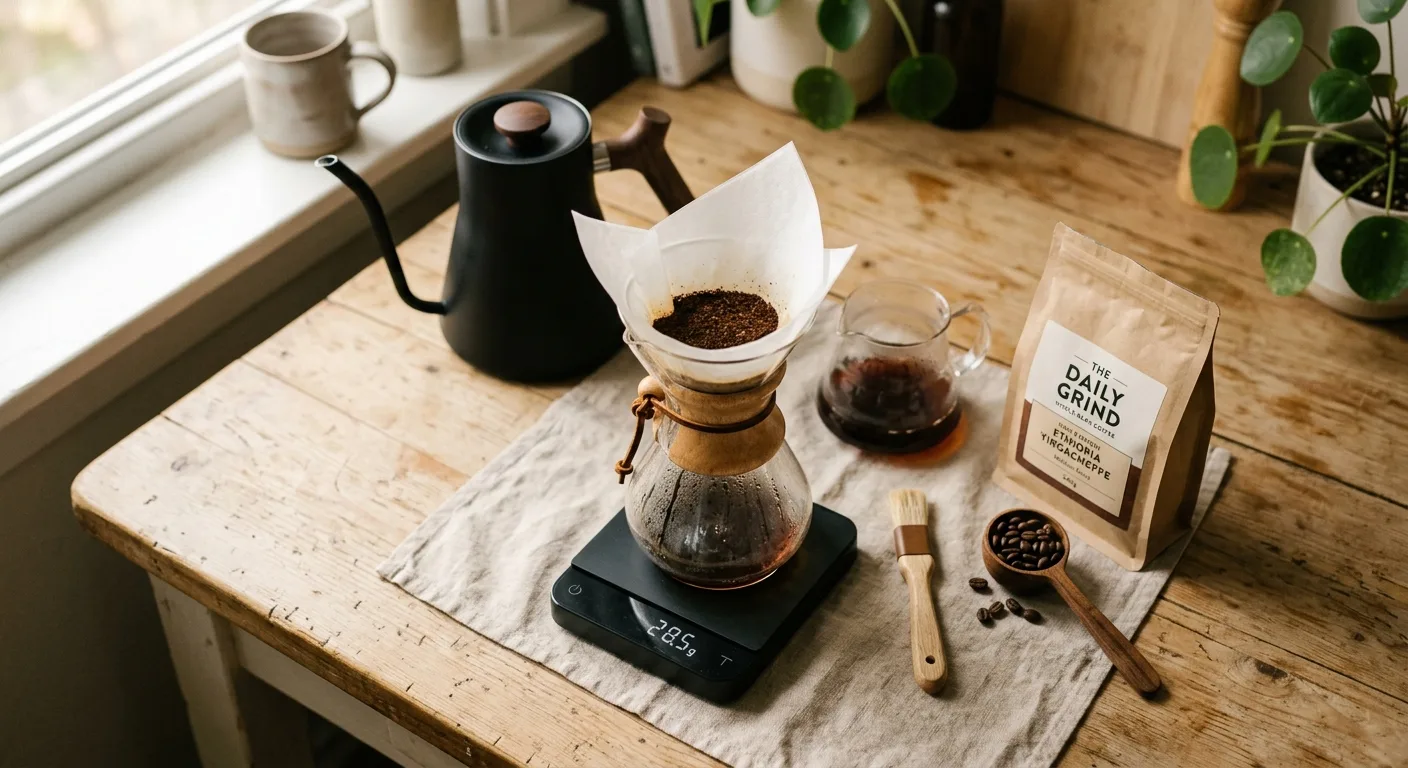
The burr grinder is the one piece of gear worth investing in early. Blade grinders chop beans unevenly, which leads to some grounds being over-extracted and others being under-extracted in the same cup. A burr grinder produces a consistent particle size, and that consistency directly affects how your coffee tastes.
Choosing the right coffee
Pour-over brewing is a clean, transparent method. It doesn't mask much, so the quality of your beans shows up clearly in the cup. Light to medium roasts tend to work especially well because the method highlights their natural flavors.
Single-origin coffees are a good starting point. They give you a clear sense of what a specific region tastes like without the complexity of a blend. The Condor from Colombia Sierra Nevada is a medium-light roast with a clean profile that brews beautifully as a pour-over. The Toucan from Costa Rica Tarrazú is another solid option, with a bright, fruit-forward character that the pour-over method brings out well.
Buy whole beans and grind them right before brewing. Ground coffee goes stale quickly once the surface area is exposed to air. Even a few days of sitting pre-ground can flatten the flavor noticeably.
The brew ratio
A standard starting ratio is 1 gram of coffee for every 15 to 17 grams of water. For a 300ml cup, that means roughly 18 to 20 grams of coffee. Start at 1:16 and adjust from there based on whether the cup tastes too strong or too weak.
Weighing your coffee and water removes the guesswork. A scoop of grounds can vary quite a bit depending on the grind size, so measuring by weight gives you a repeatable baseline to work from.
Grind size
For pour-over, aim for a medium grind. Think of it as somewhere between table salt and rough sand. If your coffee tastes bitter and harsh, the grind is too fine. If it tastes thin and sour, go finer.
| Taste issue | Likely cause | Fix |
|---|---|---|
| Bitter, harsh | Grind too fine or water too hot | Coarsen the grind or lower temp |
| Sour, thin | Grind too coarse or water too cool | Grind finer or raise temp |
| Weak, watery | Too little coffee or too fast a pour | Increase dose or slow down |
| Flat, dull | Stale beans | Buy fresher coffee |
Water temperature
Water between 90°C and 96°C (195°F to 205°F) is the standard range for pour-over. Boiling water at 100°C can scorch lighter roasts and produce a harsh, bitter cup. If you don't have a thermometer, bring water to a boil and let it sit off the heat for about 30 seconds before pouring.
Step-by-step brewing
Once your gear is ready and your beans are ground, the actual process moves quickly. Work through these steps in order:
- Rinse the filter. Place the filter in the dripper and pour hot water through it. This removes any paper taste and warms the dripper. Discard the rinse water.
- Add your ground coffee. Pour the grounds in and give the dripper a gentle shake to level them out.
- Bloom the coffee. Pour twice the weight of your coffee in water over the grounds. So for 20g of coffee, pour about 40g of water. Wait 30 to 45 seconds. You'll see the grounds puff up and bubble as CO2 releases. This is a good sign.
- Pour in stages. Pour water in slow, steady circles from the center outward. Avoid pouring directly onto the filter walls. Add water in two or three additions, letting the level drop between pours.
- Total brew time. Aim for 3 to 4 minutes from the first pour to the last drop falling through. Faster usually means the grind is too coarse. Slower usually means too fine.
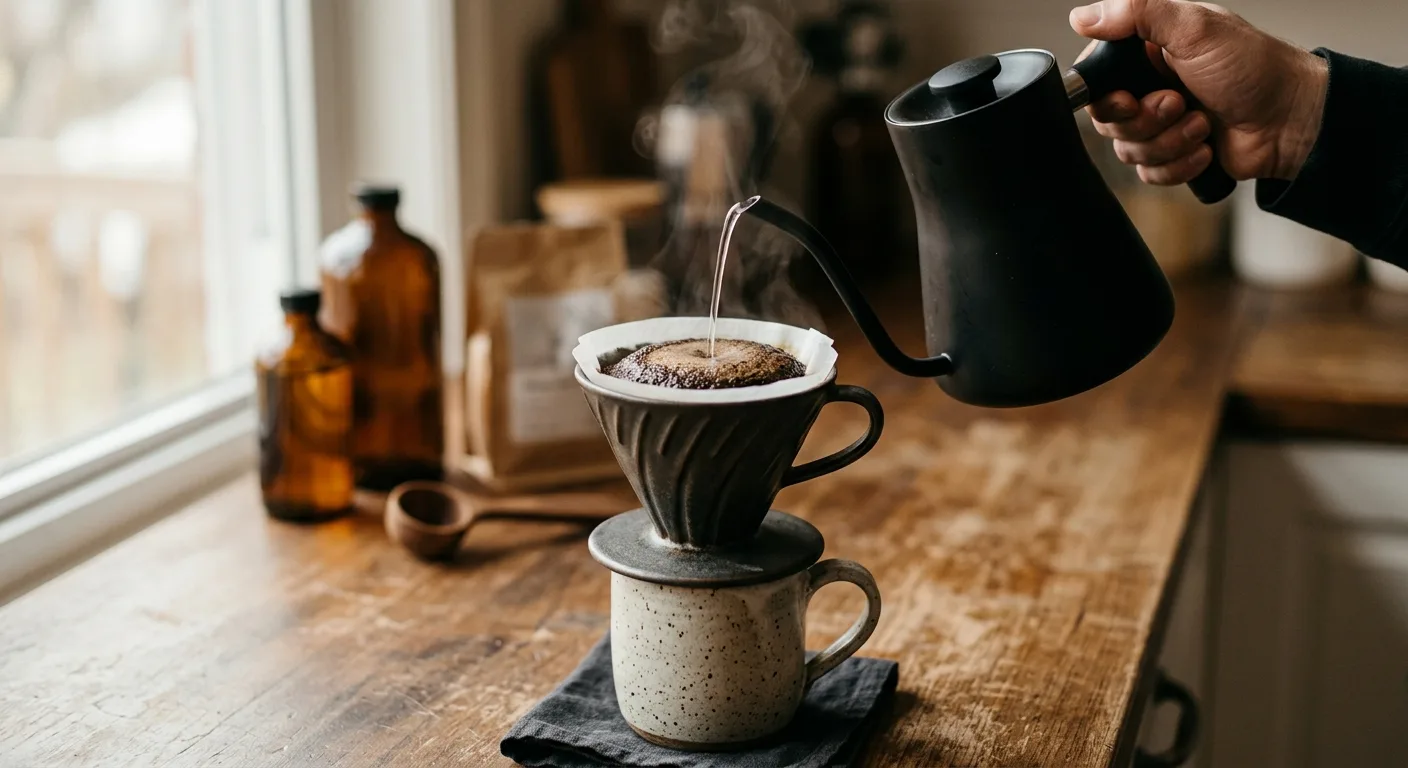
The bloom step looks minor, but skipping it produces a flat, uneven extraction. That 30-second pause is doing real work.
If you're brewing for two, scale the recipe proportionally rather than just doubling your pour into the same dripper. Many drippers have a max capacity, and overfilling slows the draw-down unpredictably.
Common mistakes to skip
- Pouring all the water at once before the bloom has finished
- Using water straight from the boil on light roasts
- Grinding your coffee the night before
- Skipping the filter rinse
- Pouring too fast and getting a muddy, under-extracted result
Where to start with beans
If you're not sure which coffee to try first, the Georgia Roasted Single Origin collection at Diving Moose Coffee is a good place to look. All of the coffees are 100% Arabica specialty grade, roasted in small batches in Georgia. Many of the single origins in the range are well-suited to pour-over brewing, and a portion of every purchase goes toward wildlife conservation through a WWF partnership.
If you want to sample a few before committing to a full bag, the 4-Count Most Popular Sample Pack lets you try four different roasts at 4oz each, which is enough to brew several pour-overs per bag and get a real sense of what you prefer.