
Rainforest Alliance vs. Fair Trade vs. Direct Trade Coffee: What the Labels Actually Mean for Farmers and Wildlife
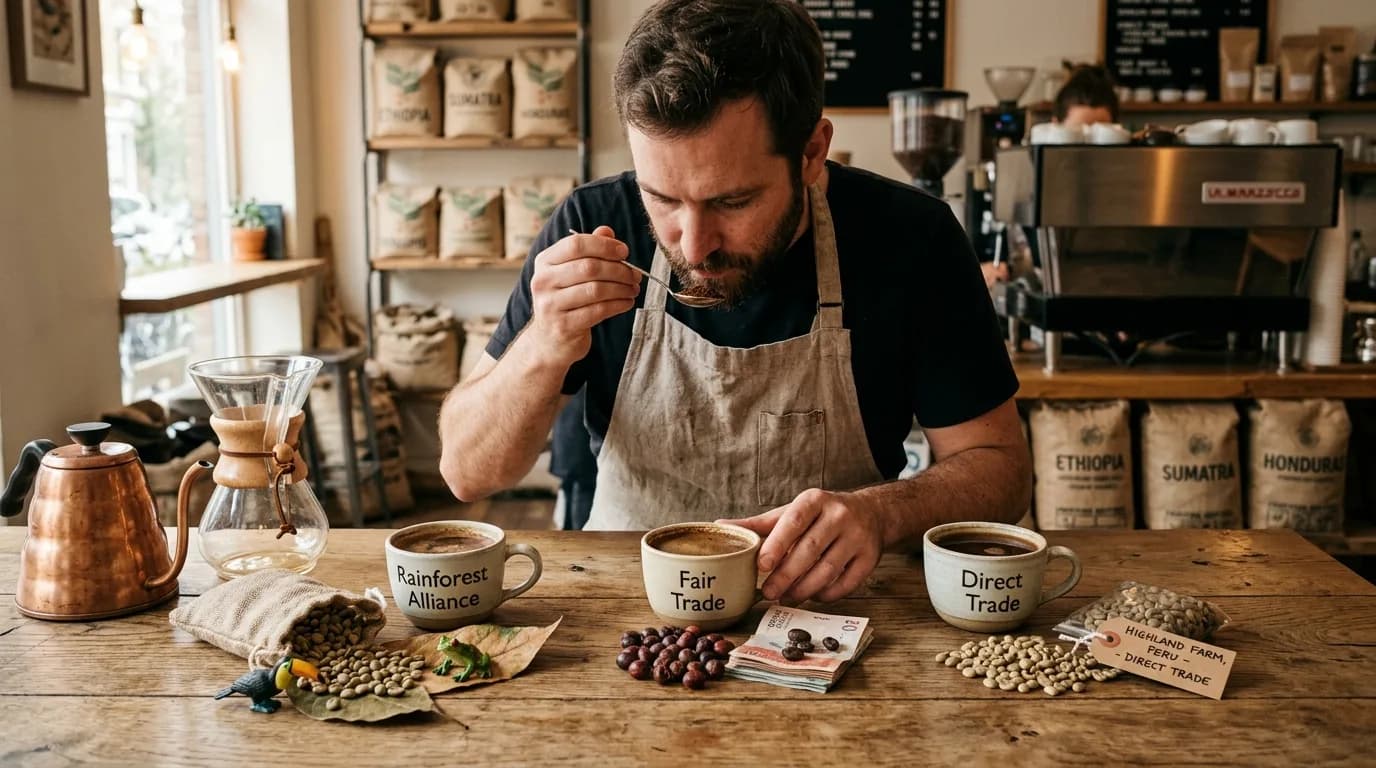
Those green frogs and fair trade stamps on coffee bags look reassuring. But what do they actually guarantee? The answer depends on which label you are looking at, and they are not all the same.
Why coffee labels exist in the first place
Coffee has a long history of price volatility. When global commodity prices drop, farmers bear the cost. Labels like Fair Trade and Rainforest Alliance grew out of a real problem: growers were often paid too little to cover the cost of production, let alone invest in better practices.
Over time, these programs expanded to cover environmental standards too. Deforestation, pesticide use, and water pollution became part of the conversation alongside farmer pay. Today, a coffee label can signal anything from minimum pricing to biodiversity audits, depending on which one you are reading.
What Fair Trade actually does
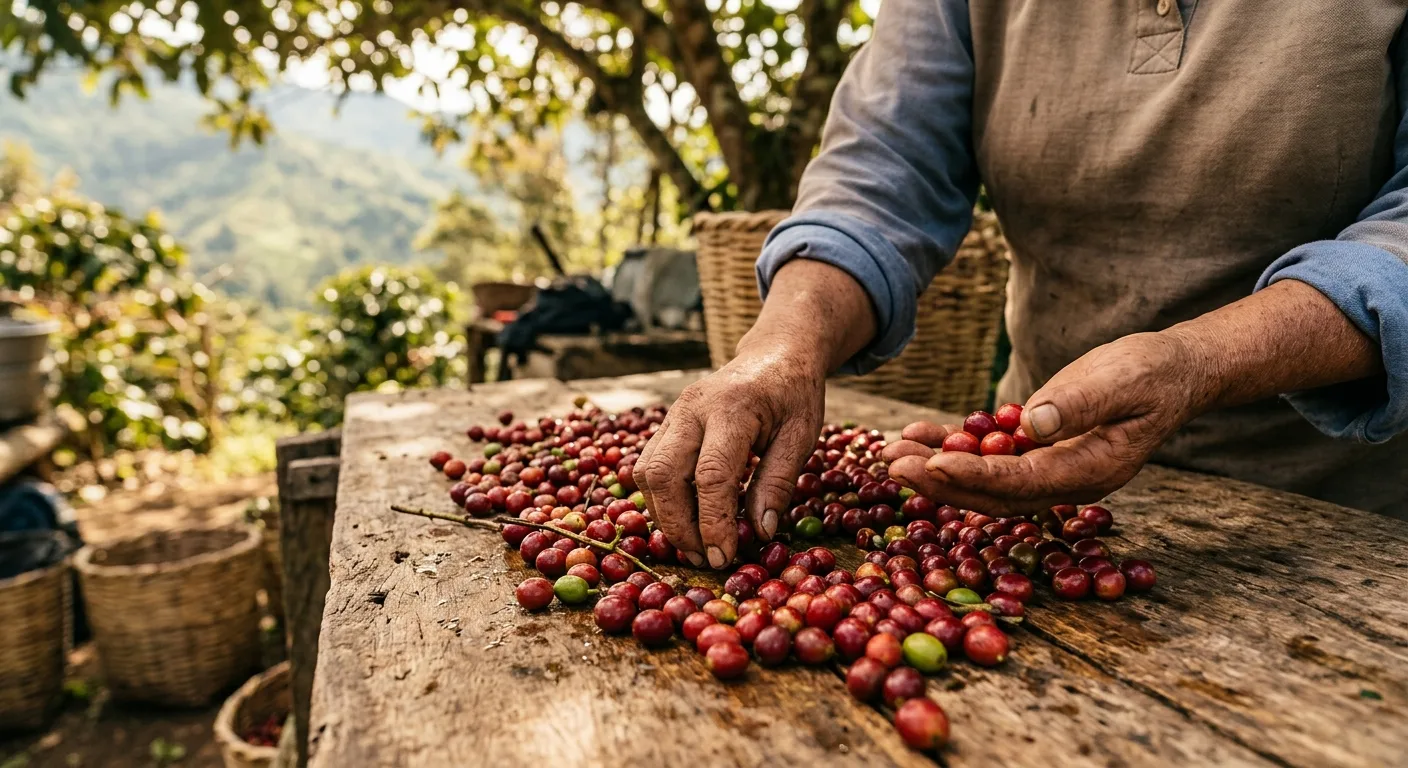
Fair Trade certification, run in the US primarily through Fair Trade USA, sets a minimum price floor for coffee. If the market price drops below that floor, certified buyers must still pay the minimum. Farmers also receive a social premium on top of the sale price, which goes into a fund controlled by the cooperative.
That cooperative structure is central to how Fair Trade works. Farmers must be organized into a cooperative to be eligible, which works well in some regions and poorly in others. Small independent farms outside a cooperative may not qualify at all.
Fair Trade USA and Fairtrade International (used in Europe) share similar goals but have different standards and certification rules. A bag certified by one may not meet the other's requirements.
The social premium is genuinely meaningful when it is managed well. Cooperatives have used it to build schools, improve water access, and fund health clinics. But auditing how that money is spent varies a lot by region and certifier.
What Rainforest Alliance actually does
The Rainforest Alliance label, recognized by its green frog, takes a broader environmental and social approach. Certified farms must meet standards around biodiversity, water use, soil health, worker rights, and farm management. The new standard introduced in 2020 also brought in a stronger income sustainability requirement.
One thing worth knowing is that Rainforest Alliance uses a percentage-based model. A bag does not need to be 100% certified coffee to carry the seal. Blends can qualify if a certain portion of the coffee meets the standard. That is not deceptive, but it does mean the label does not guarantee every bean in the bag came from a certified farm.
A label tells you a farm was audited. It does not always tell you what changed because of it.
For wildlife, Rainforest Alliance has real teeth. Certified farms must maintain buffer zones around water sources, preserve native tree cover, and avoid converting natural habitats. Those requirements directly support biodiversity in coffee-growing regions, many of which overlap with critical wildlife corridors.
What Direct Trade means (and does not mean)
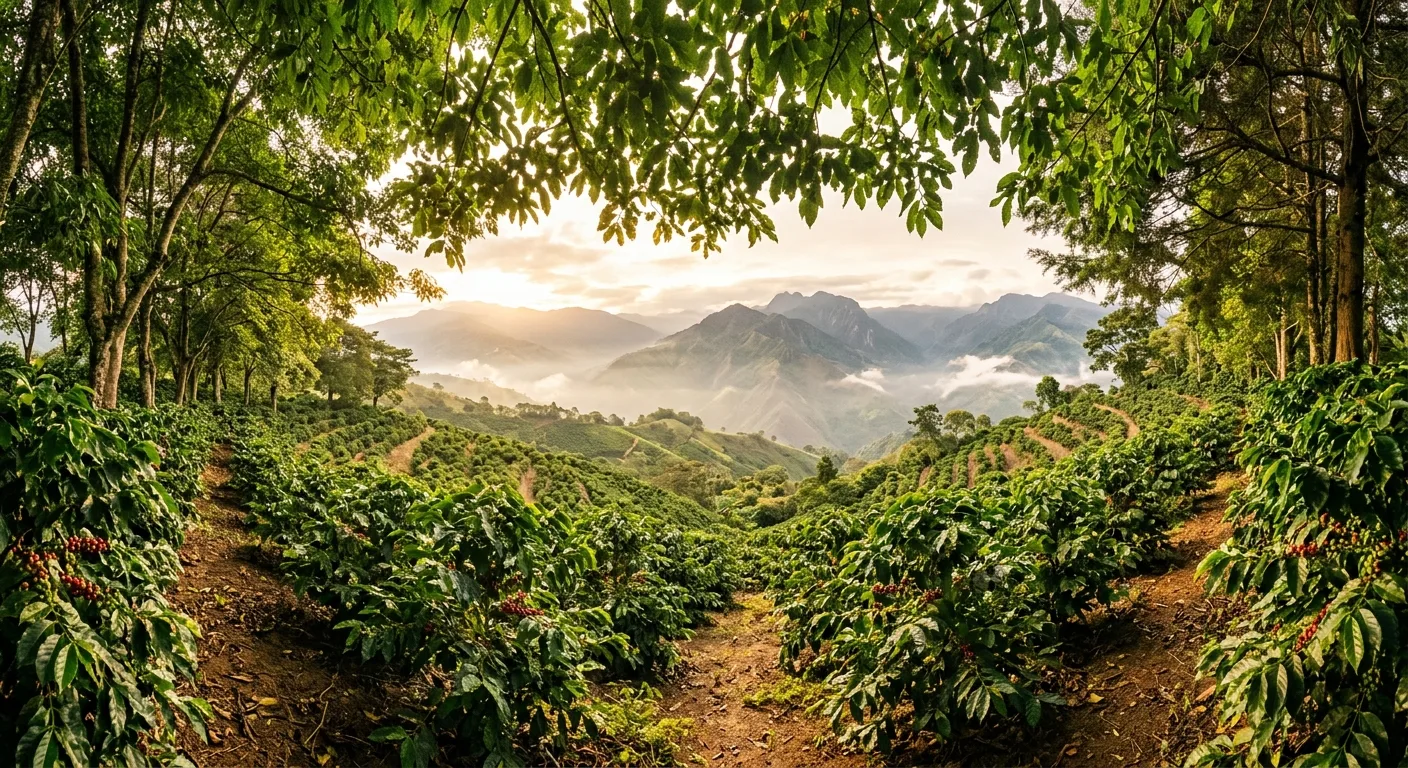
Direct Trade is not a certification. There is no third-party auditor, no fee, and no universal standard. It describes a purchasing relationship where a roaster buys directly from a specific farm or producer, usually at a price negotiated above Fair Trade minimums.
At its best, Direct Trade pays farmers more than any certification program requires and builds long-term relationships that improve quality and transparency on both sides. At its worst, it is a marketing term with no accountability.
When a roaster claims Direct Trade, look for specifics. Do they name the farm? Do they publish the price paid? Do they visit the farm? Vague claims are a warning sign.
Some of the most transparent specialty roasters in the world use Direct Trade sourcing and publish detailed reports about their purchasing relationships. Others use the phrase loosely. The label is only as good as the roaster behind it.
How the three compare
| Factor | Fair Trade | Rainforest Alliance | Direct Trade |
|---|---|---|---|
| Price floor for farmers | Yes | Not directly | Often higher, not guaranteed |
| Environmental standards | Basic requirements | Comprehensive | Varies by roaster |
| Wildlife and habitat focus | Limited | Strong | No standard |
| Third-party auditing | Yes | Yes | No |
| Small independent farmers | Cooperative required | Individual farms qualify | Can work for any farm size |
| Transparency | Moderate | Moderate | Highest when done well |
What matters most depends on your priorities
If your main concern is farmer income stability, Fair Trade's price floor is a concrete protection. If you care most about biodiversity and habitat, Rainforest Alliance standards are more directly tied to those outcomes. If you want the highest possible transparency and are willing to do a bit of research on the roaster, Direct Trade sourcing from a credible company can outperform both.
Most thoughtful buyers care about all of these things. And in practice, many excellent coffees carry more than one certification, or none at all. Certification costs money, and some small farms producing extraordinary, responsibly grown coffee simply cannot afford the audit fees.
No label on a bag guarantees a perfect supply chain. Certifications raise the floor. They do not guarantee the ceiling.
Where Diving Moose Coffee fits in
At Diving Moose Coffee, we source Organic and Fair Trade Certified coffees alongside single-origin beans selected for quality, traceability, and responsible sourcing. We also donate a portion of every purchase to wildlife conservation through our WWF partnership, which means the environmental impact does not stop at the farm.
If you want to start somewhere concrete, our single-origin collection includes coffees from Ethiopia, Colombia, Guatemala, and beyond, each sourced from specific regions with full traceability. For something with strong environmental credentials and a great cup, The Condor, a Colombia Sierra Nevada Organic Medium-Light Roast, is a good place to start. It is certified organic, traceable to a specific growing region, and genuinely delicious.
Labels matter. But so does the roaster. Know both before you buy.