
The Best Coffee Brewing Method for Camping: AeroPress, Moka Pot, and Cowboy Coffee Compared
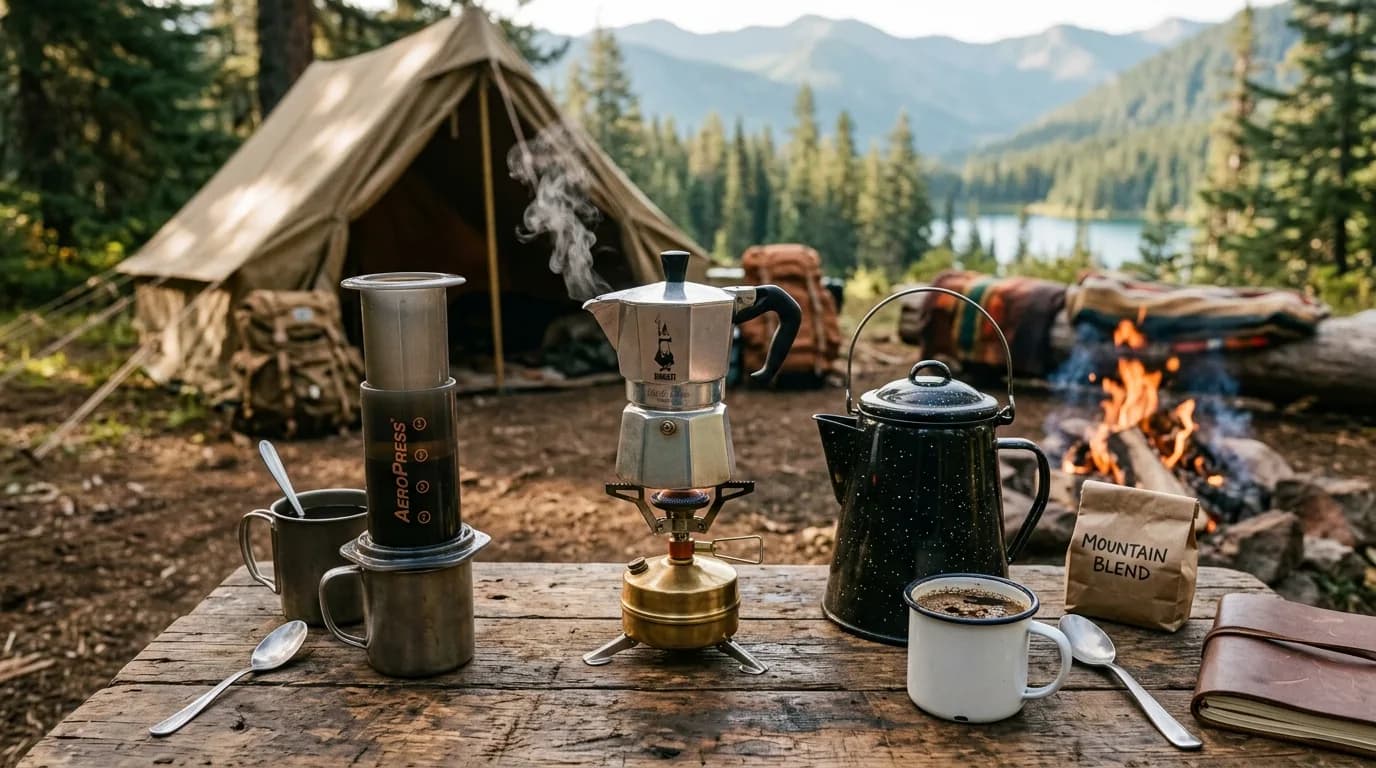
Good coffee is possible anywhere, including a campsite with no outlet, no grinder, and a fire that took 20 minutes to light. The question is which brewing method is worth the space in your pack and the effort at 6 a.m. in the woods.
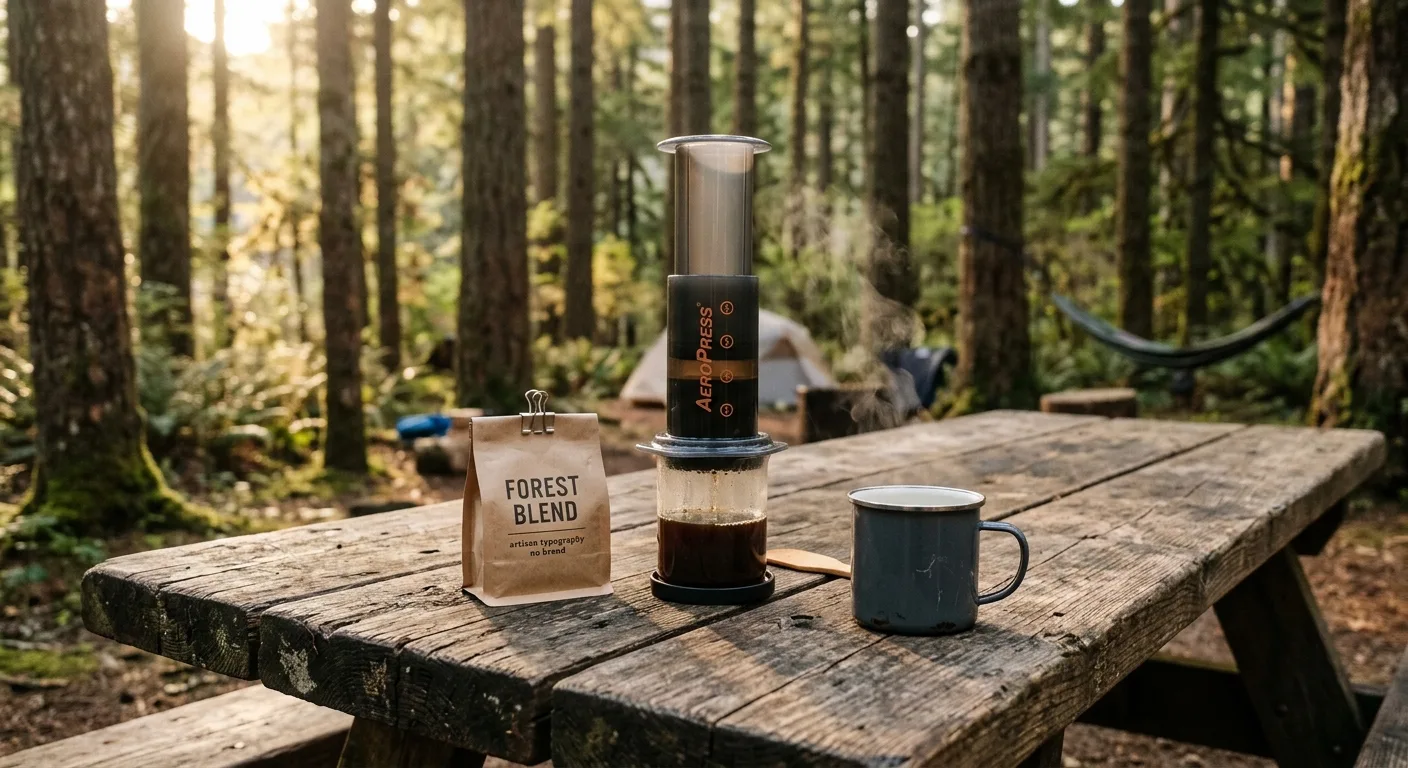
AeroPress: the camper's best friend
The AeroPress is compact, light, nearly indestructible, and forgiving. You push hot water through coffee grounds using pressure, and the whole brew takes under two minutes. It produces a concentrated, smooth cup with very low acidity.
Cleanup is fast. You pop out the puck of grounds, rinse the chamber, and you are done. No paper filters to pack out if you use a metal filter disc, though the standard paper filters are small and easy to carry.
Brew your AeroPress inverted at camp. Flip the chamber upside down, add your grounds and water, steep for 60 to 90 seconds, then flip and press. You get more control over extraction and a stronger result.
The main limitation is volume. A standard AeroPress makes one to two cups at a time. If you are brewing for four people, you are making multiple rounds. The AeroPress Go is a smaller, travel-specific version that fits inside its own mug and takes up almost no space.
Moka pot: stovetop espresso at camp
A moka pot is a two-chamber aluminum or stainless steel brewer that sits directly on a flame. Water in the bottom chamber heats up, builds pressure, and pushes through a basket of grounds into the top chamber. The result is strong, rich, and close to espresso in body.
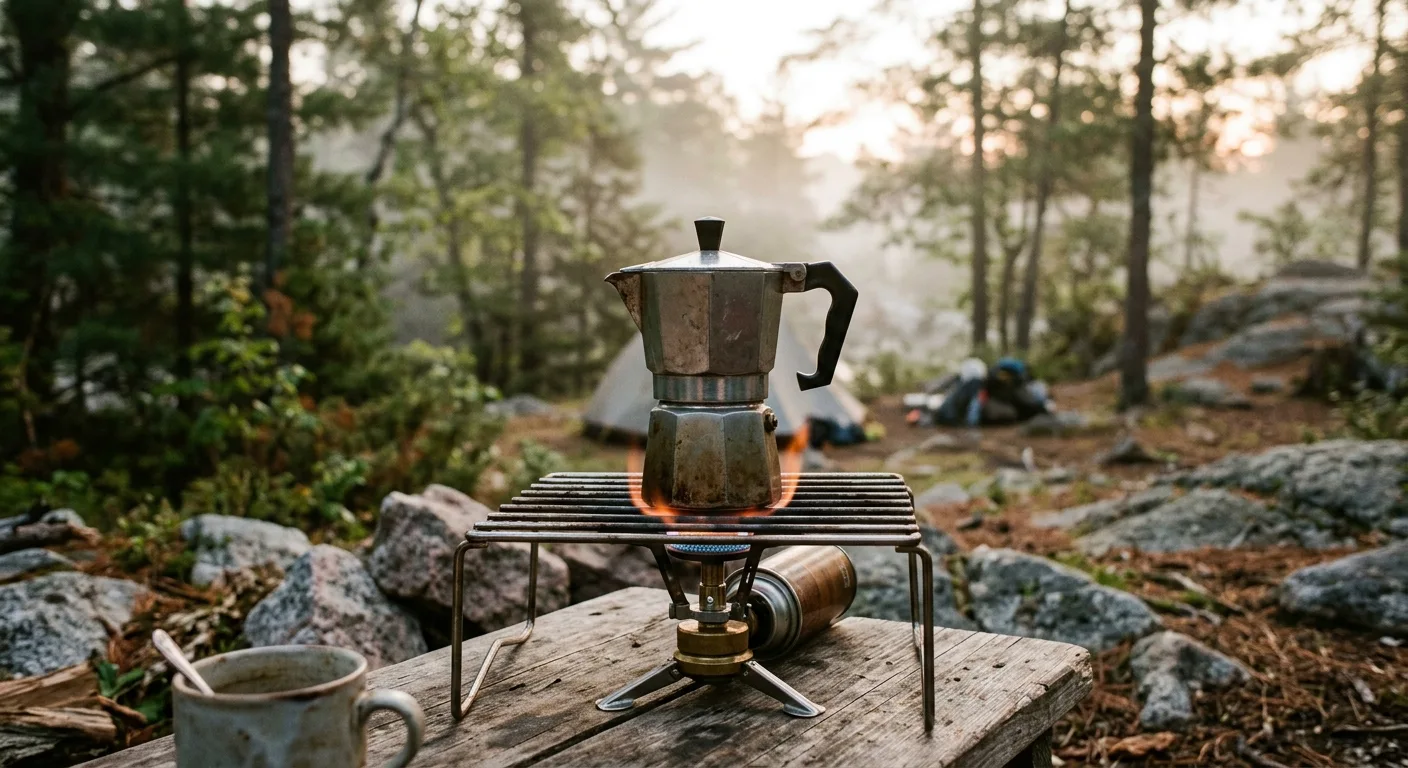
It works well on a camp stove or a grill grate over a fire. Stainless steel versions are more durable than aluminum for outdoor use. The biggest challenge is heat. Too high and you scorch the coffee. You want a medium flame and patience.
A moka pot makes coffee that tastes like it came from somewhere intentional, not just a campfire.
Moka pots come in sizes measured in espresso cups, so a 3-cup moka pot makes about 6 ounces of strong coffee, not three full mugs. For a group of two or three, a 6-cup size is more practical. The downside is weight and bulk compared to an AeroPress, and you do need a heat source with consistent output.
Cowboy coffee: no gear, no problem
Cowboy coffee is as simple as brewing gets. You boil water in a pot, add coarse ground coffee directly to the water, let it steep for a few minutes, then pour slowly so the grounds settle at the bottom before drinking.
Some people add a splash of cold water after steeping to help the grounds sink faster. It works. The cup you get is full-bodied and strong, though a little gritty at the bottom.
Use a coarser grind than you think you need for cowboy coffee. Fine grounds stay suspended longer and make for a muddier cup. Aim for a grind size similar to coarse sea salt.
The appeal is obvious. You need zero specialized equipment, just a pot and fire. For ultralight backpackers or anyone who forgot their brewer at home, cowboy coffee is a legitimate option. It also scales up easily for a large group.
How they compare
| Method | Weight and bulk | Cups per batch | Cleanup | Skill needed |
|---|---|---|---|---|
| AeroPress | Light and compact | 1 to 2 | Very easy | Low to moderate |
| Moka pot | Moderate | 2 to 6 depending on size | Moderate | Moderate |
| Cowboy coffee | None (uses camp pot) | Scales easily | Easy | Low |
What coffee to bring
Pre-ground coffee is completely fine for camping. Whole beans are better for freshness, but carrying a hand grinder is a personal call based on how much you care and how much weight you have left.
A medium-dark roast tends to hold up well to the less precise conditions at camp. Something with chocolate, nutty, or earthy notes translates well whether you are using an AeroPress or boiling grounds in a pot over a fire.
Our Diving Moose Signature Medium-Dark Roast Blend works well across all three methods. It is smooth enough for a clean AeroPress cup and bold enough to hold its character in cowboy coffee. If you want something with more earthy depth, the Jimothy Roast, our Indonesia Flores Bajawa Organic Medium-Dark Roast, is a good pick for the trail. Both are available in our most popular roasts collection.
Which method should you pack
If you are solo or with one other person and care about coffee quality, pack the AeroPress. It is hard to beat for the weight and result. If you are car camping and love a rich, espresso-style cup, a moka pot on the camp stove is worth it. And if you left everything at home or want zero extra gear, cowboy coffee will get you through the morning without complaint.
Whatever you bring, use good coffee. A great brewing setup cannot fix a bad bean, but a decent setup with quality coffee almost always produces something worth drinking.