
Shade-Grown vs. Sun-Grown Coffee: What the Difference Means for Birds and Biodiversity
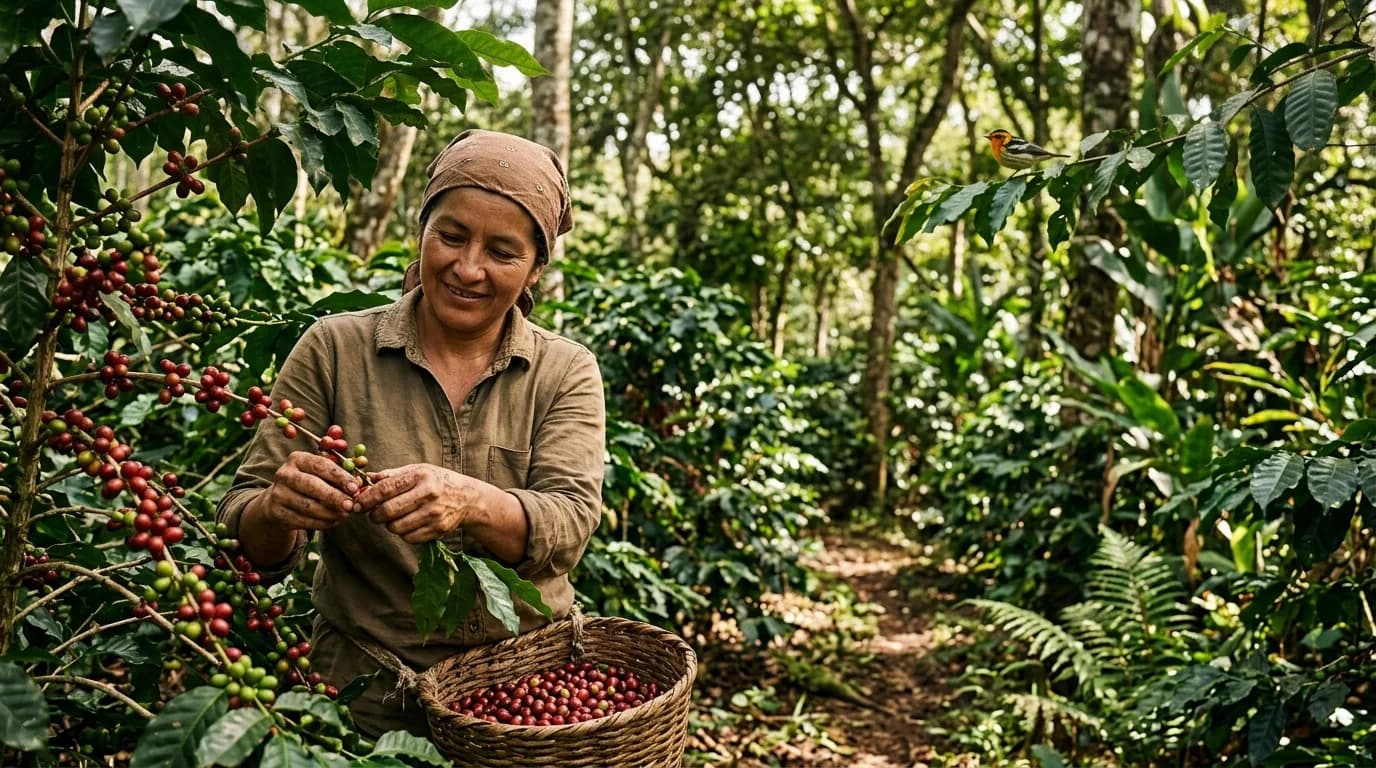
The way coffee is grown has a direct impact on the ecosystems around it. Two farms can produce the same species of coffee plant, but the methods behind them can mean the difference between a thriving forest habitat and a biological wasteland. This is the core of the shade-grown vs. sun-grown debate, and it matters well beyond the cup.
How sun-grown coffee took over
Through the 1970s and 1980s, agricultural programs pushed coffee farmers toward higher-yield sun-tolerant varieties. The appeal was straightforward: more beans per acre, faster growth, and simpler harvesting on open, flat rows.
The tradeoff was the canopy. To grow coffee in full sun, farmers cleared the forest cover that traditional farms had maintained for generations. In Central America alone, millions of acres of shade canopy were removed to make room for sun-grown plantations.
What shade-grown farms actually look like
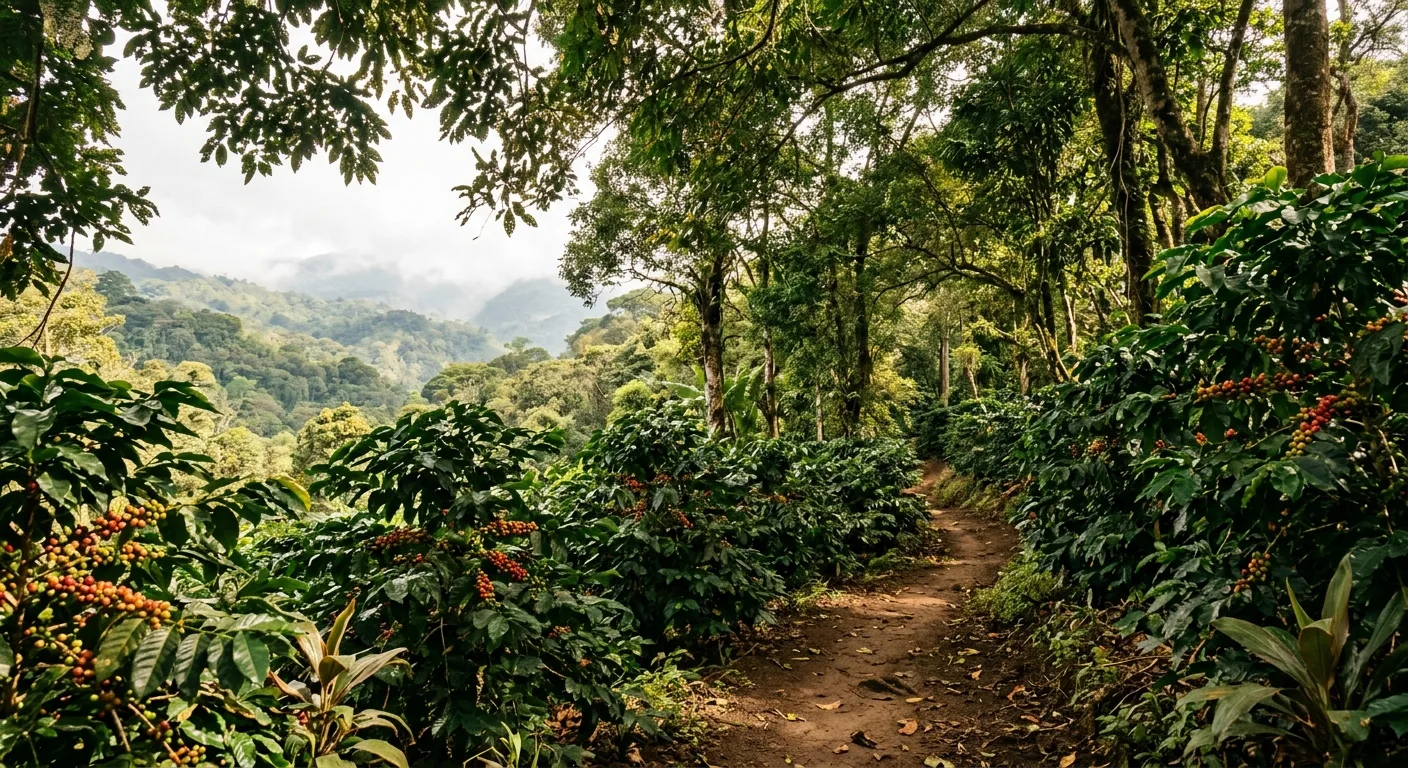
A shade-grown coffee farm is closer to a managed forest than a conventional plantation. Coffee plants grow beneath a layered canopy of native trees, fruit trees, and sometimes timber species. That canopy does several things at once.
- It regulates soil temperature and moisture, reducing the need for irrigation.
- Leaf litter from the canopy trees feeds the soil naturally, cutting the need for synthetic fertilizers.
- The root systems of canopy trees reduce erosion on steep hillsides.
- Flowering trees attract pollinators, which benefit the coffee plants themselves.
The result is a farm that functions more like an ecosystem than a factory. That complexity is exactly what birds and other wildlife need.
A shade-grown coffee farm is closer to a managed forest than a conventional plantation.
Why birds are the clearest measure of impact
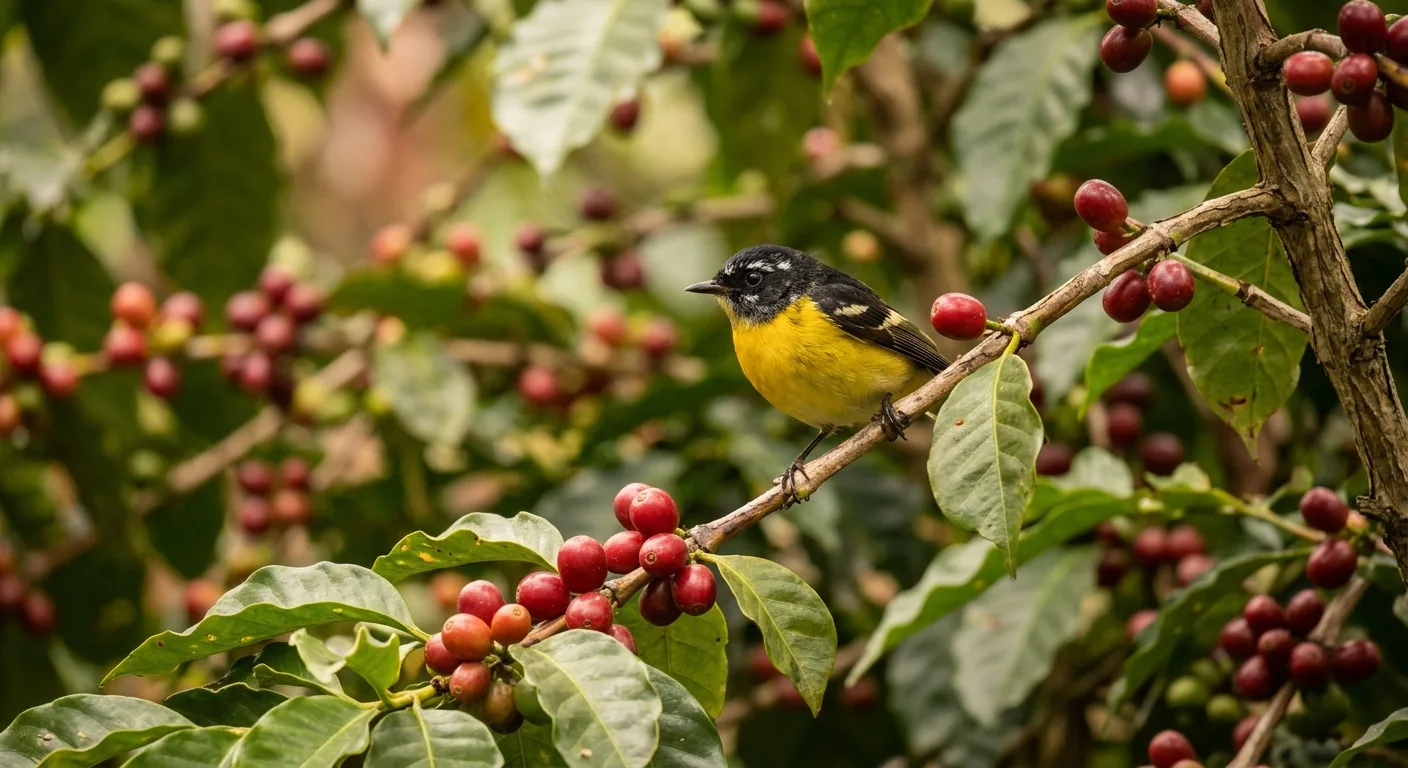
Birds are a reliable indicator of ecosystem health. When habitat quality drops, bird diversity drops with it. Researchers studying coffee farms in Latin America have consistently found that shade-grown farms support significantly more bird species than sun-grown monocultures.
Migratory songbirds from North America spend their winters in tropical regions, including the coffee-growing highlands of Mexico, Guatemala, Colombia, and Ethiopia. Many of these species, Baltimore orioles, warblers, and tanagers among them, rely on shaded coffee farms as critical wintering habitat. Without that canopy, they lose both shelter and food sources during the months they are most vulnerable.
The Smithsonian Migratory Bird Center developed the Bird Friendly certification specifically for shade-grown coffee. It is one of the most rigorous environmental standards in the coffee industry, requiring both canopy cover and organic certification.
Shade-grown vs. sun-grown: a direct comparison
| Factor | Shade-grown | Sun-grown |
|---|---|---|
| Bird species per farm | High (often 150 or more) | Low (often fewer than 20) |
| Canopy cover | 40% or more | Minimal to none |
| Synthetic input needs | Lower | Higher |
| Soil health over time | Improves naturally | Degrades without inputs |
| Yield per plant | Moderate | Higher (short term) |
| Carbon storage | Significant | Minimal |
The yield advantage of sun-grown coffee is real but short-lived. Sun-grown plants tend to exhaust soil nutrients faster, requiring increasing chemical inputs over time. Shade-grown farms trade short-term output for long-term resilience.
Beyond birds: the broader biodiversity case
Birds get most of the attention, but they are not the only beneficiaries of shade-grown farming. Studies have documented higher populations of bats, beneficial insects, amphibians, and small mammals on shaded farms compared to sun-grown operations.
Bats alone provide enormous value. A single bat colony can consume thousands of insects per night, many of them coffee pests. Shade-grown farms that maintain bat habitat effectively get free pest control. The same logic applies to certain wasp and spider species that prey on the coffee berry borer, one of the most destructive pests in the industry.
When shopping for coffee, look for organic certification as a starting point. Many organic farms also maintain shade canopy because the growing conditions support each other. Our Organic and Fair Trade Certified coffees are a good place to start.
What this means when you buy coffee
Certifications are imperfect, but they are still useful signals. Bird Friendly, Rainforest Alliance, and organic certifications all point toward farming practices that are less destructive to habitat. They are not identical standards, so it helps to understand what each one actually covers.
At Diving Moose Coffee, we source single-origin and small-batch coffees with traceability in mind, and we partner with WWF to direct a portion of every sale toward wildlife conservation. Our single-origin coffees include farms in regions where shade canopy and biodiversity are part of the growing culture.
The Nyala, our Ethiopia Sidamo Organic, comes from a region where coffee still grows in and around native forests. Ethiopian coffee has deep roots in agroforestry traditions that predate modern monoculture farming. The flavor reflects it: complex, layered, and distinctly unlike anything grown in stripped-down full sun.
How to put this into practice
You do not need to overhaul how you shop overnight. A few small shifts make a real difference over time.
- Look for organic certification as a baseline. It rules out synthetic pesticides and often correlates with shade growing.
- Seek out single-origin coffees with named regions. Traceability tends to go hand in hand with better farming practices.
- Support roasters who are transparent about sourcing. Vague supply chains usually mean the farm practices are not something to advertise.
- Consider that paying a bit more for a quality bag often means the farm can afford to maintain canopy rather than maximize output at any cost.
Shade-grown coffee is not a niche product for specialists. It is the older, more ecologically sound way of growing coffee, and it produces beans with more complexity because the plants grow more slowly and develop more fully under a canopy. If you want to start somewhere concrete, browse our Organic and Fair Trade collection and read the origin notes. The farming context is part of what ends up in your cup.