
The Best Water Temperature and Ratio for Brewing Coffee: A Science-Backed Guide
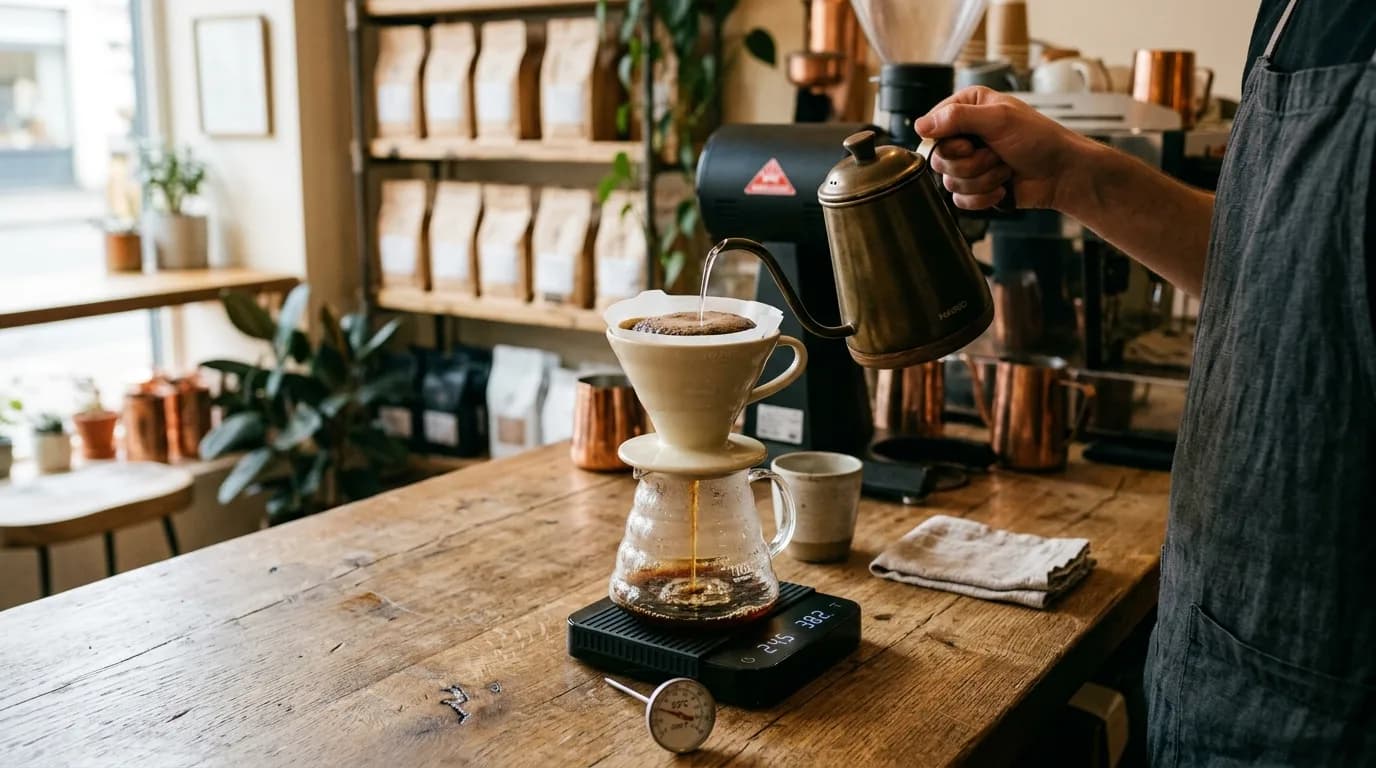
Two variables control most of what ends up in your cup: water temperature and coffee-to-water ratio. Get both right, and everything else becomes much easier. Get them wrong, and even great beans taste flat or harsh.
Why temperature matters more than you think
Water temperature directly controls how much of the coffee's soluble compounds are pulled into your cup. This process is called extraction. Too little, and the coffee tastes sour and thin. Too much, and it turns bitter and harsh.
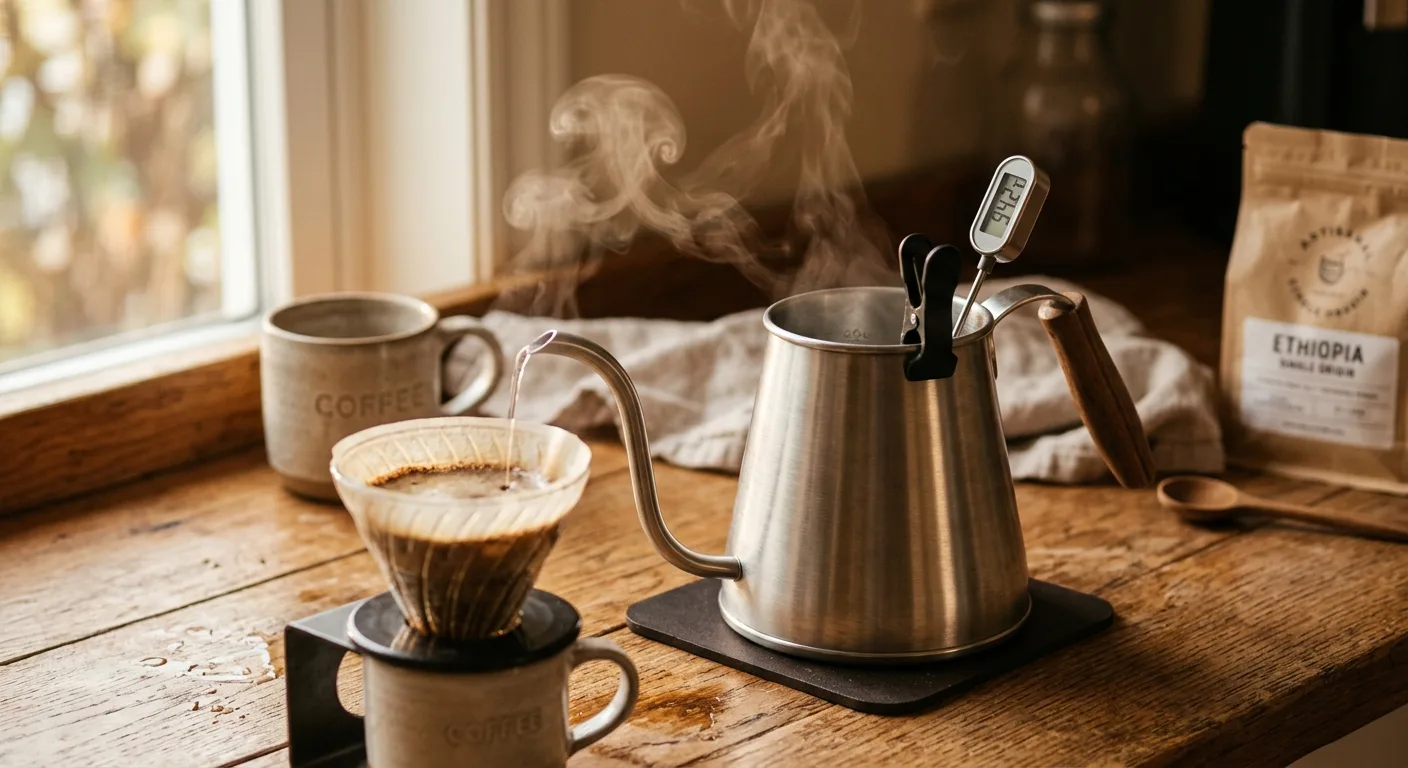
The Specialty Coffee Association recommends brewing between 195°F and 205°F (90°C to 96°C). This range dissolves the right balance of acids, sugars, and oils from the grounds. Boiling water, at 212°F, over-extracts and scorches delicate compounds, especially in light roasts.
If you don't have a thermometer, bring water to a full boil, then let it sit off the heat for 30 to 45 seconds. That drop gets you close to the 205°F range in most home kitchens.
How roast level shifts the target temperature
Roast level changes how readily a coffee extracts, so a single fixed temperature doesn't work perfectly across all beans.
| Roast level | Suggested temperature range | Why |
|---|---|---|
| Light roast | 200°F to 205°F | Denser beans need more heat to extract properly |
| Medium roast | 195°F to 205°F | Good range for balance and clarity |
| Medium-dark roast | 195°F to 200°F | Lower heat reduces over-extraction of darker compounds |
| Dark roast | 190°F to 196°F | Roasted cells are more porous and extract fast |
If you brew a light roast at 190°F, you'll often get a sour, underdeveloped cup. If you brew a dark roast at 205°F, you risk pushing ash and bitterness forward. Small adjustments make a real difference.
The coffee-to-water ratio explained
Ratio sets the strength of your brew. It's the relationship between how much coffee you use and how much water you pour. Most specialty coffee guides express this as a weight-based ratio such as 1:15, meaning one gram of coffee for every 15 grams of water.
A scale costs less than a bag of specialty coffee. Once you start weighing, you stop guessing.
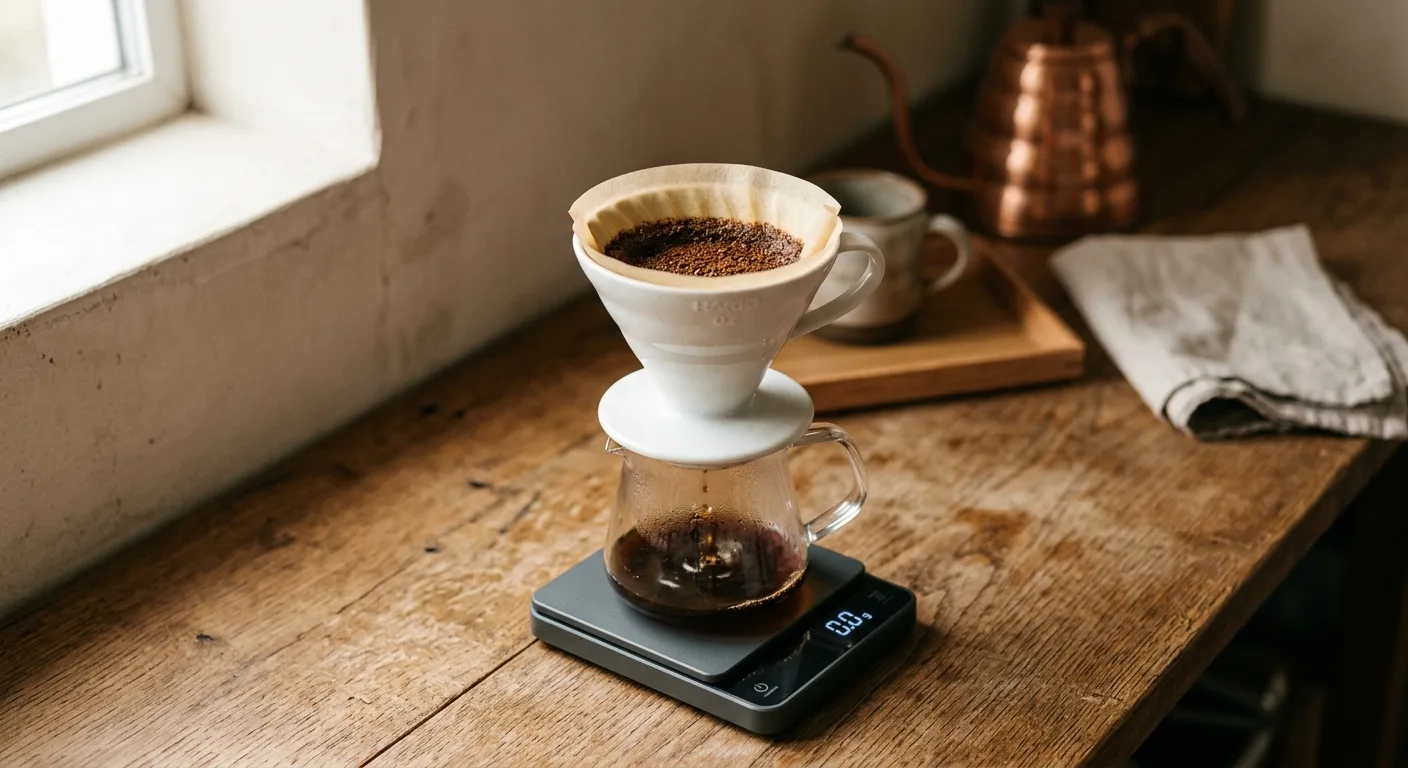
Volume measures like tablespoons and cups are inconsistent because grind size and bean density change how much coffee fits in a spoon. Weighing your coffee removes that variable entirely. A basic kitchen scale is all you need.
The SCA's golden ratio is 55 grams of coffee per liter of water (roughly 1:18). That said, most home brewers find 1:15 to 1:16 produces a fuller, more satisfying cup.
Common ratios and what they produce
These are general starting points. Your preferred grind size, brew method, and taste preferences will shift them slightly.
| Ratio (coffee:water) | Flavor profile | Best for |
|---|---|---|
| 1:12 to 1:14 | Strong, heavy body | Those who prefer a bold, concentrated cup |
| 1:15 to 1:16 | Balanced, full-flavored | Most drip, pour-over, and French press brewing |
| 1:17 to 1:18 | Lighter, more delicate | Highlighting floral or fruity notes in light roasts |
How brew method affects both variables
Different brewing methods interact with temperature and ratio in different ways. Immersion methods like French press keep water in contact with grounds longer, so a slightly coarser grind and a ratio closer to 1:15 works well. Pour-over methods let you control flow and contact time, making them more sensitive to small temperature changes.
Cold brew is the outlier. It uses room-temperature or cold water and a long steep of 12 to 24 hours, with a much stronger ratio, often around 1:7 or 1:8. The cold water slows extraction dramatically, which is why the steep time is so long. The Narwhal Cold Brew Blend from Diving Moose Coffee is built for this method, with a bean profile that holds up well over a long, slow extraction without turning bitter.
Troubleshooting your cup with these two variables
Before changing your grind size or brew time, check your temperature and ratio. They account for a large share of common brewing problems.
- Tastes sour or sharp: Water may be too cool, or the ratio is too weak. Try raising temperature by 5°F or using slightly more coffee.
- Tastes bitter or harsh: Water may be too hot, or the ratio is too strong. Drop the temperature a few degrees or pull back slightly on the coffee dose.
- Tastes watery: The ratio is almost certainly too low. Add more coffee before adjusting anything else.
- Tastes flat or lifeless: This often points to stale coffee, but under-extraction from low temperatures can produce the same effect. Check both.
Changing multiple variables at once makes it nearly impossible to know what fixed the problem. Adjust one thing at a time and brew again before making another change.
Start with good beans, then dial in from there
Temperature and ratio can only do so much. Fresh, quality beans are the foundation. If the coffee is stale or poorly grown, no amount of precision brewing brings it back.
If you want a reliable starting point, the 4-Count Most Popular Sample Pack at Diving Moose Coffee lets you try four different roasts, each roasted in small batches in Georgia. That kind of variety makes it easy to experiment with ratio and temperature across different roast levels without committing to a full bag of something you haven't tasted yet.
Pick one brew you make regularly and run it twice this week: once at your current settings, and once with a small adjustment to either temperature or ratio. Write down what changes. That single habit, done consistently, will tell you more about your own palate than any guide can.
Browse our single-origin coffees when you're ready to put your dialed-in technique to work on something worth tasting.