
Ethiopian vs. Colombian Coffee Beans: How Origin Shapes Flavor, Aroma, and Your Morning Ritual
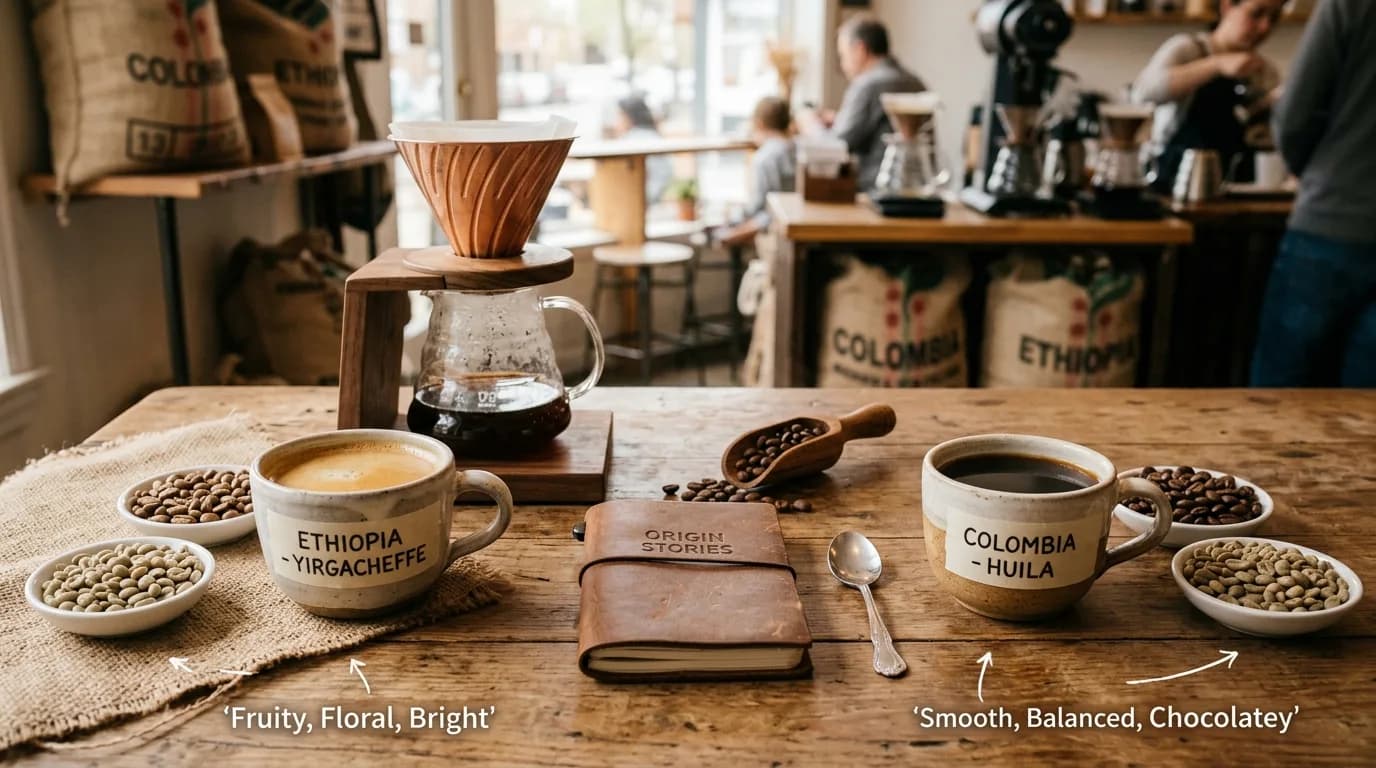
Where a coffee bean grows shapes everything about it. Soil, altitude, rainfall, and the way it's processed all leave a mark on what ends up in your cup. Ethiopian and Colombian coffees sit at opposite ends of the flavor spectrum, and understanding the difference makes it easier to choose what you actually want to drink.
Ethiopia: the birthplace of coffee
Coffee is native to Ethiopia. Wild coffee plants still grow in the forests of the Kaffa region, and the country has been cultivating arabica for centuries longer than anywhere else. That long history shows up in the cup.
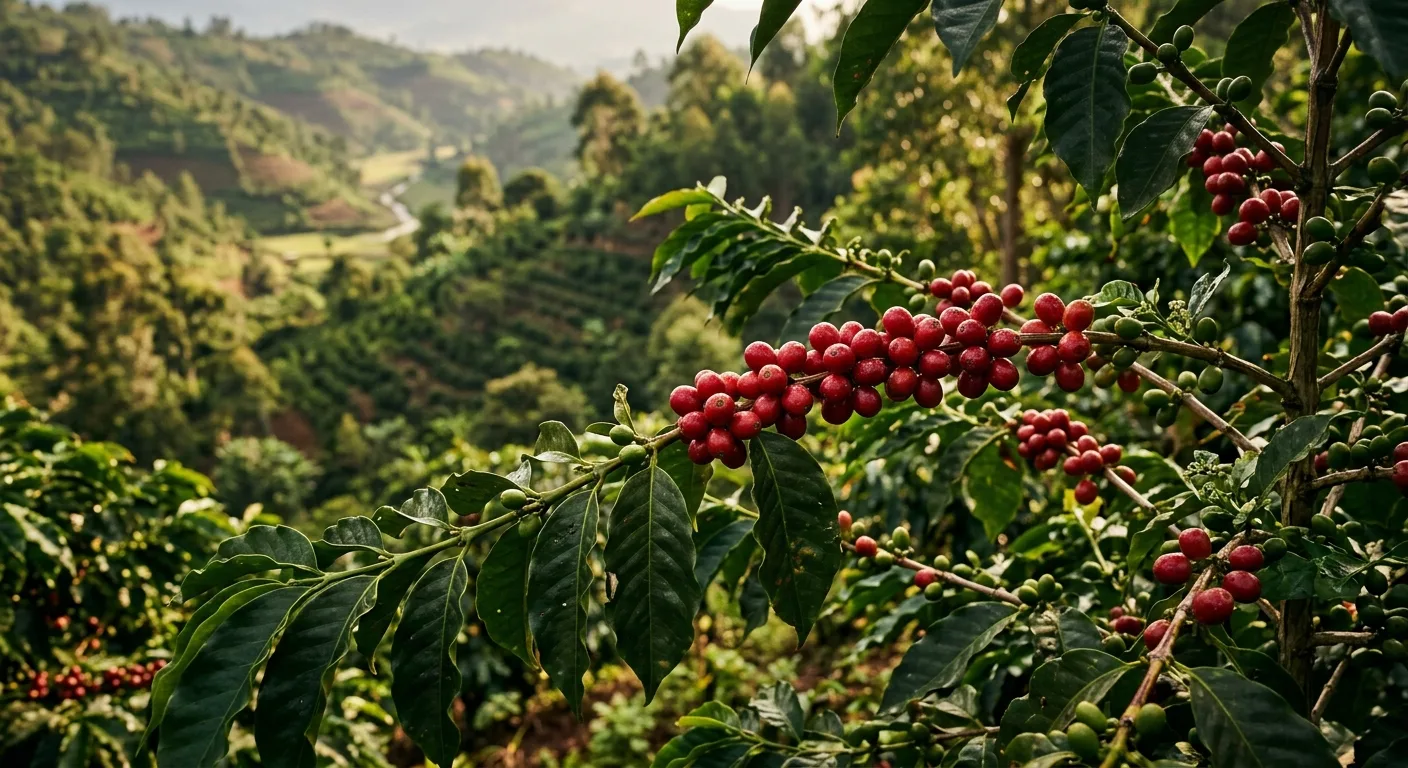
Ethiopian coffees are famous for their complexity. You'll often find jasmine, bergamot, blueberry, or stone fruit in a well-grown Ethiopia. The acidity is bright, sometimes sharp, and the body tends to be lighter than what you get from Central or South American origins. A washed Ethiopian from Yirgacheffe or Sidamo will taste clean and tea-like. A natural-processed Ethiopia tastes wilder, with intense fruit and fermented sweetness.
If you like bright, floral coffees, look for washed-process Ethiopian beans. If you prefer bold fruit flavors with more sweetness, try a natural-process Ethiopian instead.
Our Nyala Ethiopia Sidamo Organic is a medium-dark roast from the Sidamo region. It's single-sourced and certified organic, which matters in Ethiopia where small-plot farming is common and traceability is hard to guarantee.
Colombia: reliable, balanced, and widely loved
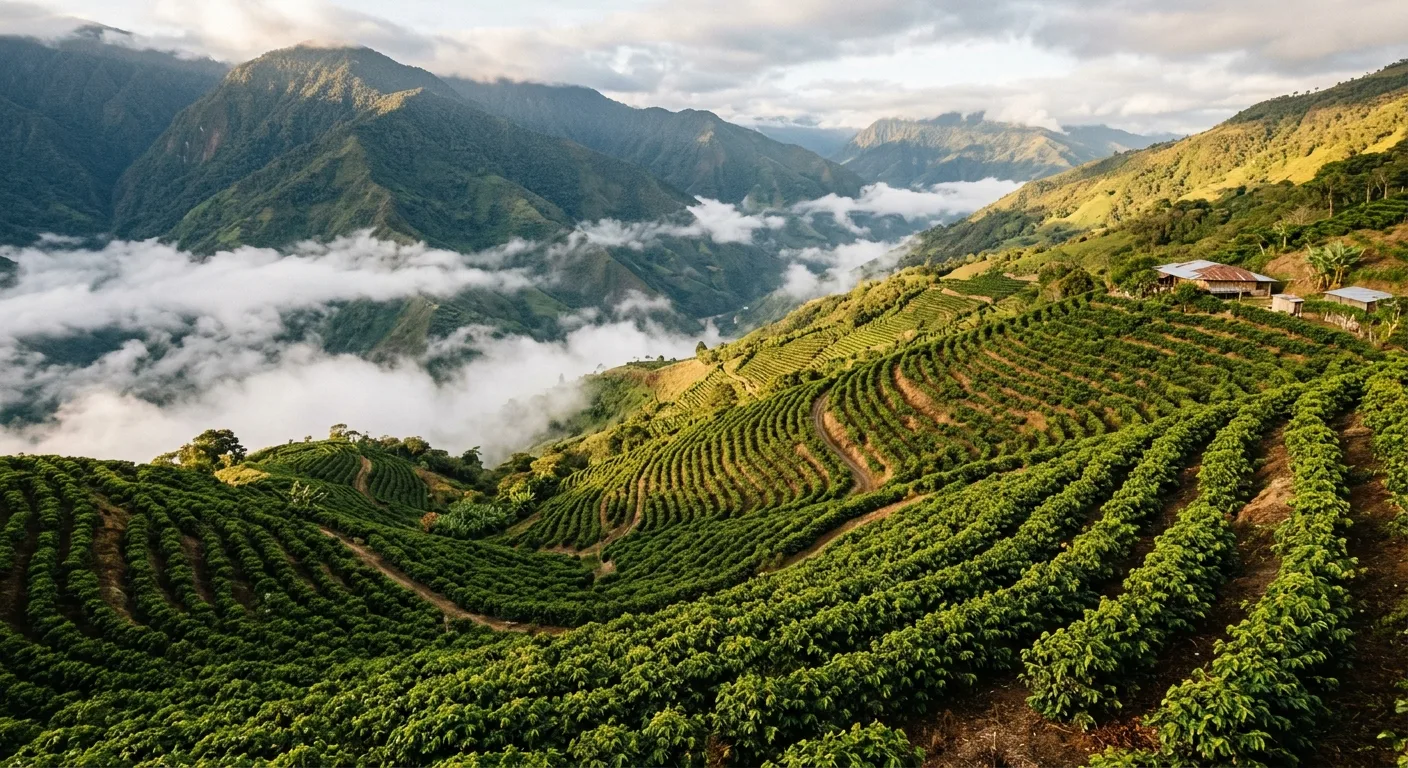
Colombia is one of the most consistent coffee-producing countries in the world. The Andes mountains create ideal growing conditions across several distinct regions, including Huila, Nariño, and Sierra Nevada. High altitude, rich volcanic soil, and a two-harvest-per-year cycle give Colombian farms a steady output of high-quality beans.
Colombian coffee is almost always washed, which means the fruit is removed from the bean before drying. That produces a clean, consistent cup. Expect mild citrus, caramel, brown sugar, and a soft nuttiness. The acidity is present but gentle. The body is medium and smooth, which is part of why Colombian beans work in so many brewing formats.
Colombian coffee doesn't shout. It shows up every morning, tastes exactly right, and never gets in the way.
Our Condor Colombia Sierra Nevada Organic comes from the Sierra Nevada de Santa Marta, one of Colombia's highest and most remote growing regions. It's a medium-light roast with clean flavor and organic certification.
How processing shapes flavor more than you'd expect
Origin sets the foundation, but processing method does a lot of the flavor work. Most Colombian coffee is washed. Ethiopian coffee comes in both washed and natural varieties, and that difference is significant.
| Processing method | What happens | Flavor result |
|---|---|---|
| Washed (wet) | Fruit removed before drying | Clean, bright, more acidity |
| Natural (dry) | Whole cherry dried with fruit on | Fruity, sweet, more body |
| Honey | Some fruit left on during drying | Balance of both, mild sweetness |
When you read a bag of Ethiopian coffee and it says "natural process," expect blueberry, tropical fruit, and sometimes a wine-like quality. Washed Ethiopian beans will be more floral and delicate. Colombian beans, almost always washed, stay consistent batch to batch.
Altitude and its effect on your cup
Both Ethiopia and Colombia grow coffee at high altitudes, which slows the cherry's development and concentrates its sugars. Ethiopia's coffee grows between roughly 1,500 and 2,200 meters above sea level. Colombia's best regions sit in a similar range, often between 1,200 and 2,000 meters.
High-altitude coffees generally have brighter acidity and more complex flavor than low-altitude beans. This is why both Ethiopia and Colombia produce some of the world's most sought-after specialty coffee.
The difference is in what the altitude does for each variety. In Ethiopia, altitude amplifies the floral and fruity notes that come from the plant's genetic diversity. In Colombia, it brings out sweetness and softens the acidity into something more approachable.
Which one suits your brewing method?
Brewing method matters here. Ethiopian coffees shine in pour-over, AeroPress, and filter brewing, where their delicate aromatics have room to come through. Heavy brewing methods like French press or espresso can muddy the lighter notes.
Colombian coffees are more flexible. They work well in drip machines, pour-over, French press, and as the base for milk-based espresso drinks. The balanced profile holds up to heat, milk, and sugar without disappearing.
- Pour-over or filter: Ethiopian washed, for clarity and aroma.
- French press: Colombian or natural Ethiopian, for body and sweetness.
- Espresso: Colombian works cleanly. Ethiopian can be used but may taste sour at standard espresso extraction.
- Cold brew: Colombian holds up well. Natural Ethiopian adds interesting fruit character.
Not sure where to start?
If you want to try both origins side by side, our single-origin collection makes that easy. Each coffee is labeled by region and roast level, so you know exactly what you're getting before you order.
Our Nyala Ethiopia Sidamo Organic and Condor Colombia Sierra Nevada Organic are a good pair to start with. Brew them the same way on back-to-back mornings and you'll immediately hear what origin does to a cup. And every bag you buy supports wildlife conservation through our WWF partnership, which isn't a bad way to spend your coffee budget.