
How Coffee Agroforestry Systems Are Quietly Saving Migratory Bird Habitats Across Central America
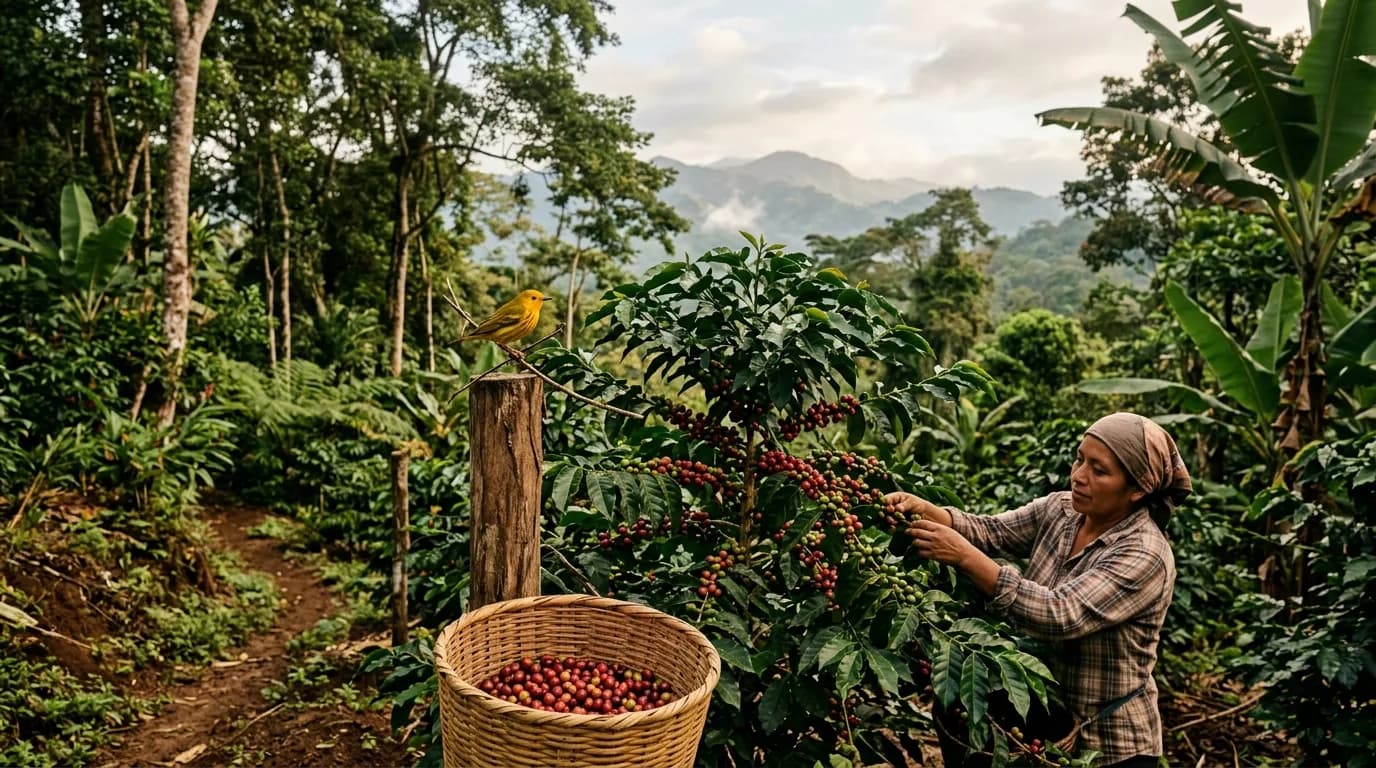
Across Central America, millions of migratory birds pass through each year on their way between North and South America. Many of those birds depend on forest cover to rest, feed, and survive the journey. Coffee farms that grow their crops under a canopy of shade trees are turning out to be one of the most important stopover habitats those birds have left.
What agroforestry actually means
Agroforestry is farming that intentionally keeps trees in the mix. For coffee, that means growing plants under a canopy of taller shade trees rather than clearing land and planting in open rows under full sun. The canopy can include native hardwoods, fruit trees, nitrogen-fixing species, and flowering plants, creating layers of vegetation very similar to natural forest.
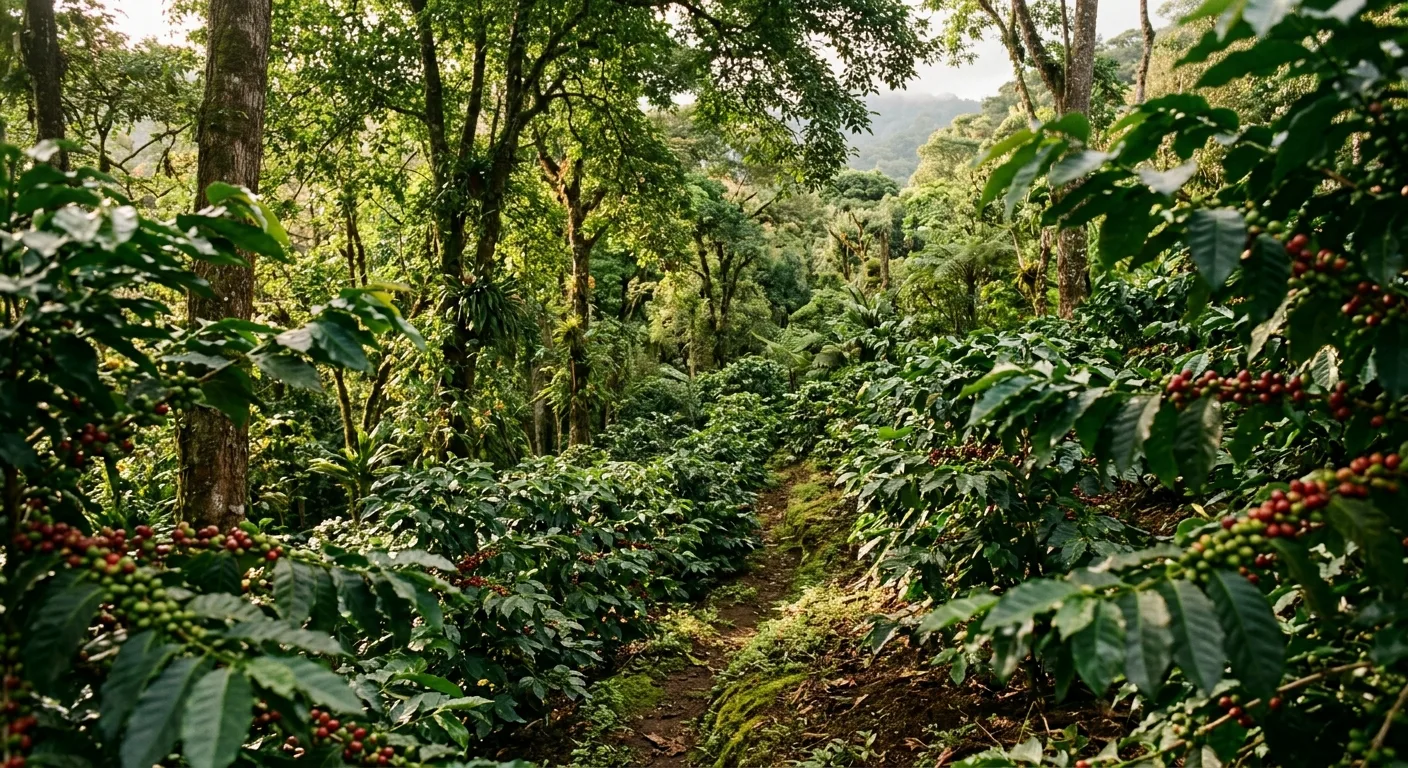
This is not a new idea. Traditional coffee farming in much of Latin America was done this way for generations. The shift toward sun-grown, high-yield monoculture farming in the 1970s and 1980s removed that canopy from millions of acres of coffee land. What was lost along with the trees was complex habitat that countless species had come to rely on.
Why migratory birds need coffee farms
Central America has lost a large portion of its original forest cover over the past century. What remains is often fragmented, with agricultural land filling the gaps. For birds migrating from North America, this creates a real problem. They need places to stop, rest, and refuel, and natural forest patches are not always available where or when they need them.
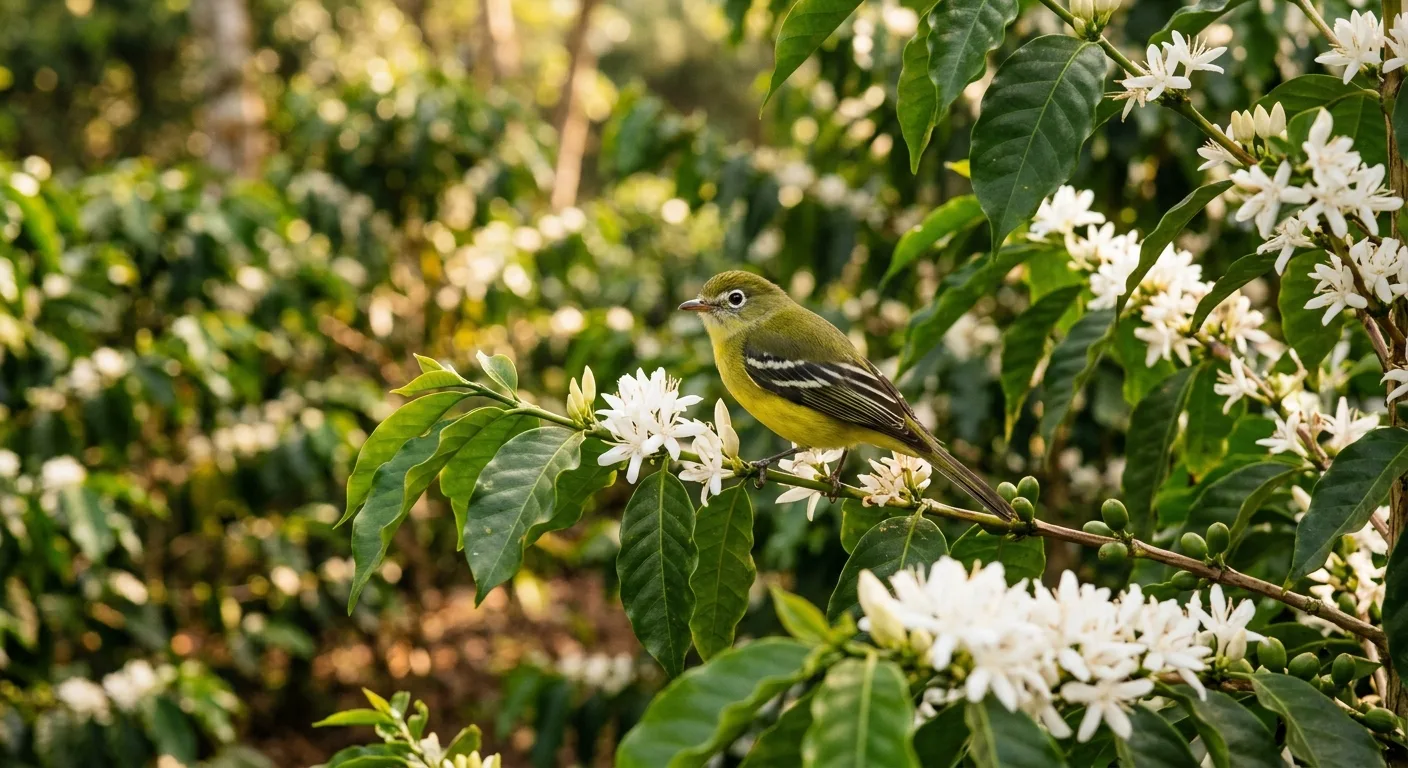
Shade-grown coffee farms fill that gap in ways that cleared farmland cannot. The canopy structure provides cover from predators. The mix of tree species produces insects, berries, and nectar. Studies from researchers and conservation organizations have found that shade-grown coffee farms can support more than 150 bird species, including many that are considered threatened or in decline.
Warblers, tanagers, thrushes, and orioles are among the most commonly recorded migratory species on shade-grown coffee farms in Guatemala, Costa Rica, and Colombia. Many of these birds spend their winters in Central America before returning north to breed.
Shade-grown coffee farms can support more than 150 bird species. For migratory birds, they are not just nice to have. They are essential rest stops on a very long road.
Sun-grown vs. shade-grown coffee
The difference between the two farming approaches goes well beyond habitat. Sun-grown, high-density cultivation produces higher yields per hectare in the short term, but it requires more chemical inputs, leads to higher rates of soil erosion, and degrades land faster over time. Shade-grown farms tend to have lower yields, but the coffee often develops more slowly and with greater complexity in flavor.
| Factor | Sun-grown monoculture | Shade-grown agroforestry |
|---|---|---|
| Bird species supported | Low (often fewer than 20) | High (often 100 or more) |
| Chemical input needs | Higher | Lower |
| Soil health over time | Degrades faster | More stable |
| Coffee flavor development | Faster, often flatter | Slower, often more complex |
| Forest cover preserved | None | Significant |
Where the best shade-grown origins come from
Several of the most respected specialty coffee origins happen to align closely with strong agroforestry traditions. Colombia, Guatemala, Costa Rica, and Ethiopia all have significant farming communities that grow coffee under shade, often with organic practices layered on top. These are not coincidentally some of the most complex and sought-after coffees in the world.
At Diving Moose Coffee, several of our single-origin and certified offerings come from exactly these kinds of farms. The Condor is a single-origin Colombian coffee from the Sierra Nevada region, grown with organic certification. The Kinkajou comes from the high-altitude Huehuetenango region of Guatemala, an area with a long tradition of shade cultivation. And The Nyala is an organic Sidamo coffee from Ethiopia, where forest-garden farming systems have existed for centuries.
Look for Organic and Fair Trade certification on your coffee bag. These labels are not perfect, but they reliably indicate farms that avoid synthetic pesticides and pay growers fairly, both of which tend to correlate with shade-growing practices.
How your coffee purchase connects to this
The economics here are straightforward. Shade-grown and organic certified coffee costs more to produce. If that coffee does not command a price premium in the market, farmers face real pressure to switch to higher-yield sun-grown methods. Consumer demand for certified, traceable coffee is one of the most direct ways to keep agroforestry systems financially viable for the farmers who maintain them.
That is also part of why the WWF partnership matters to us at Diving Moose Coffee. A portion of every purchase goes toward wildlife conservation, which includes habitat programs in exactly the regions where this kind of farming makes the biggest difference for migratory birds and other species.
Where to start
If you want to make your coffee habit work harder for bird habitat, start by shifting toward single-origin coffees from shade-growing regions with organic or Fair Trade certification. Our Organic and Fair Trade Certified collection is a good starting point, and our Central and South American coffees include options from the exact origins that matter most to migratory birds.
The coffee is genuinely good. And the farms it comes from are doing real work to keep bird habitat intact across one of the most important migratory corridors in the western hemisphere.