
How Sustainable Coffee Farming Protects Wildlife Habitats Around the World
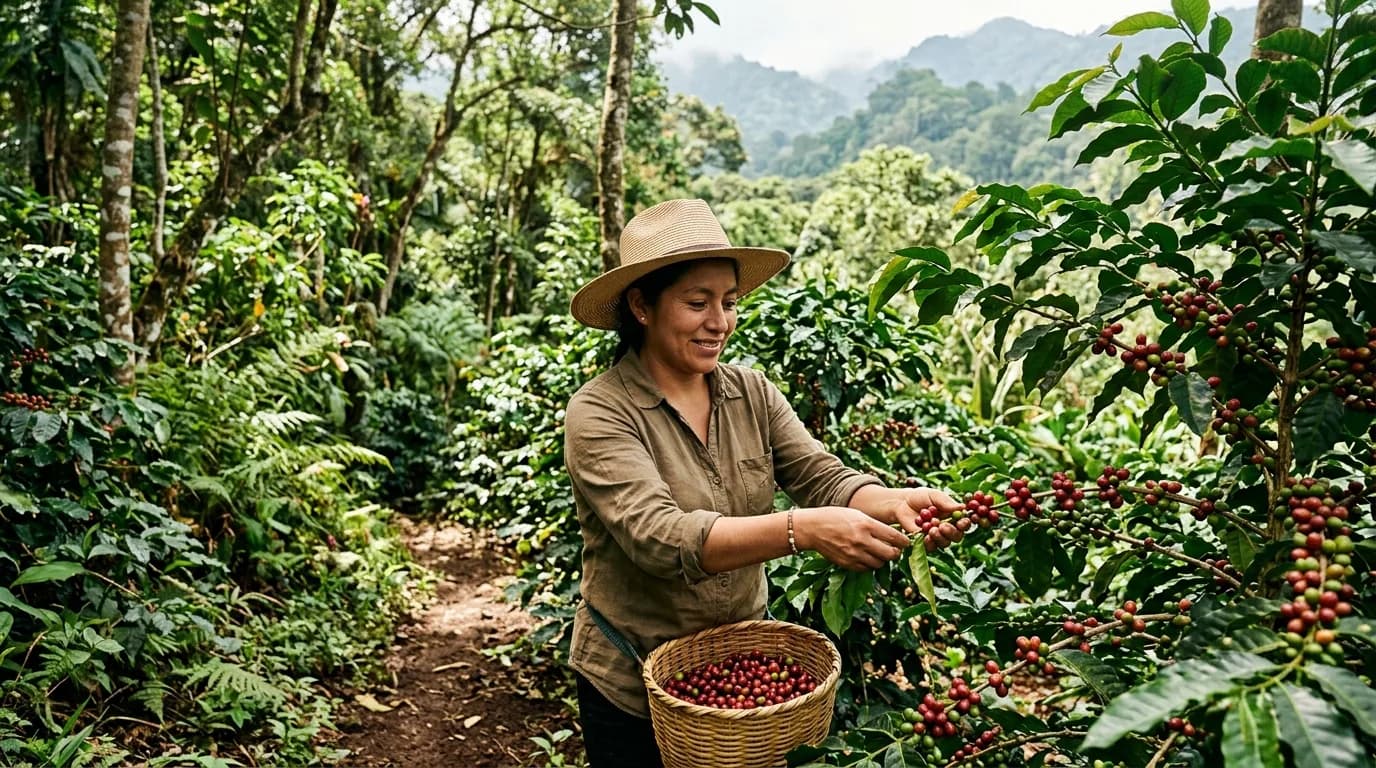
The way coffee is grown has a direct impact on the forests, birds, and mammals that share the same land. Sustainable farming practices keep those ecosystems intact while still producing great coffee.
Coffee farms and forests are closer than you think
Most of the world's coffee grows in the tropics, a band of land that overlaps almost perfectly with some of Earth's most biodiverse regions. The Congo Basin, the Amazon, the forests of Sumatra and Ethiopia all sit inside or right next to major coffee-growing zones. That proximity matters.
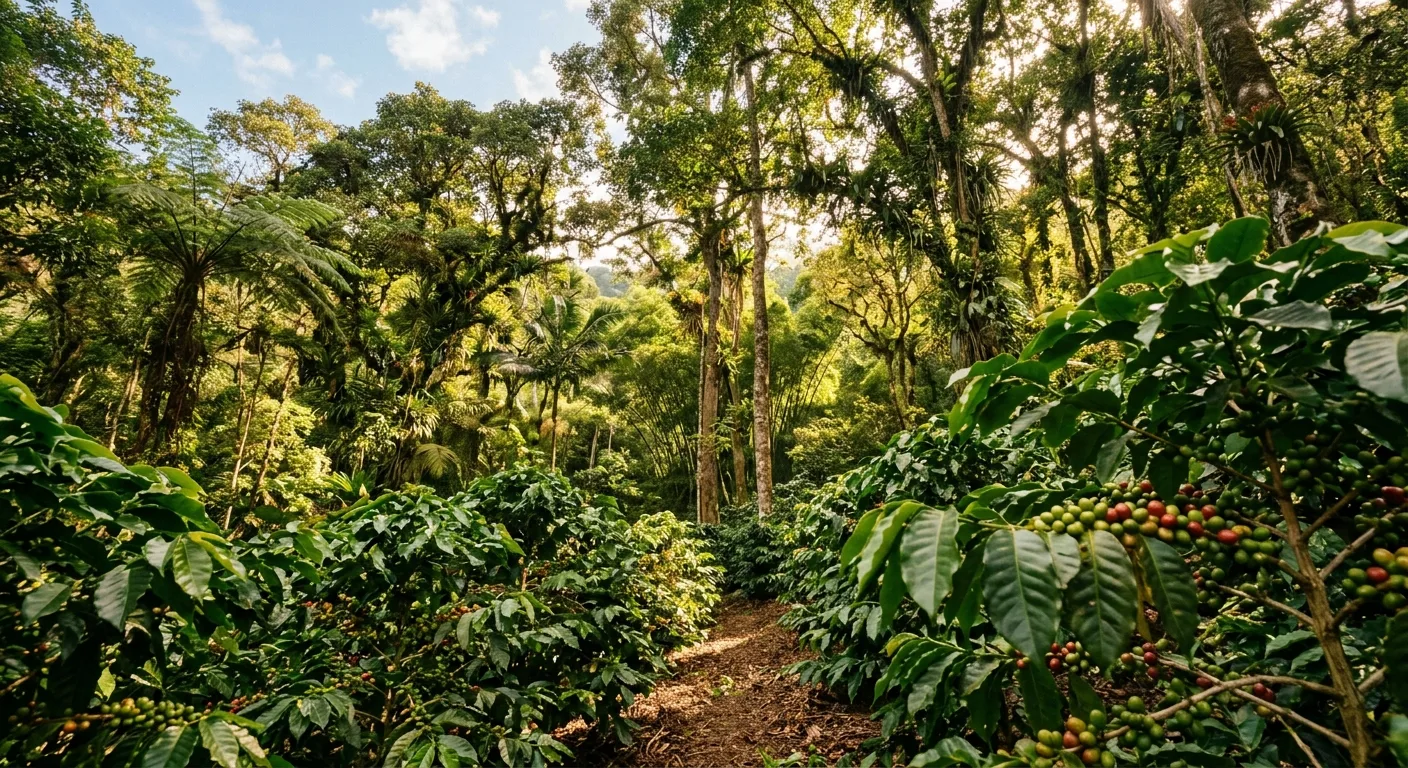
When farms clear forest to plant coffee in full sun, the habitat disappears. When farms keep trees standing and grow coffee beneath them, the habitat stays. That single choice determines whether migratory birds, mammals, and insects have a place to live.
What shade-grown farming actually does
Shade-grown coffee is planted under a canopy of native trees rather than in open fields. Those trees provide shelter for birds during migration, food for insects, and root systems that hold soil in place and filter rainwater into streams.
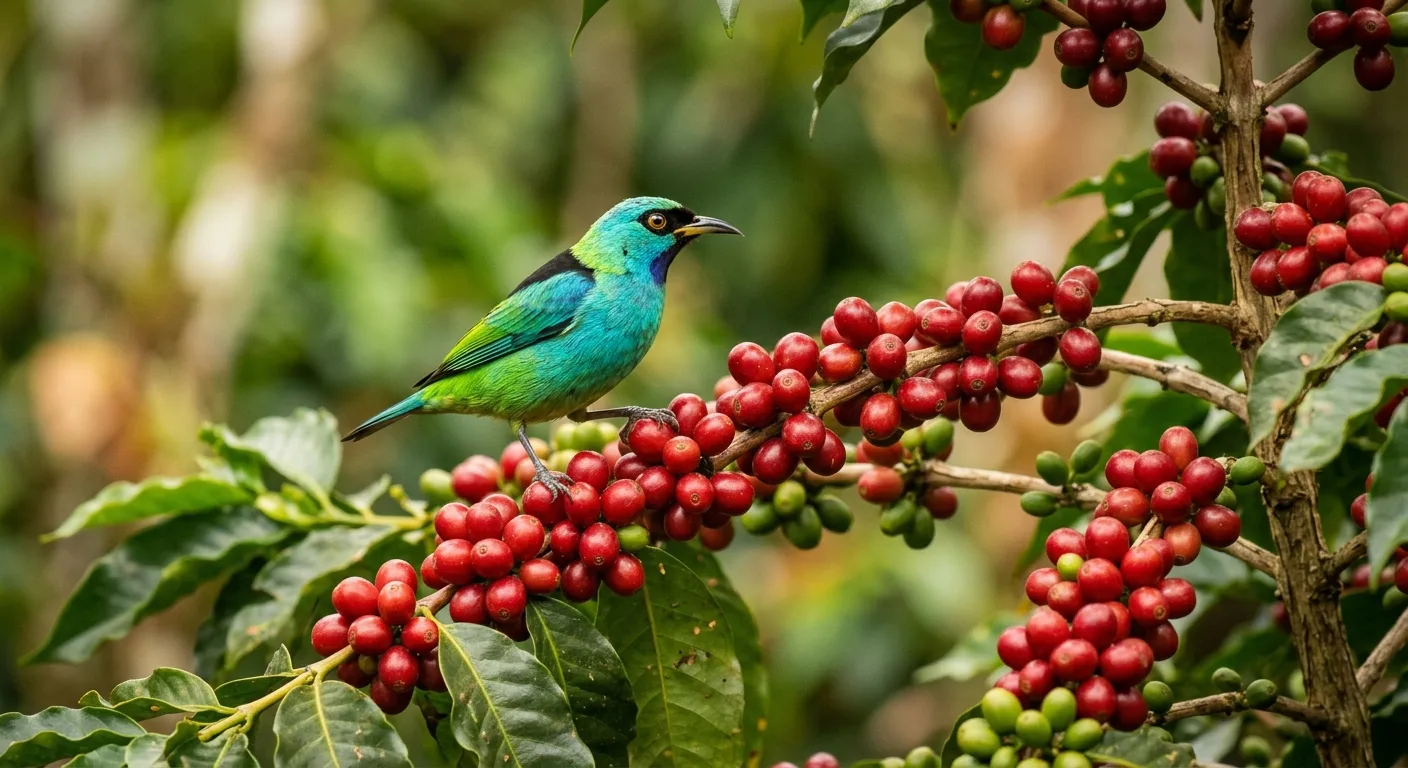
Studies from coffee-growing regions in Latin America have found that shade farms host significantly more bird species than sun-grown monoculture farms. Some of those birds eat the insects that damage coffee plants, reducing the need for pesticides. The ecosystem does part of the work.
The ecosystem does part of the work. Shade trees attract birds that control pests, which means fewer chemicals on the land and in the water.
The problem with conventional sun-grown coffee
In the 1970s and 1980s, agricultural programs pushed farmers toward higher-yield sun-grown varieties. Forests were cleared, chemical inputs went up, and production increased. Wildlife paid the price.
Sun-grown coffee requires more fertilizer and pesticide because there are no trees moderating temperature, hosting beneficial insects, or adding organic matter to the soil. Runoff from those chemicals enters local waterways and affects fish, amphibians, and the animals that depend on clean water.
Conventional coffee farming is one of the more chemically intensive crops in the world. Certified organic farms avoid synthetic pesticides and fertilizers entirely, which significantly reduces the chemical load on surrounding habitat.
Certifications worth knowing
Not all sustainability labels mean the same thing. Here is a quick comparison of the most common ones and what they actually require.
| Certification | What it covers | Wildlife benefit |
|---|---|---|
| USDA Organic | No synthetic pesticides or fertilizers | Healthier soil, cleaner water |
| Fair Trade | Fair pay for farmers, some environmental standards | Moderate, supports better land stewardship |
| Bird Friendly (Smithsonian) | Shade canopy requirements plus organic | Strong, directly protects avian habitat |
| Rainforest Alliance | Environmental and social standards | Good, focuses on ecosystem management |
Bird Friendly certification from the Smithsonian Migratory Bird Center sets some of the toughest habitat standards in the industry. It requires both organic production and a minimum canopy cover, which means the forest structure has to actually be there, not just promised.
How organic farming protects more than the soil
Organic certification eliminates synthetic chemicals, but the ripple effect goes further than the farm boundary. Cleaner soil means cleaner runoff. Cleaner runoff means healthier rivers. Healthy rivers support fish populations, amphibians, and the larger predators that depend on them.
At Diving Moose Coffee, several of our coffees carry organic and fair trade certification. Our organic and fair trade collection includes single-origin and blended options grown without synthetic inputs. The Nyala, for example, is an Ethiopia Sidamo organic medium-dark roast sourced from a region where wild coffee plants still grow in native forests. You can find it at The Nyala product page.
If you want to start with something approachable, our 4-Count Most Popular Sample Pack includes a mix of our top-selling roasts, some of which are organically sourced. It is a low-commitment way to find a coffee you love while supporting responsible farming.
The WWF connection
Diving Moose Coffee donates a portion of every purchase to wildlife conservation through our partnership with WWF. That money supports habitat protection, anti-poaching efforts, and research in some of the same regions where our coffee is grown. Buying a bag of coffee becomes a small, concrete act that funds the work happening on the ground.
The link between what is in your cup and what happens in a forest halfway around the world is real. Sourcing decisions, farming practices, and conservation funding are all connected.
What farmers gain from sustainable practices
Sustainable farming is not just better for wildlife. It is often better for farmers too. Shade trees reduce the need for irrigation by retaining moisture. Organic practices lower input costs over time. Healthier soil produces more consistent harvests across decades rather than peaking and declining like chemically managed land.
Farmers who invest in sustainability tend to qualify for specialty coffee premiums, which pay more per pound than commodity-grade coffee. That economic incentive matters because it makes conservation financially viable rather than just idealistic.
What you can do from your kitchen
Buying certified coffee is the most direct way to support these farming systems. Look for organic, fair trade, or Bird Friendly labels. When you buy from a company that also funds conservation directly, that impact compounds.
If you want to explore coffees grown in some of the world's most biodiverse regions, our single-origin collection includes beans from Ethiopia, Indonesia, Colombia, and more. Each origin page explains where the coffee comes from and how it is grown. That transparency is intentional.