
From Farm to Your Cup: The Full Journey of Specialty Coffee
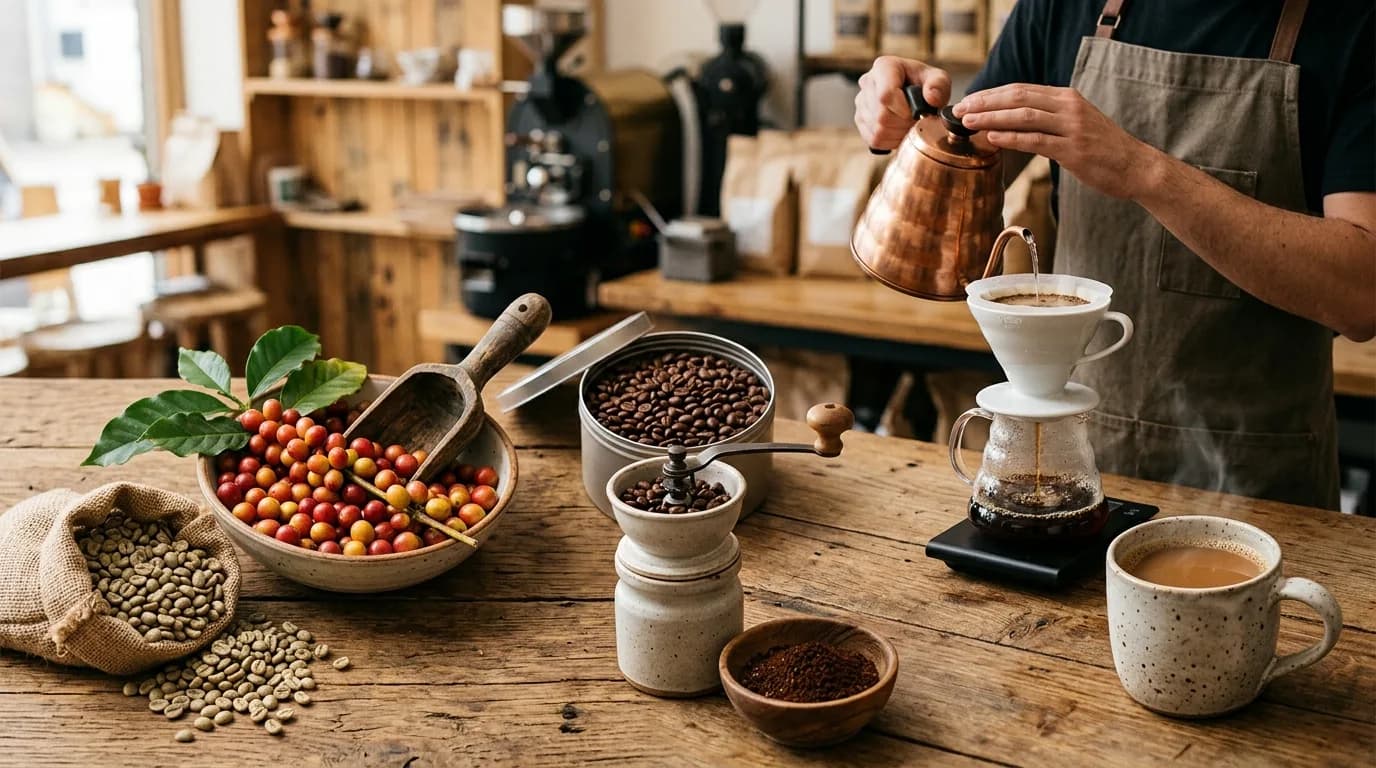
Most people think about coffee the moment it hits their mug. But a lot happens before that, across months and thousands of miles, and understanding that journey changes how you taste what's in your cup.
It starts with the plant
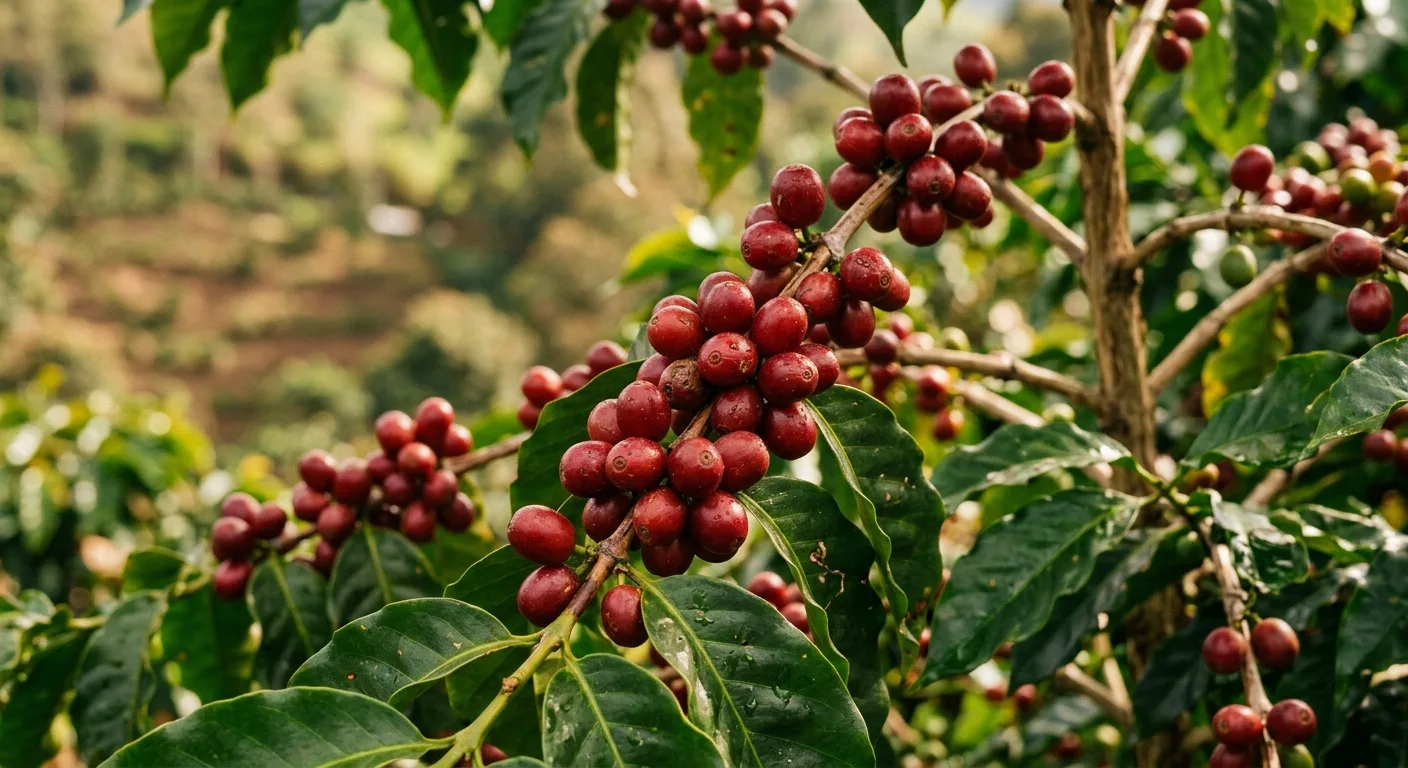
Coffee comes from a flowering shrub, and the two species you'll encounter most are Arabica and Robusta. Specialty coffee is almost always 100% Arabica. Arabica grows best at high altitudes, in well-drained volcanic soil, with consistent rainfall and mild temperatures. Those conditions slow the cherry's development and let more complex sugars build up in the seed.
The region where the plant grows leaves a fingerprint on the cup. Ethiopian coffees tend toward bright fruit and floral notes. Brazilian coffees are typically nuttier and lower in acidity. Indonesian beans lean earthy and full-bodied. This is what coffee people mean when they talk about terroir, the same concept wine drinkers use to describe how geography shapes flavor.
Harvesting: not as simple as it sounds
Coffee cherries don't ripen all at once on a branch. On the same plant, you might have green, yellow, and deep red cherries at the same time. For specialty coffee, selective hand-picking is standard. Workers move through the trees repeatedly over several weeks, taking only the ripe red cherries each pass. It's slow and labor-intensive, and that's exactly why it produces better coffee.
Strip harvesting and machine harvesting are faster and cheaper. They take everything at once, ripe or not. That approach works fine for commodity coffee, but it's not how specialty farms operate.
Specialty coffee earns a score of 80 or above on the Specialty Coffee Association's 100-point scale. The scoring covers aroma, flavor, acidity, body, and aftertaste, among other attributes.
Processing: where flavor gets shaped
After harvest, the fruit around the seed has to be removed. This stage is called processing, and the method used has a significant effect on what ends up in your cup. There are three main approaches.
| Method | How it works | Flavor profile |
|---|---|---|
| Washed (wet) | Fruit removed before drying | Clean, bright, high acidity |
| Natural (dry) | Whole cherry dried with fruit on | Fruity, wine-like, heavy body |
| Honey | Partial fruit left on during drying | Sweet, balanced, medium body |
After processing, the seeds are dried to a precise moisture level, then hulled and sorted. Any defective beans get removed here. What's left is called green coffee, and it can be stored and shipped in this form for months without losing quality.
The roast
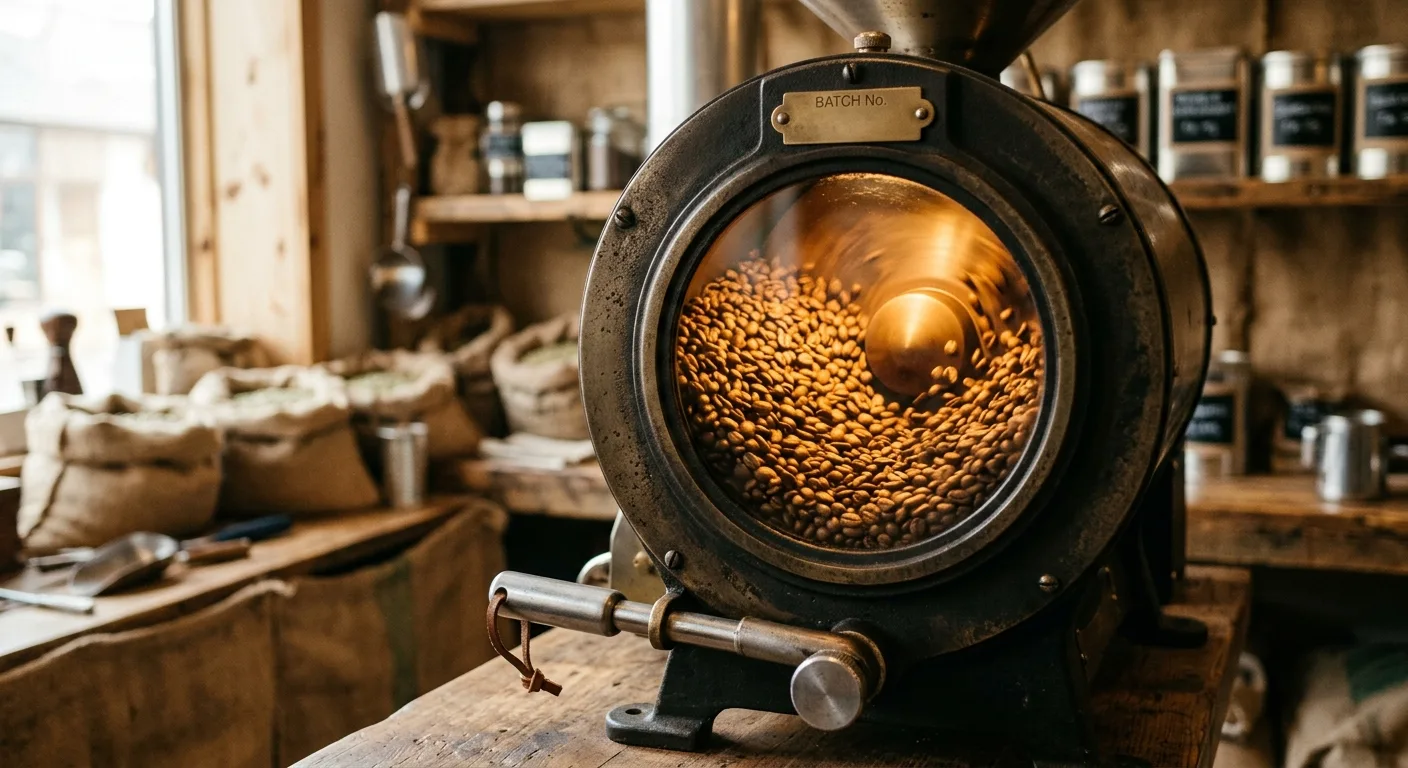
Green coffee is essentially flavorless on its own. Roasting is where the chemistry happens. Heat triggers hundreds of chemical reactions that produce the aromas, colors, and flavors we associate with coffee. A light roast preserves more of the origin character. A darker roast develops bolder, roastier notes and reduces brightness.
A light roast preserves more of the origin character. A darker roast develops bolder, roastier notes and reduces brightness.
Small-batch roasting gives the roaster more control. At Diving Moose Coffee, every roast is done in small batches in Georgia, which means the beans you receive haven't been sitting in a warehouse for weeks. You can see the full range of roast styles across our Georgia Roasted Single Origin Coffees, from light and bright to rich and full-bodied.
Sourcing and transparency
Specialty coffee companies usually know where their beans come from at the farm or cooperative level. That traceability matters because it puts pressure on the supply chain to treat farmers fairly and maintain quality. When a bag tells you the region, the farm, and the processing method, that's not just marketing. It's accountability.
Coffees from distinct regions taste distinct for a reason. Our Africa and Arabia collection pulls from growing regions like Ethiopia and Kenya, where the soil and altitude produce some of the most complex cups you'll find. Our Indonesia and Pacific collection covers earthy, full-bodied beans from places like Flores and Papua New Guinea.
If you want to taste how much origin matters, try two single-origin coffees side by side from different continents. Brew them the same way and compare. The differences will be obvious.
Packaging and freshness
Coffee starts going stale as soon as it's roasted. Carbon dioxide releases from the beans over the first few days, which is why most specialty bags have a one-way valve. That valve lets gas out without letting oxygen in. Once you open the bag, aim to use it within two to three weeks for best results.
Grind size also affects how fast coffee goes stale. Pre-ground coffee loses freshness much faster than whole beans because grinding exposes far more surface area to air. If you can grind just before brewing, do it.
Your brew
By the time coffee reaches your cup, it has traveled across at least six stages and possibly thousands of miles. How you brew it is the last step, and it's the one you control completely. Water temperature, grind size, brew ratio, and time all affect the final result. None of it has to be complicated, but small adjustments make a real difference.
If you're not sure where to start with specialty coffee, our 4-Count Most Popular Sample Pack is a practical way to try four different roasts before committing to a full bag. You'll get a sense of how much variety exists within the specialty category and find what actually fits your taste.
The journey from farm to cup is long, and every stage either adds to or takes away from what ends up in your mug. Knowing the stages doesn't just make you a better buyer. It makes you a more attentive drinker, and that's where the real payoff is.