
Light Roast vs. Dark Roast Coffee: Which Has More Caffeine and Which Tastes Better?
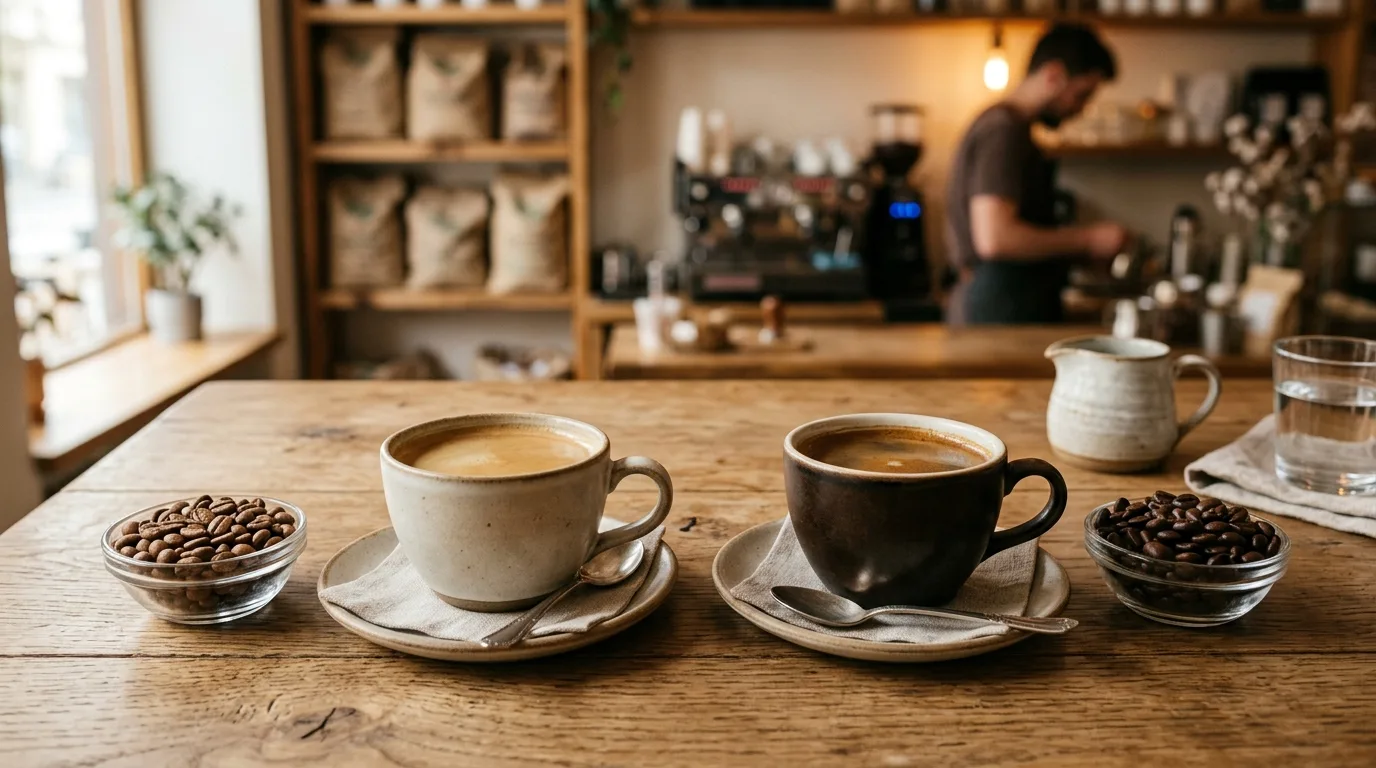
Most people assume dark roast means stronger coffee. More caffeine, bolder flavor, more of everything. The truth is a little more complicated, and once you understand what roasting actually does to a coffee bean, the choice between light and dark becomes a lot more interesting.
What roasting actually does to a coffee bean
A green coffee bean is dense, grassy, and full of moisture. Roasting removes that moisture and triggers chemical changes that create the flavors, aromas, and color we associate with coffee. The longer and hotter the roast, the more those original characteristics break down and get replaced by roast-driven ones.
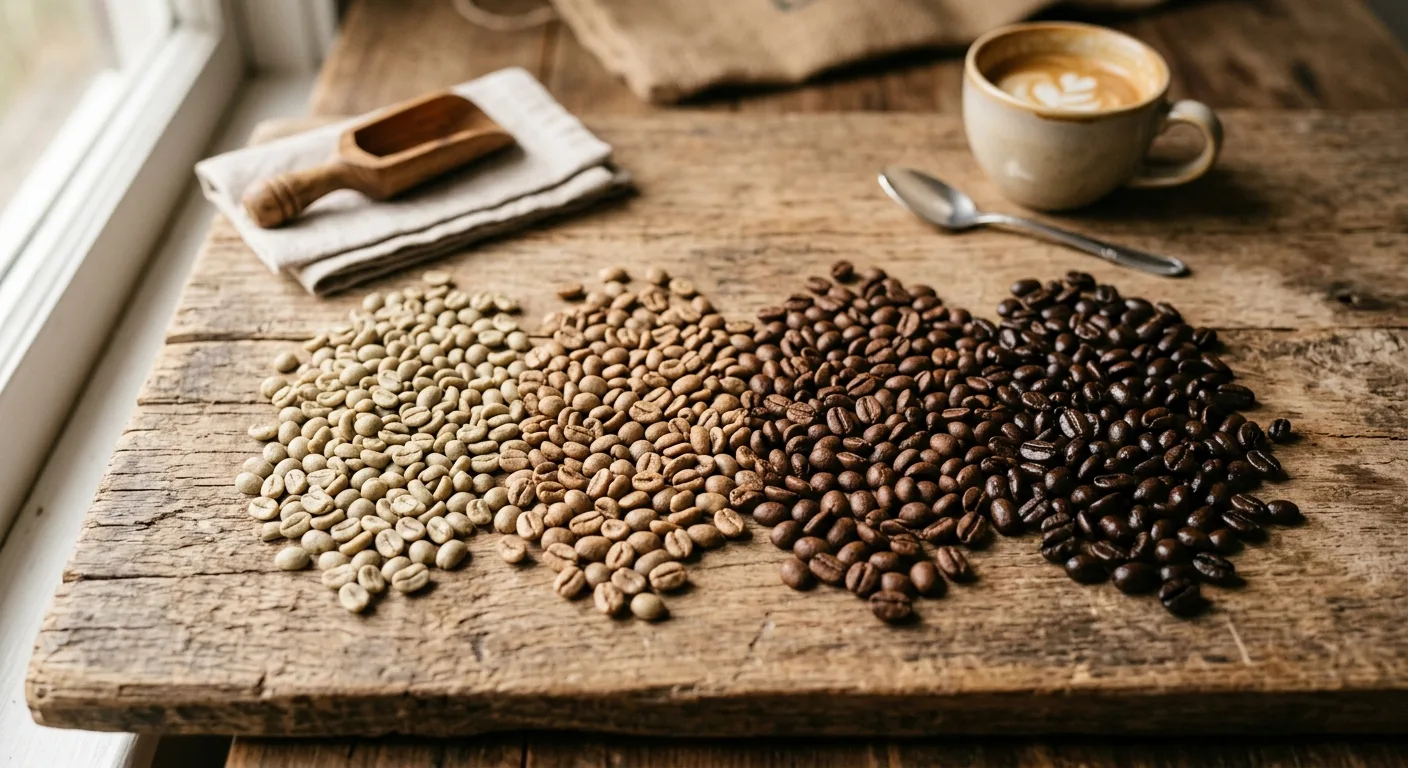
Light roasts are pulled from the roaster earlier, so they retain more of what was in the bean to begin with. Dark roasts go further, often past a second crack, which is when oils migrate to the surface and the flavor shifts toward chocolate, smoke, and bitterness.
The caffeine question
This is the one that surprises most people. By weight, light roast coffee has slightly more caffeine than dark roast. Roasting breaks down caffeine along with everything else, so the longer the roast, the more caffeine is lost. The difference is not dramatic, but it is real.
Dark roast tastes stronger, but that boldness comes from roast chemistry, not caffeine content.
Here is where it gets practical. Most people scoop their coffee by volume, not by weight. Dark roast beans are larger and less dense because they have lost more moisture. So a tablespoon of dark roast contains fewer beans, and therefore slightly less caffeine, than a tablespoon of light roast. If you weigh your coffee (and you should), the gap is small. If you scoop it, light roast wins by a slightly larger margin.
If caffeine is your main goal, use a scale instead of a scoop. Brew at a ratio of about 1 gram of coffee to 15 to 16 grams of water for a standard drip cup.
How roast level changes flavor
Flavor is where the roast decision really matters. Light and dark roasts taste genuinely different, and neither is objectively better. They are just doing different things.
| Roast Level | Typical Flavors | Acidity | Body |
|---|---|---|---|
| Light | Fruit, floral, citrus, tea-like | Higher | Light to medium |
| Medium | Caramel, nuts, mild chocolate | Balanced | Medium |
| Dark | Chocolate, smoke, bittersweet, roasty | Lower | Full |
Light roast lets the origin shine. A coffee from Ethiopia will taste completely different from one grown in Guatemala, and a light roast makes those differences obvious. Dark roast, by contrast, smooths out the origin character. Two dark roasts from different countries can taste more similar to each other than two light roasts do.
Which roast works with which brew method
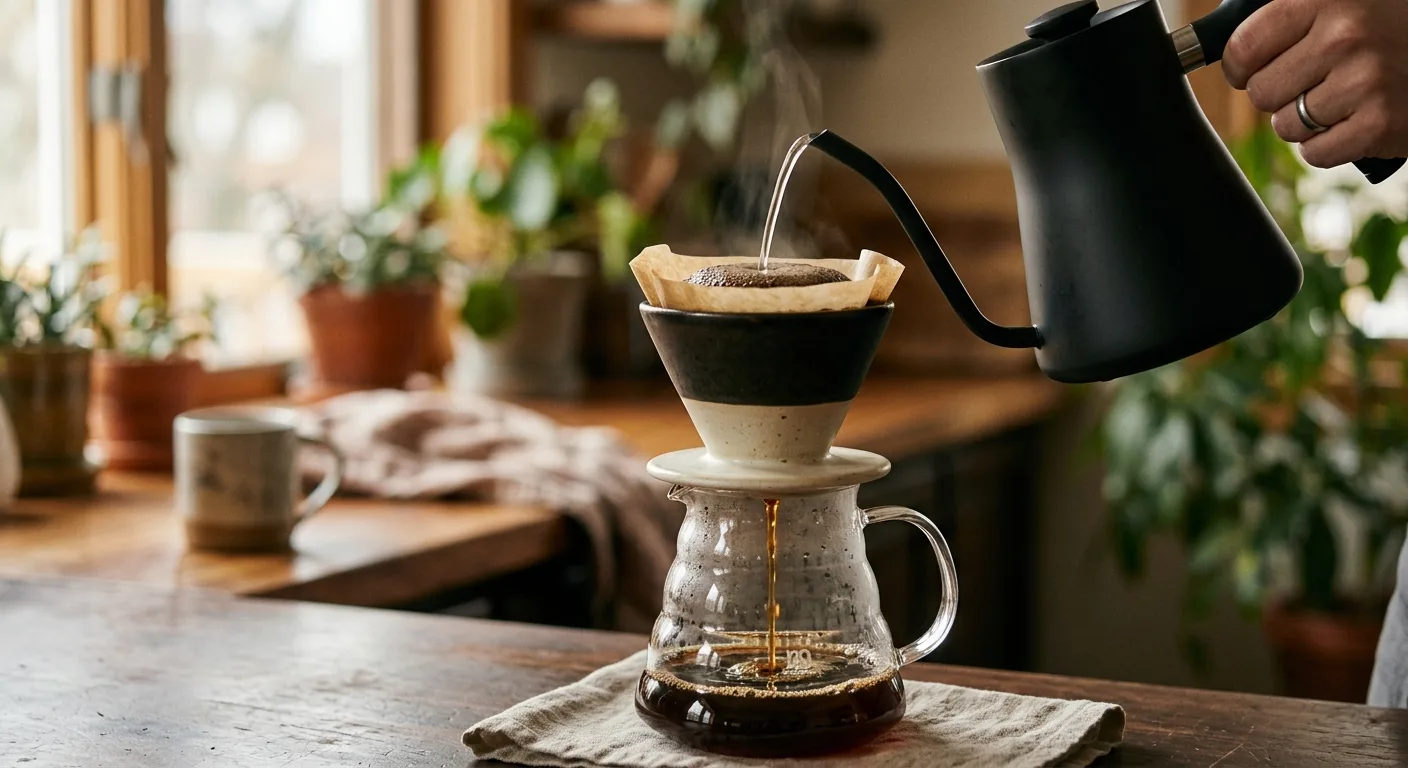
Roast level and brew method are connected. Light roasts do well with methods that extract slowly and cleanly, like pour-over or a quality drip machine. The slower extraction pulls out the delicate flavors without turning acidic notes harsh.
Dark roasts hold up well under pressure, which is why they work in espresso machines. The fast, high-pressure extraction suits the bold, low-acid profile of a dark roast. Cold brew is another good match for dark roast, since the long steep time benefits from a heavier body.
If you find light roast coffee tastes sour rather than bright, try a coarser grind and slightly hotter water. Under-extraction, not the roast itself, is usually the cause of sourness.
What about medium roast
Medium roast sits in the middle and is the most popular roast level in the US for good reason. It balances origin character with roast flavor, keeps acidity in check, and works with almost any brew method. If you are new to specialty coffee, medium is a low-risk starting point.
Our Red Panda House Blend is a medium-light roast that works well for people who want something approachable without giving up complexity. It is a good bridge between light and dark.
So which should you choose
If you want to taste where a coffee came from, go light. If you want something rich, low-acid, and easy to drink black or with milk, go dark. If you want a little of both, medium roast is probably your answer.
The good news is you do not have to commit to one. Trying a few roasts side by side is the fastest way to figure out what you actually prefer. Our 4-Count Most Popular Sample Pack includes four of our top sellers at different roast profiles, which makes it easy to compare without buying full bags of each.
If you already know you lean dark, The Diving Moose Signature Medium-Dark Roast Blend is a good place to start. It has the body and low acidity of a dark roast but stops short of the heavy smokiness that puts some people off. And every bag you buy supports wildlife conservation through our WWF partnership, so the cup does a little more than just taste good.