
Moose, Glaciers, and Coffee: Discovering the Wild Side of the Pacific Northwest Through Specialty Beans
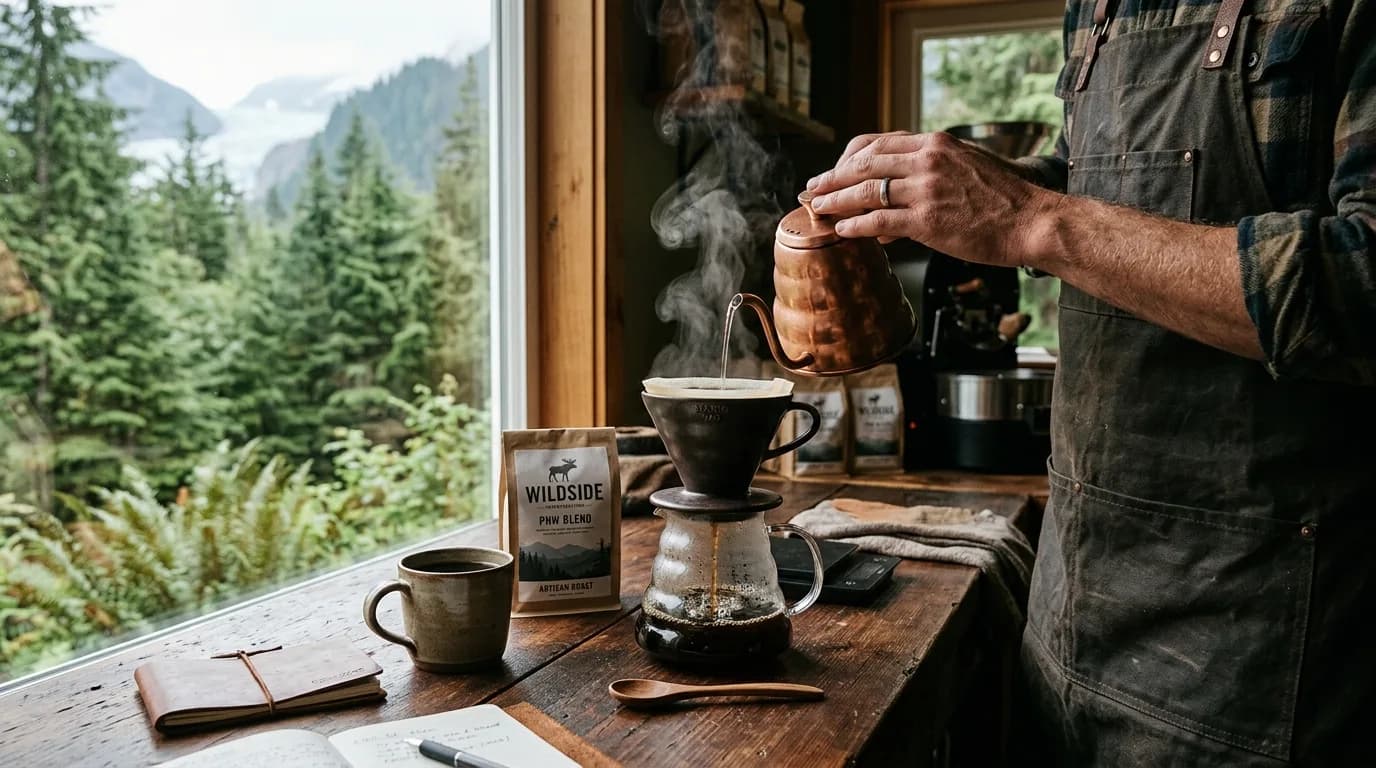
The Pacific Northwest has a way of making everything feel a little more alive. The air is cool and sharp. Old growth forests push up against volcanic peaks. And somewhere in that landscape, a good cup of coffee hits differently than it does anywhere else.
Why the Pacific Northwest and coffee go together
Seattle did not invent espresso, but it did a lot to make it mainstream in America. The drip-then-espresso shift that swept across the country in the 1980s and 1990s had deep roots in the Pacific Northwest. Dense cloud cover, cold mornings, and a culture built around outdoor work made strong coffee feel essential rather than optional.
That history stuck. Today the region is home to some of the most demanding coffee drinkers in the country, and roasters there helped build the vocabulary most coffee lovers now use: single origin, light roast, terroir, processing method.
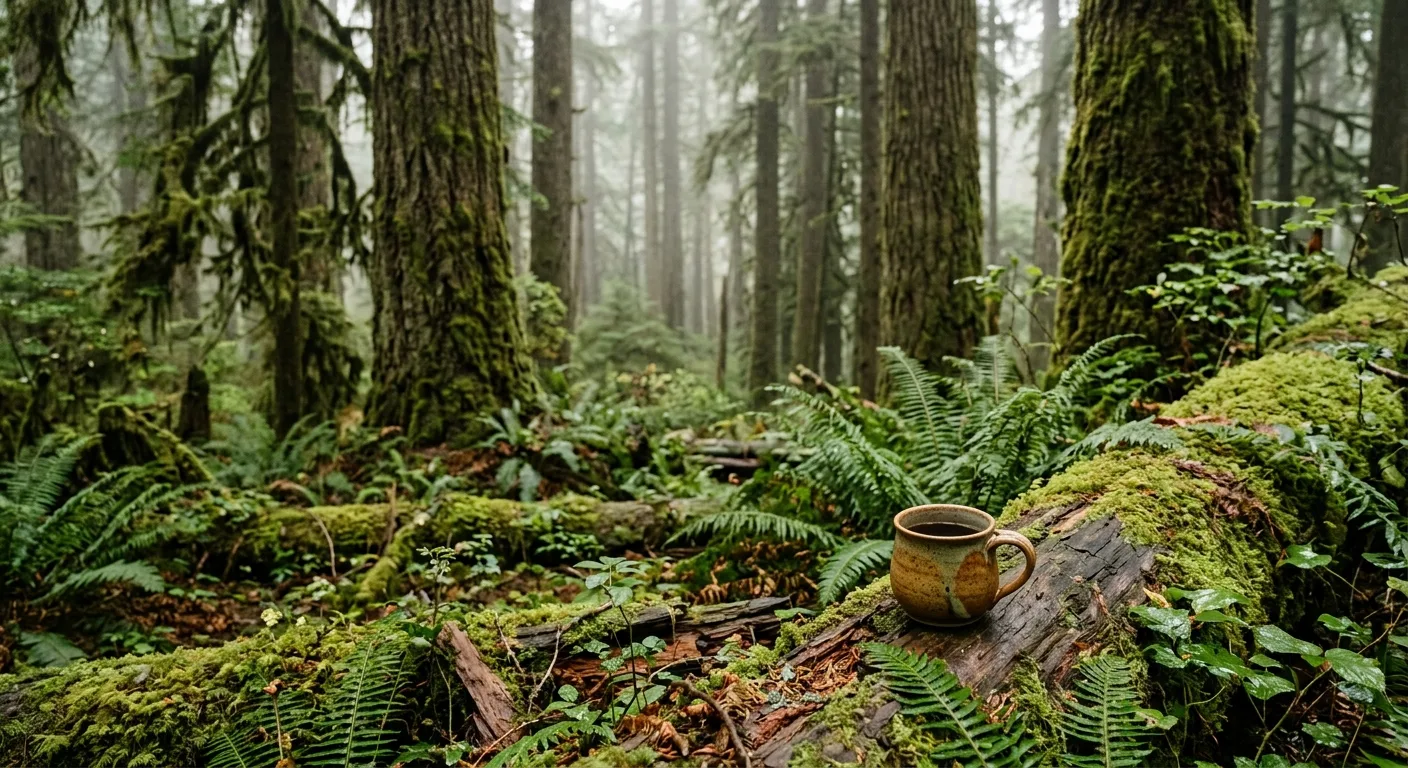
What moose and glaciers have to do with your morning cup
More than you might think. Moose roam the forests of the Cascades and the northern Rockies, feeding on wetland plants shaped by glacial runoff. That same glacial melt feeds watersheds that flow across some of the most biologically rich land on the continent. The health of those ecosystems depends on clean water, stable snowpack, and forests that stay intact.
Coffee growing regions around the world face the same pressures. High altitude farms in Ethiopia, Colombia, and Papua New Guinea rely on predictable rainfall and cool temperatures. When those conditions shift, the crop quality shifts with them. The ecological story of the Pacific Northwest and the ecological story of a coffee farm in Sidamo are not as separate as they look on a map.
A portion of every Diving Moose Coffee purchase goes to wildlife conservation through our WWF partnership. The moose on our brand is not just a logo. It represents a genuine commitment to the wild places that make this kind of coffee possible.
Single origin coffee and sense of place
One of the things specialty coffee does well is connect the cup to a location. A good single origin coffee does not just taste like coffee. It tastes like where it came from. Altitude, soil type, shade canopy, fermentation method, and drying conditions all leave a mark on the bean.
That idea maps cleanly onto how people experience the Pacific Northwest. You do not just see a mountain. You see a specific mountain, with a specific snowline and a specific species of fir tree on its slopes. Specificity is the whole point.
A good single origin coffee does not just taste like coffee. It tastes like where it came from.
Our The Condor is a good example of this. It comes from the Sierra Nevada region of Colombia, a high altitude growing area with a distinctive cup profile. Our The Nyala comes from the Sidamo region of Ethiopia, one of the oldest coffee growing areas on earth. Both are organic, single origin, and traceable to a specific geography.
Roast level and the Pacific Northwest palate
For a long time, dark roast was the default in American coffee culture. The Pacific Northwest helped shift that. Roasters there pushed back on over-roasting and started showcasing what lighter roasts could do, brighter acidity, more distinct fruit notes, and a cleaner finish.
That does not mean dark roast is wrong. It means the choice became intentional. A medium-dark roast from a quality bean in a region with good processing infrastructure is a completely different product from a dark roast used to mask defects in a lower grade bean.
| Roast level | What it tends to do | Good for |
|---|---|---|
| Light | Preserves origin flavors, higher acidity | Pour over, drip |
| Medium-light | Balanced, fruit and nut notes common | Drip, Chemex, AeroPress |
| Medium-dark | Deeper body, less acidity, some sweetness | Drip, French press, espresso |
| Dark | Bold, low acidity, roast flavors dominate | Espresso, cold brew |
The Jimothy connection
If you have spent any time around Diving Moose Coffee, you know Jimothy. He is a raccoon, deeply unbothered, and thoroughly at home in the Pacific Northwest. Raccoons are a fixture of the urban wild in Seattle, Portland, and the surrounding valleys. They are also, whether people like it or not, a sign that wildlife and human spaces still overlap in meaningful ways.
Jimothy is not just merchandise. He is a reminder that the wild side of the Pacific Northwest is not only found on a glacier or in an old growth stand. Sometimes it is rummaging through your compost bin at midnight.
If you want to bring a little Pacific Northwest energy into your morning routine, pair a cup of the Jimothy Roast with the Jimothy Travel Mug. The Jimothy Roast is an organic medium-dark from Indonesia Flores Bajawa, earthy and full-bodied with low acidity.
How to find your Pacific Northwest cup
You do not need to be in Seattle to drink like you are. What you need is a coffee sourced with care, roasted to highlight the bean rather than hide it, and brewed at the right temperature with clean water. That is it.
- Start with a single origin from a high altitude region like Ethiopia, Colombia, or Indonesia
- Use water between 195 and 205 degrees Fahrenheit
- Grind just before brewing whenever possible
- Try a pour over or drip method to let the origin flavors show clearly
- Pay attention to what the coffee actually tastes like, not what the label says it should taste like
Where to start with Diving Moose Coffee
If you are new to our roasts, the single origin collection is a good starting point. Each coffee is sourced from a specific region, roasted in small batches in Georgia, and named after a wild animal connected to its origin story.
Every bag you buy contributes to wildlife conservation. That is not a tagline. It is how the business is built. The moose is out there somewhere, probably near a glacier, probably unbothered. Your coffee helped keep that possible.