
Single-Origin vs. Blended Coffee Beans: Which One Is Right for Your Morning Cup?
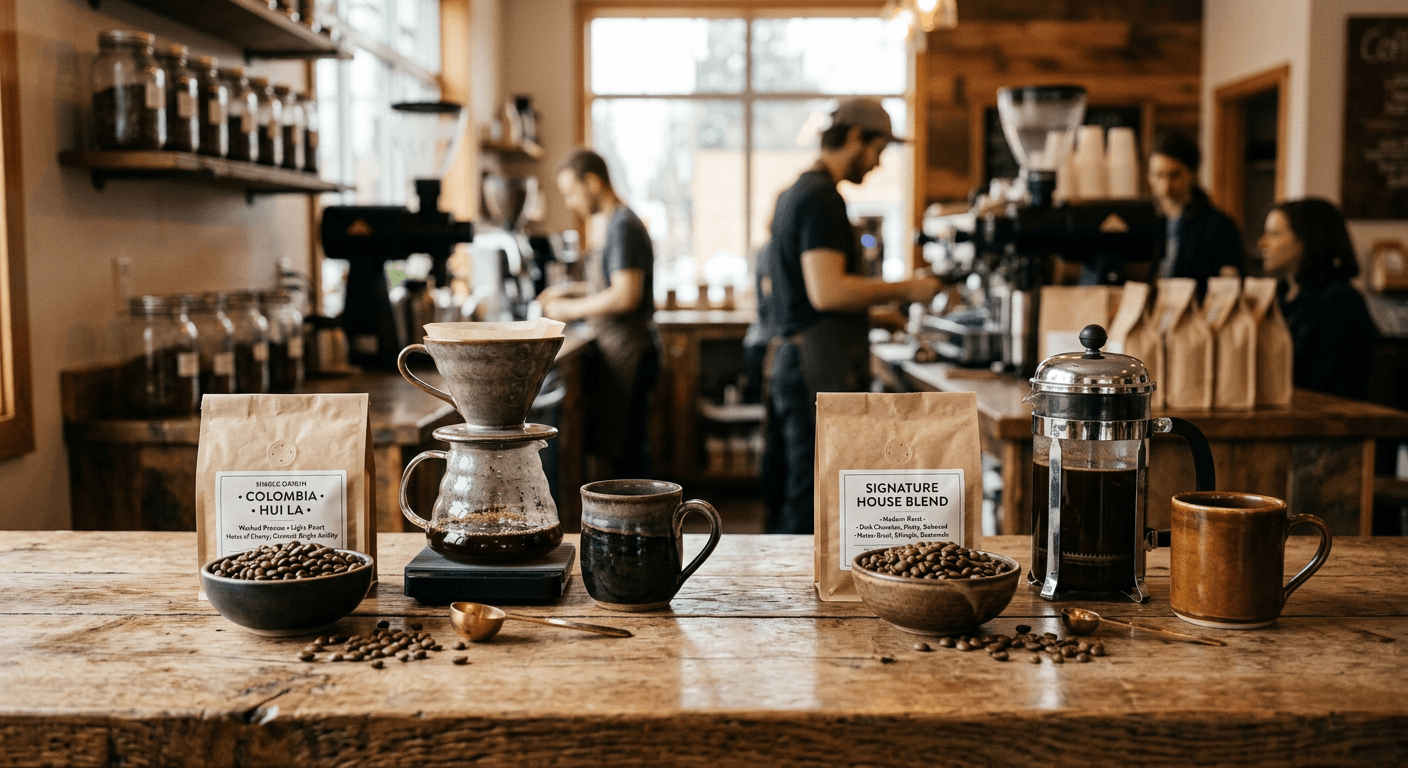
If you've spent any time browsing specialty coffee, you've probably seen the terms single-origin and blend thrown around. But what do they actually mean, and does it matter for your morning cup? Here's a straightforward breakdown to help you decide.
What Is Single-Origin Coffee?
Single-origin coffee comes from one specific place. That could be a single country, a specific region within a country, or even a single farm or cooperative. The idea is traceability: you know exactly where your coffee was grown.
Because the beans come from one place, the flavors reflect that environment. Soil, altitude, rainfall, and processing methods all leave their mark on the final cup. A natural-processed Ethiopian coffee might taste fruity and floral. A washed Colombian might be clean and bright with notes of red apple.
Single-origin coffees are often seasonal too. When a harvest is gone, it's gone. That's part of what makes them interesting to a lot of coffee drinkers.
What Is a Coffee Blend?
A blend combines beans from two or more origins. Roasters do this intentionally, mixing coffees that complement each other to hit a specific flavor profile. One bean might add body, another adds brightness, and a third brings sweetness.
Blends are also built for consistency. Since no single harvest lasts forever, a roaster can swap in similar beans when one origin runs out, keeping the taste stable year-round. This is why your favorite café's house blend probably tastes the same every time you order it.
Blends are especially popular for espresso. The mix of origins can create a balanced, rich shot that holds up well with milk.
How They Taste Differently
Single-origin coffees tend to be more expressive. You might taste something unexpected, like jasmine, peach, or dark chocolate, depending on the origin and roast. The flavors can be more complex but also more polarizing. Not everyone wants their morning coffee to taste like a fruit salad.
Blends are usually more approachable. The goal is balance, so you're less likely to get a sharp or surprising flavor note. If you want something smooth, familiar, and consistent, a good blend delivers that reliably.
Neither is better. It really comes down to what you're looking for on any given morning.
Which One Works Best for Your Brew Method?
Your brewing method matters more than most people think when choosing between the two.
- Pour-over or filter coffee tends to highlight the nuances in single-origin beans. These methods are clean and precise, so the origin's character comes through clearly.
- Espresso works well with both, but blends were largely designed with espresso in mind. The pressure and heat of espresso can amplify acidity, so a blend helps keep things balanced.
- French press or cold brew suits either option, though blends often produce a fuller, more rounded result in these immersion methods.
- Moka pot pairs nicely with a medium roast blend, which can hold up to the stronger extraction without turning bitter.
Roast Level Plays a Role Too
Single-origin coffees are often roasted lighter to preserve the natural flavors of the bean. Roasting dark can mask those subtle notes, which is why you rarely see a heavily dark-roasted single-origin from a specialty roaster.
Blends can work across all roast levels. A dark roast blend is a classic choice for people who like a bold, full-bodied cup with low acidity. If you're used to a dark roast and want to try single-origin, starting with a medium roast from a well-known region like Colombia or Guatemala is a good place to begin.
Price and Value
Single-origin coffees are often more expensive. The traceability and limited seasonal availability drive the cost up. A micro-lot from a small farm with a specific harvest date will cost more than a house blend, plain and simple.
That doesn't mean blends are lesser quality. A well-crafted blend from a reputable roaster uses high-quality beans and requires real skill to put together. You can get excellent coffee at a fair price from a thoughtful blend.
If you drink a lot of coffee every day, a quality blend might make more sense for your budget. If you want to explore different flavor profiles or support specific farming communities, single-origin is worth the extra cost.
Why Origin Matters Beyond the Cup
At Diving Moose Coffee, we care about where beans come from, not just because it affects flavor, but because origin transparency connects you to the farmers growing your coffee. When you know your coffee comes from a specific cooperative in Ethiopia or a family farm in Peru, it changes how you think about what's in your cup.
That connection to the source is also why sustainability matters so much in specialty coffee. Responsible sourcing supports farming communities and helps protect the ecosystems where coffee grows, many of which overlap with critical wildlife habitats. Through our partnership with WWF, a portion of every purchase goes toward protecting those ecosystems around the world.
So, Which Should You Choose?
If you want consistency and approachability, go with a blend. It's reliable, balanced, and usually works well with any brew method.
If you want to explore, try something seasonal, or taste how a specific region expresses itself in your cup, pick a single-origin.
And honestly, there's no reason to choose just one. Many coffee drinkers keep a blend on hand for everyday mornings and pull out a single-origin when they want to slow down and pay attention to what's in the cup. That's a pretty good way to do it.