
Coffee Growing Regions of the World: How Altitude, Climate, and Soil Shape Your Coffee's Flavor
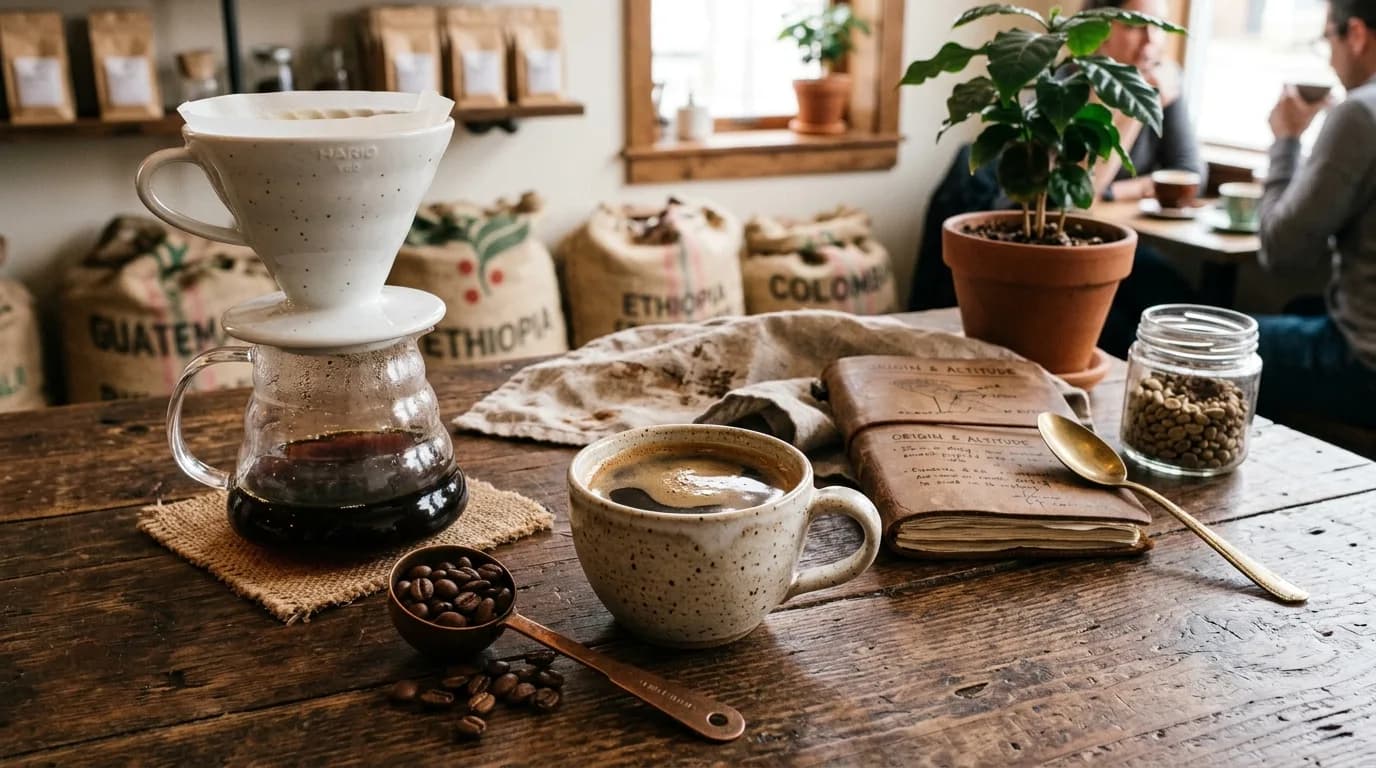
Where a coffee is grown shapes almost everything in your cup. The altitude, climate, and soil at origin determine acidity, body, sweetness, and aroma far more than most people realize. Understanding this connection makes you a better coffee drinker and helps you pick beans you'll actually enjoy.
The Bean Belt: coffee's home turf
Coffee trees need warmth, consistent rainfall, and mild temperatures. That limits commercial growing to a band circling the globe between roughly 25 degrees north and 25 degrees south latitude. This stretch covers parts of Central and South America, Africa, the Middle East, and the Asia-Pacific region.
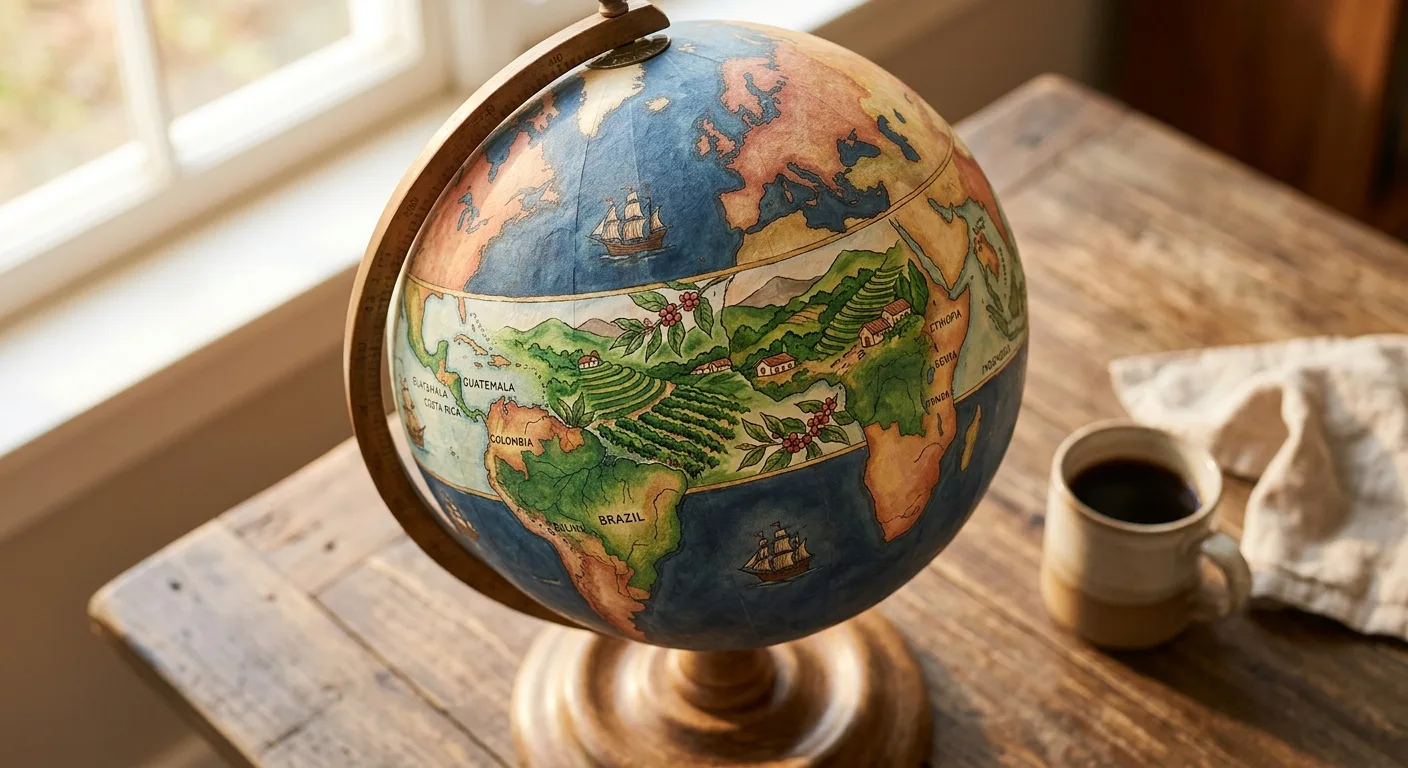
Within that belt, conditions vary enormously. A farm in Ethiopia at 2,000 meters has almost nothing in common climatically with a farm in Sumatra near sea level. Those differences show up clearly in the cup.
Why altitude matters so much
At higher elevations, temperatures are cooler and the air is thinner. Coffee cherries ripen more slowly under those conditions. Slower ripening gives the fruit more time to develop sugars and organic acids, which translates to brighter acidity and more layered flavor in the finished cup.
Coffees grown below 1,000 meters tend to be milder and lower in acidity. They can be pleasant and smooth, but they rarely have the complexity of a high-grown bean. Coffees grown above 1,500 meters often show floral or fruity notes that lower-elevation beans simply cannot produce.
When shopping for single-origin coffee, look for the farm or region elevation on the bag. Anything above 1,400 meters is a strong signal of potential complexity.
What soil does to flavor
Volcanic soil is rich in minerals and drains well, two traits that coffee plants thrive on. Regions built on volcanic geology, like Guatemala, Colombia, Ethiopia, and parts of Indonesia, consistently produce distinctive cups because the mineral content of the soil feeds directly into the plant's chemistry.
Sandy or clay-heavy soils hold moisture differently and provide fewer trace minerals. Farms on those soils can still produce good coffee, but they often need careful management to compensate. Soil pH also plays a role. Coffee prefers a slightly acidic environment, and regions that naturally provide that tend to produce fruit-forward, well-balanced beans.
A region-by-region breakdown
Every major growing region has a consistent flavor identity shaped by its geography. This is a simplified overview, but it gives you a useful starting point.
| Region | Typical altitude | Climate type | Flavor profile |
|---|---|---|---|
| Ethiopia | 1,500 to 2,200m | Highland tropical | Floral, fruity, berry, wine-like |
| Colombia | 1,200 to 2,000m | Andean mountain | Balanced, caramel, mild citrus |
| Guatemala | 1,300 to 1,800m | Volcanic highland | Chocolate, nutty, mild spice |
| Costa Rica | 1,200 to 1,900m | Tropical highland | Clean, bright, stone fruit |
| Brazil | 800 to 1,300m | Subtropical | Nutty, low acid, smooth body |
| Sumatra (Indonesia) | 1,000 to 1,500m | Humid equatorial | Earthy, full body, low acidity |
| Papua New Guinea | 1,300 to 1,800m | Humid highland | Fruity, syrupy, mild earthiness |
Altitude, soil, and climate are not marketing words. They are the actual ingredients behind every flavor note on a coffee bag.
Africa and Arabia: where coffee started
Ethiopia is the birthplace of coffee and still one of the most exciting origins in the world. Coffees from the Sidamo and Yirgacheffe regions are grown at very high altitude on ancient, biodiverse land. They tend to show floral and berry-forward characteristics that are unlike anything from the Americas or Asia.
At Diving Moose Coffee, The Nyala is a single-origin Ethiopia Sidamo organic medium-dark roast. It comes from one of the most storied growing regions on earth, and it reflects the terroir clearly with bright, complex character. You can explore more coffees from this part of the world in our Africa and Arabia collection.
The Americas: range and reliability
Central and South America produce a huge share of the world's coffee, and for good reason. The altitude range across countries like Colombia, Guatemala, Costa Rica, and Brazil allows for everything from crisp, light roasts to heavy, chocolatey blends.
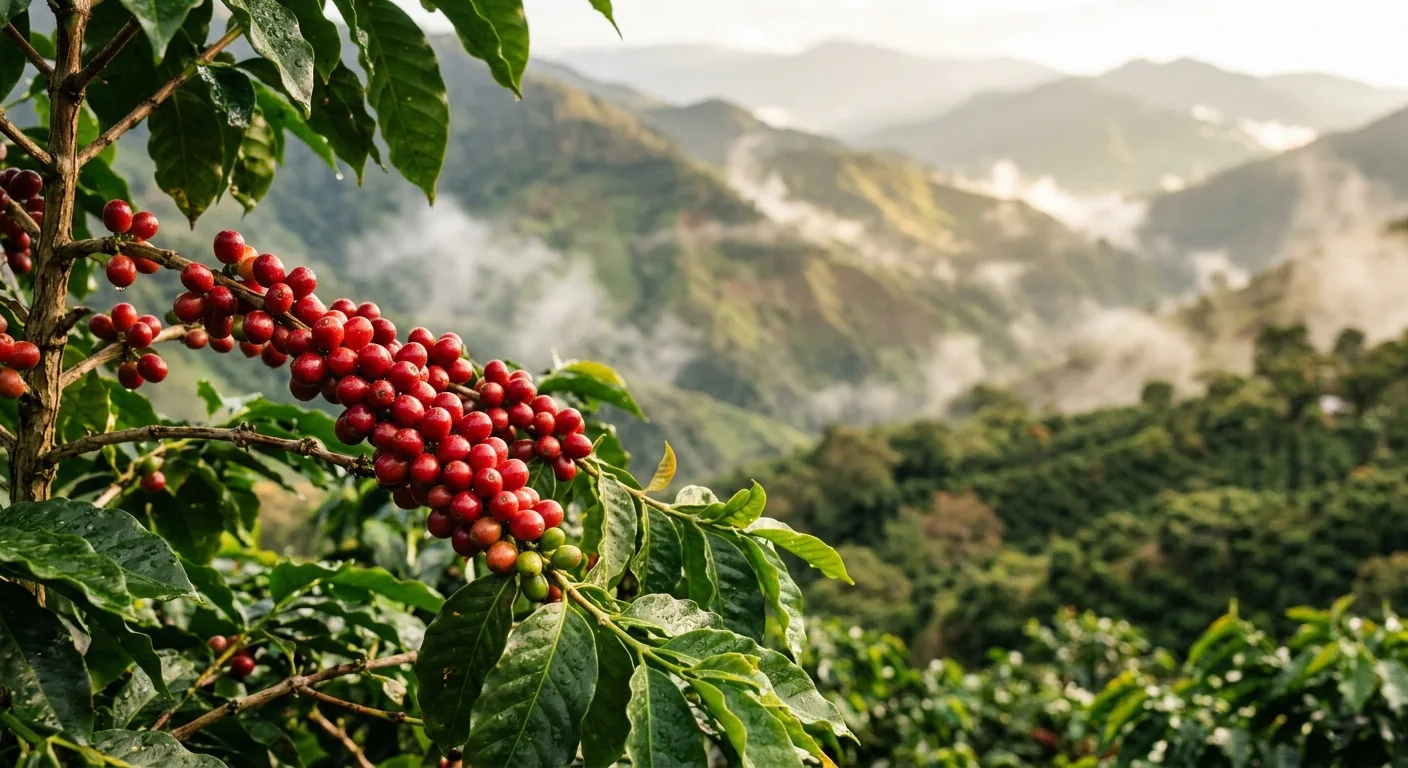
Colombia's Andean geography produces naturally balanced coffee with gentle acidity, which is part of why Colombian beans appear in so many blends. The Condor is our single-origin Colombia Sierra Nevada organic medium-light roast, and it captures that balance well. Brazil, by contrast, grows coffee at lower altitudes, producing the smooth, nutty character that works well in espresso blends. Our Otter Brazil Mogiana is a good example of that profile. Browse the full Americas collection to compare origins side by side.
Costa Rica and Guatemala both use high-altitude volcanic soil, which is part of why their coffees tend to be clean and well-structured. Our Toucan Costa Rica Terrazu and Kinkajou Guatemala Huehuetenango are both worth trying if you want to taste that highland character directly.
Indonesia and the Pacific: earthy and full
Indonesian coffees from Sumatra, Sulawesi, and Flores have a very different character from African or Latin American beans. The humid equatorial climate and wet-hulling processing method common to the region produces coffee with deep body, low acidity, and earthy, sometimes woody flavor notes. It is a profile that divides coffee drinkers, but those who like it tend to seek it out specifically.
Our Jimothy Roast is an organic medium-dark roast from Flores Bajawa, Indonesia, and it is a strong example of what Pacific-region terroir delivers. You can find more from this part of the world in our Indonesia and Pacific Region collection.
Use this knowledge when you shop
Knowing these regional patterns is a practical tool. If you want bright, fruity coffee, look at African origins grown above 1,500 meters. If you prefer something smooth and low-acid, Brazilian or Indonesian beans are a better fit. If you want balance and versatility, Colombian or Costa Rican single origins are a reliable starting point.
If you want to taste multiple origins without committing to a full bag, our 4-Count Most Popular Sample Pack is a practical way to compare profiles side by side. Four different coffees, each 4 ounces, roasted in small batches in Georgia.