
Single-Origin vs. Blended Coffee: Which One Is Right for Your Taste and Values?
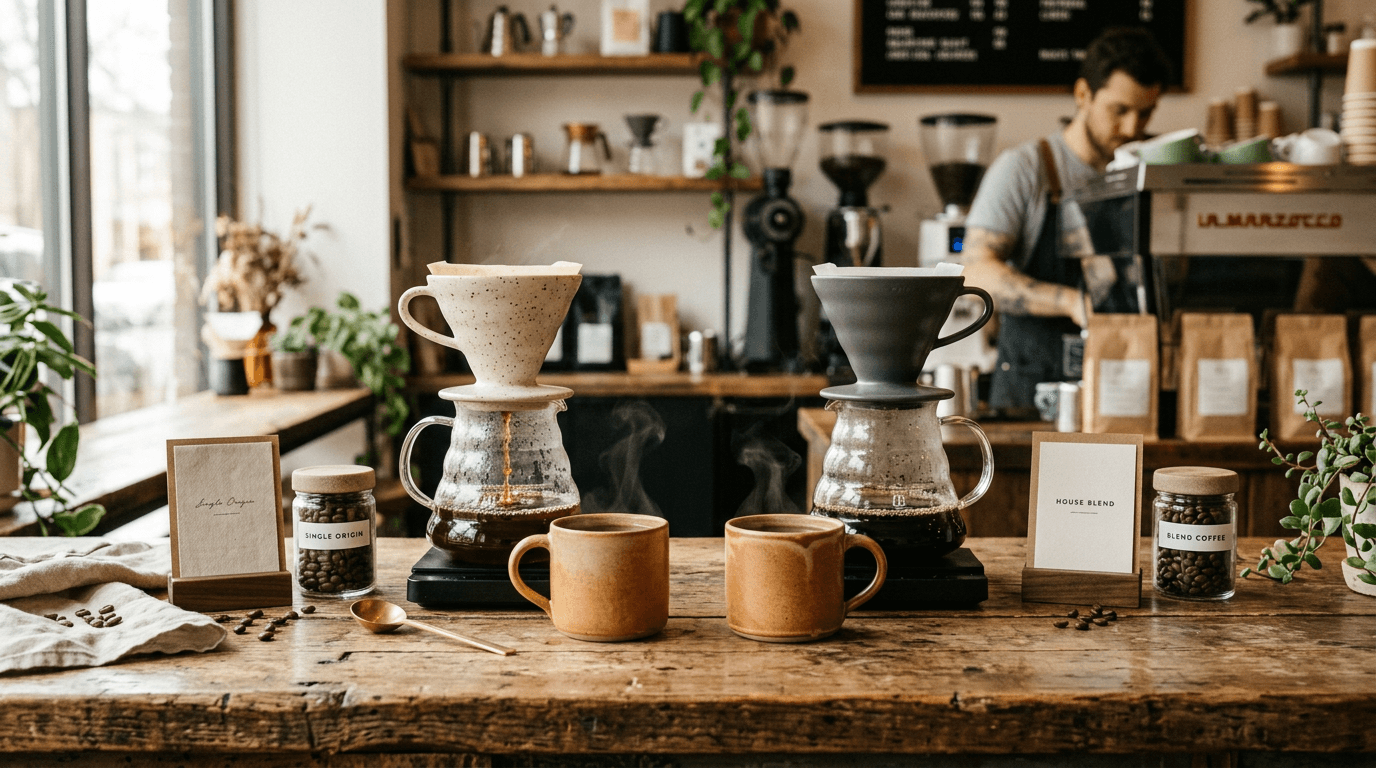
There are a lot of opinions about single-origin and blended coffee. Some people swear by the distinct character of a single-origin Ethiopian. Others reach for a well-crafted blend every morning without a second thought. Both camps have good reasons.
The truth is, neither is better. They're just different. Understanding what makes each one unique can help you figure out which suits you, and when.
What Is Single-Origin Coffee?
Single-origin coffee comes from one specific place. That might be a country, a region, or even a single farm or cooperative. The idea is that you're tasting the product of one particular environment, soil type, altitude, and harvest.
Because nothing is blended in to balance or soften the flavor, what you get is more transparent. If the beans are exceptional, that shows. If something went wrong in the process, that shows too.
Single-origin coffees are popular with specialty coffee drinkers who want to notice the differences between, say, a washed Kenyan and a natural Ethiopian. The flavors can range from bright citrus and berry to floral, stone fruit, or earthy and chocolatey, depending entirely on where the coffee was grown and how it was processed.
What Is Blended Coffee?
Blended coffee combines beans from two or more origins. A roaster might mix a Brazilian base for body and sweetness with a Colombian bean for brightness, or add a small percentage of a natural-processed African coffee for depth.
Blending is a craft. Good roasters spend a lot of time dialing in ratios to hit a consistent, balanced flavor profile. The goal is usually a cup that works well across different brewing methods and tastes reliably good every time you buy a bag.
Most espresso blends are built this way. Milk-based drinks like lattes and flat whites often taste better with a blend, because the balance holds up against the dairy rather than getting lost in it.
How They Taste Differently
Single-origin coffees tend to have more pronounced, sometimes unexpected flavors. That's part of the appeal. A light-roasted Ethiopian Yirgacheffe might taste like blueberry and jasmine. A Guatemalan from the Huehuetenango region might be more chocolatey and nutty with a hint of apple.
Blends are usually more predictable in the best sense. They're designed for consistency and balance. You know roughly what you're getting, and that's a feature, not a flaw. For people who want a reliable morning cup without a lot of variation, a good blend delivers that every time.
Neither is more complex or impressive than the other. A thoughtfully crafted blend can be just as interesting as a standout single-origin.
Which Works Better for Different Brewing Methods?
Brewing method matters more than most people think when choosing between the two.
- Pour-over and filter brewing tend to highlight the clarity and brightness of single-origin coffees. The slower extraction lets delicate flavors come through.
- Espresso is often better suited to blends. The high pressure of espresso extraction can amplify sharp or acidic notes, and a blend helps smooth that out.
- French press and cold brew work well with both, though medium-to-dark roast blends often produce a richer, fuller result.
- Moka pot users often prefer a blend or a single-origin with lower acidity, since the intense heat can make acidic coffees taste harsh.
Experimenting is the only way to know for sure what works in your setup. Start with what you have and adjust from there.
The Traceability Question
For a lot of coffee drinkers today, it's not just about flavor. It's about knowing where your coffee comes from and how it was produced.
Single-origin coffee has a natural advantage here. Because it comes from one place, there's usually more information available about the farm, the farming practices, and the people involved. Some roasters publish detailed information about the specific lot, the producer's name, and the processing method used.
That level of transparency can matter if ethical sourcing is important to you. It makes it easier to support producers who use sustainable farming practices, pay fair wages, and look after the land.
Blends can be ethically sourced too, but the traceability is less straightforward. A good roaster will know exactly where each component of a blend comes from and will vet their supply chain carefully. It just takes a bit more trust on your part, or more digging into the roaster's sourcing practices.
At Diving Moose Coffee, sourcing with intention is central to everything we do. Every bag sold contributes to wildlife conservation through our partnership with WWF. The coffee in your cup connects to something bigger, whether it's a single-origin or a blend.
Price and Availability
Single-origin coffees can be more expensive, especially micro-lot or farm-specific offerings. The smaller the supply, the higher the price tends to be. Seasonal availability is also a factor. A specific lot from a Rwandan cooperative might only be available for a few months of the year.
Blends are generally more consistent in both price and availability. Roasters can adjust the component ratios throughout the year to maintain flavor consistency even when one origin has a lighter harvest. That makes blends a practical choice if you want something you can rely on year-round.
So Which One Should You Choose?
It comes down to what you want from your coffee.
- If you enjoy exploring different flavor profiles and want to taste the character of a specific region or farm, single-origin is worth exploring.
- If you want a balanced, reliable cup that works well in most brewing situations and suits milk-based drinks, a well-crafted blend is probably the better fit.
- If you care deeply about traceability and knowing exactly where your coffee comes from, single-origin tends to offer more transparency.
- If consistency and value over time matter most, blends usually win on that front.
Many coffee drinkers end up keeping both around. A single-origin for slow weekend mornings with a pour-over, and a solid blend for quick weekday espressos. That's not a bad way to do it.
The Bottom Line
Single-origin and blended coffees each have real strengths. One isn't more serious or more worthy than the other. What matters is understanding what you're buying and why, and finding something that genuinely tastes good to you.
Good coffee starts with good sourcing, careful roasting, and honest craft. Whether it comes from one farm or five, that's what you're really paying for.